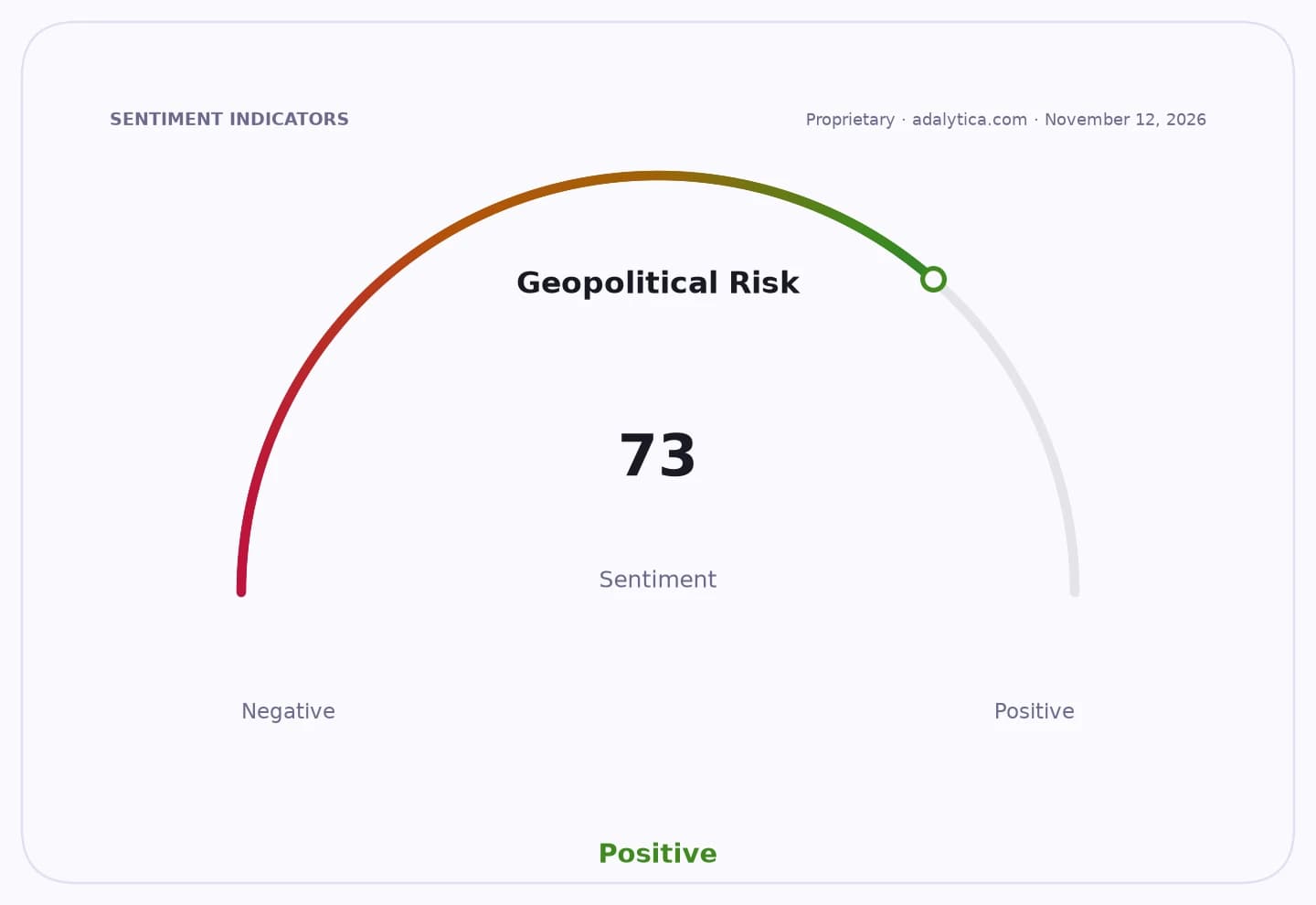
The U.S. is pressing Beijing to stick to the Busan trade truce just as China moves to extend the deal for another two months, a sign the world’s two largest economies still want to avoid a rupture even as tariff risk, export controls and farm purchases remain unresolved.
China Busan Trade Truce Extension and Market Impact

That matters because a fragile trade pause is now doing real work in the global economy: it is keeping the door open to continued flows of soybeans, commodities and industrial inputs while helping cap the kind of escalation that would hit inflation, corporate margins and cross-border capital spending. The market’s immediate read is not that Washington and Beijing have settled their disputes, but that neither side is ready to absorb the economic cost of a full restart in the trade war.
Sentiment Indicators
The latest extension buys time ahead of the next Xi-Trump meeting, but it also underlines how little has been structurally solved. The sticking points are familiar — agricultural purchases, intellectual property and the broader enforcement of commitments — and that is precisely why investors should care. A truce that survives only through repeated deadlines keeps pricing in policy risk, not resolution, and that can exaggerate moves in sectors exposed to China demand, tariffs and supply-chain politics.
Commodity markets are already signaling how sensitive the backdrop remains. WTI crude has swung sharply in recent weeks, a reminder that geopolitical headlines can move energy inflation and feed directly into expectations for transport, fertilizer and food costs. For agriculture, the stakes are even more direct. U.S. exporters and agribusinesses are still navigating a trade environment where China’s buying decisions can quickly shift from tailwind to headwind, affecting volumes, margins and inventory planning across the entire supply chain.
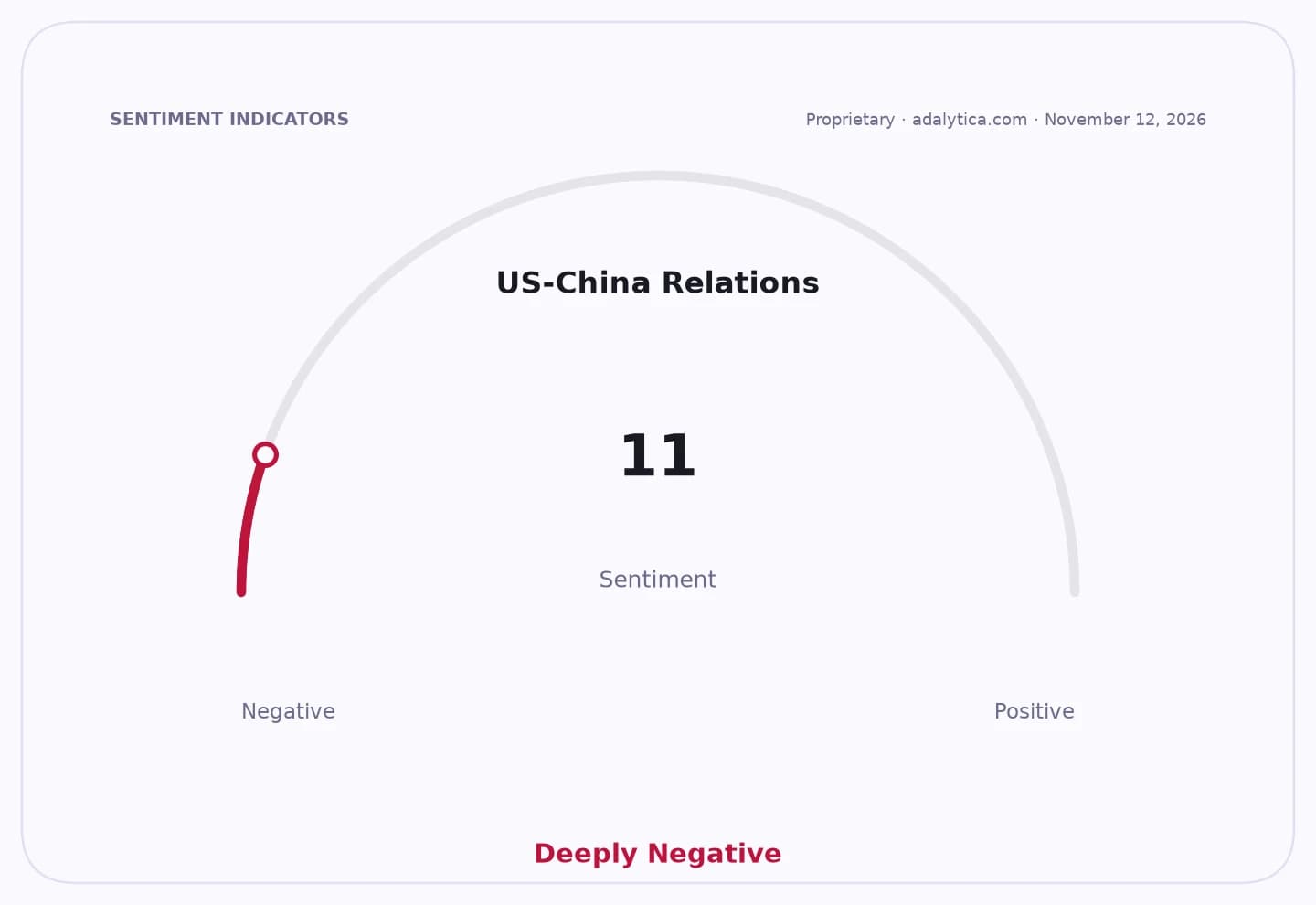
US-China Relations — 30-day sentimentadalytica.com
Explore this data interactively — full history, time series and cross-market comparisons.
That is why the headline matters well beyond diplomacy. A temporary détente can support names tied to farm exports, logistics and crop inputs, while renewed friction would tend to favor domestic substitution, supply-chain rerouting and defensive pricing power. It also helps explain why trade-sensitive shares can stay bid even when the macro picture looks uncertain: investors are effectively paying for optionality on a deal rather than conviction on a breakthrough.
The broader narrative is that both sides are trying to manage a controlled rivalry, not end it. China is simultaneously deepening trade ties elsewhere, including with other major partners, which suggests Beijing is still hedging against U.S. pressure. For investors, that means the strategic trade map is not reverting to the old order. It is fragmenting, and capital is flowing toward the companies that can live inside that fragmentation.
The high-conviction takeaway is simple: this is still a policy-driven market, not a fully de-risked one. If Busan holds, the beneficiaries are the exporters, agrichemicals and logistics names exposed to China demand; if it fails, the winners will be the domestic substitutes, defense-linked supply chains and volatility hedges. The best positioning is to own the businesses that gain from trade normalization, but only at prices that already assume the truce can break again.
| Entity | Gains | Losses |
|---|---|---|
| U.S. agribusiness exporters | ▲Better China demand | ▼Retaliatory buying risk |
| Chinese importers | ▲Short-term supply stability | ▼Higher costs if talks fail |
| Tariff-sensitive manufacturers | ▲Less policy uncertainty | ▼Margin pressure if trade restarts |
| Volatility hedges | ▲More demand for protection | ▼Complacent longs |