China is extending its pressure campaign on Taiwan beyond the island’s crowded western waters, with new Coast Guard patrols off the Pacific coast raising the economic and strategic stakes for Taipei and its allies.
China Coast Guard Patrols East of Taiwan

That matters because Taiwan’s east coast is more than open water. It is a vital backdoor to the Pacific, the route that links the island to U.S. and Japanese partners and the flank that would become critical in any crisis. By sending cutters east of Taiwan for the first time in the available data, Beijing is showing it can widen the map of confrontation whenever it wants, without crossing into Taiwanese-claimed waters.
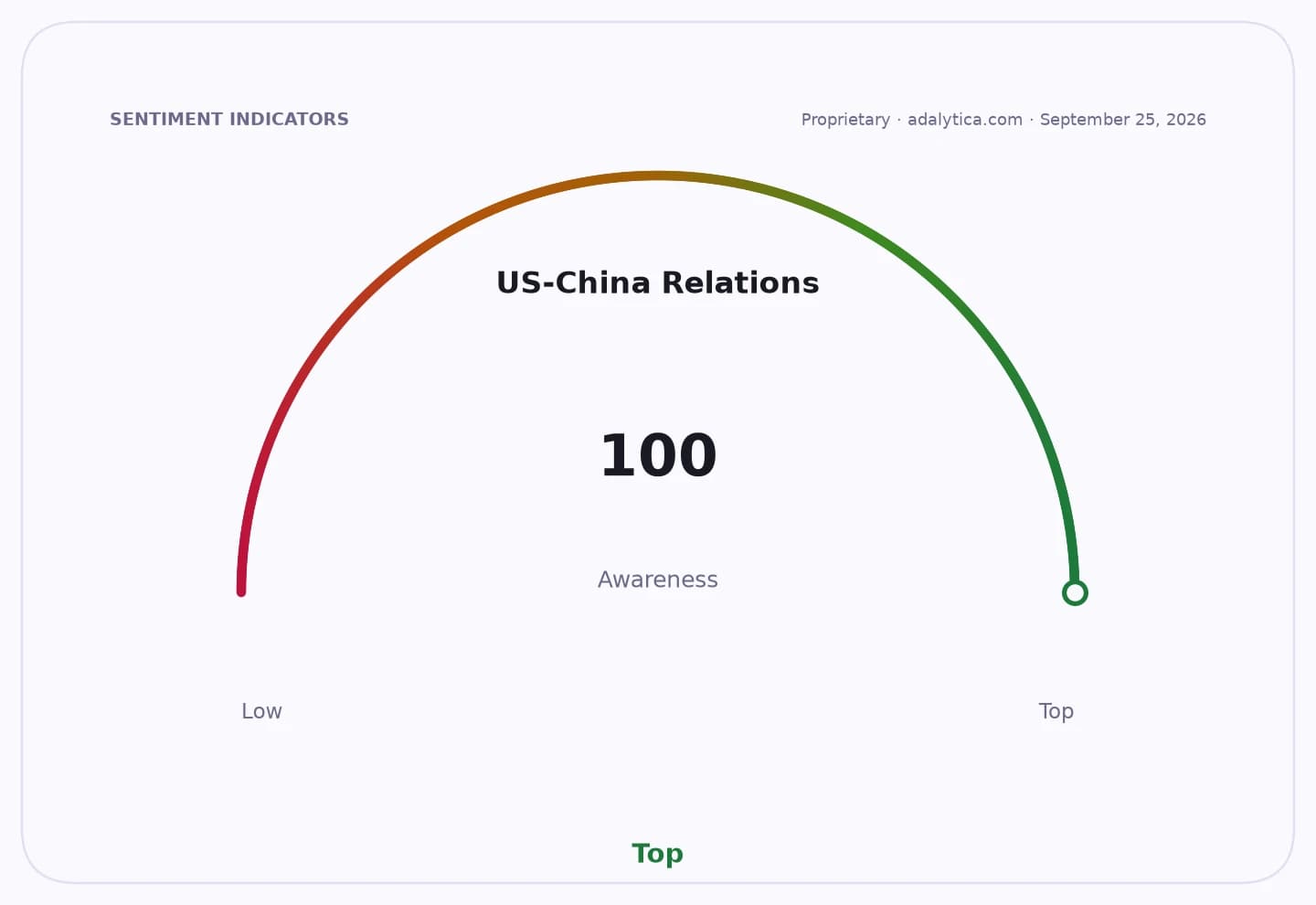
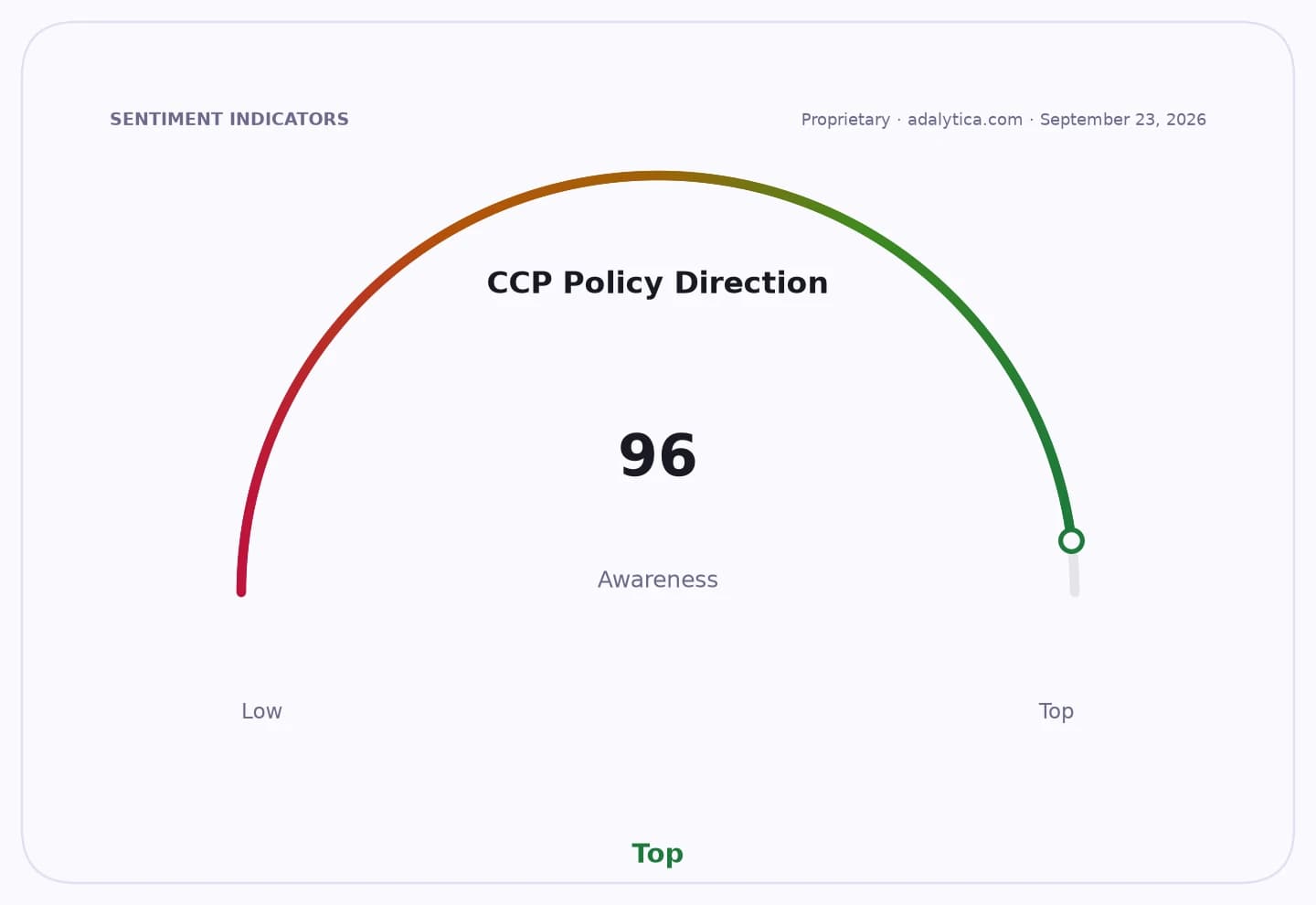
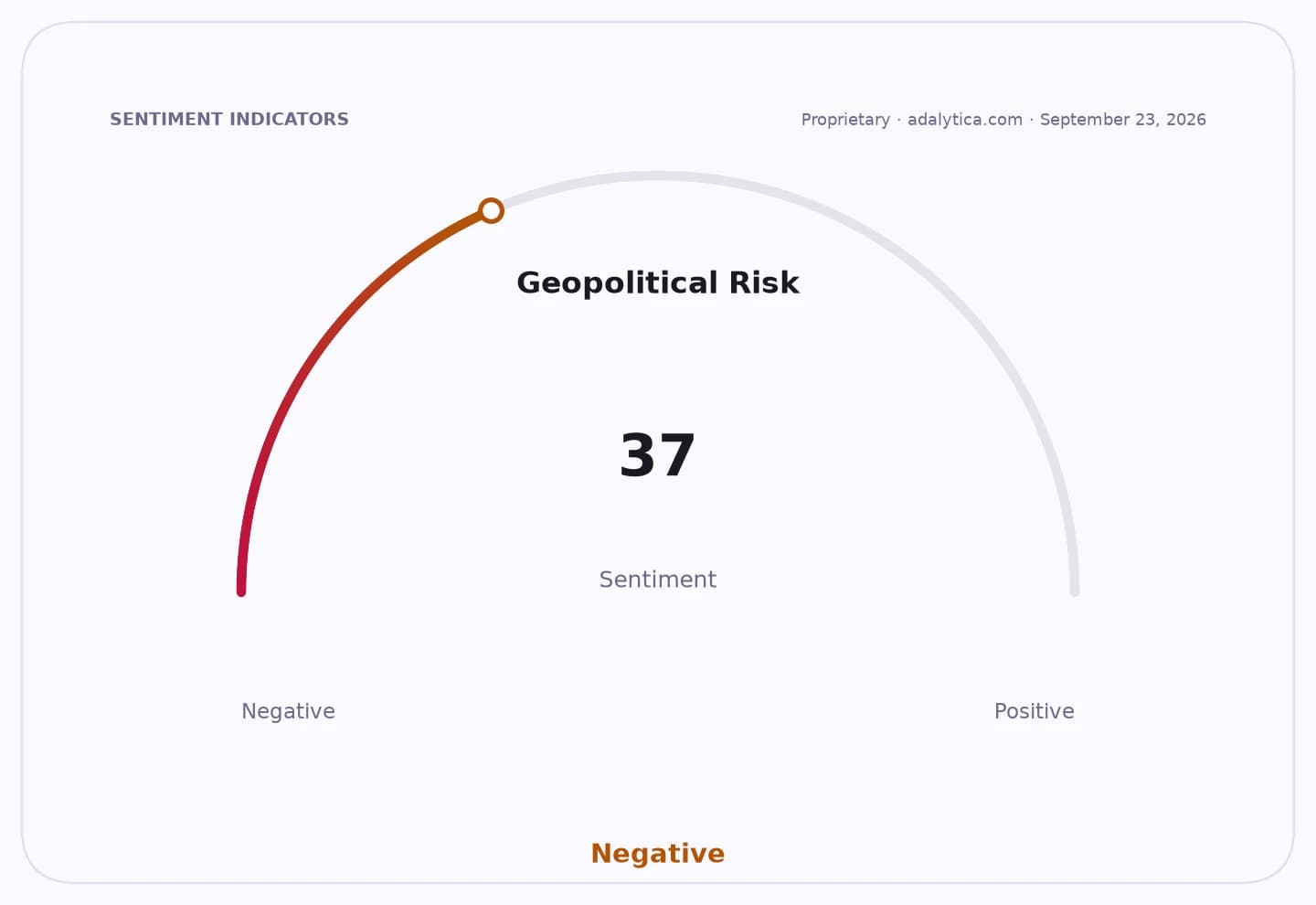
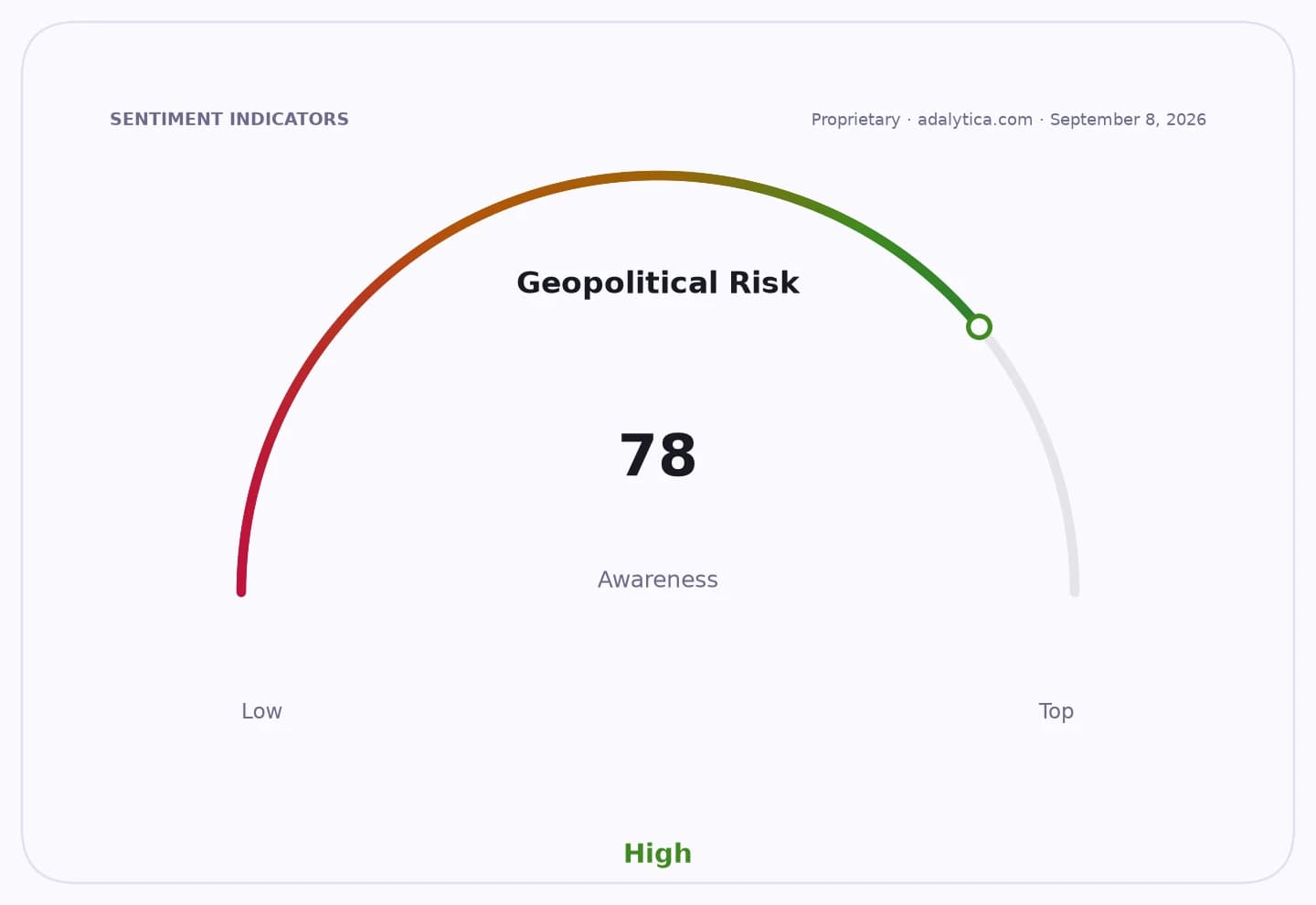
Sentiment IndicatorsⓘProprietary · adalytica.com · September 7, 2026
This is a snapshot — live sentiment, awareness and momentum for 130+ markets update continuously in the dashboard.Open AlphaPulse

Bloomberg calculations based on ship-tracking data show China has deployed an average of two Coast Guard cutters a month east of Taiwan since June, after Japan and the Philippines announced plans to define their overlapping maritime border in the region. Patrols have covered about 27,100 square nautical miles, an area more than twice the size of Taiwan itself. The ships stayed roughly 30 nautical miles from the island’s eastern coast, which suggests a calibrated show of force: close enough to intimidate, far enough to limit immediate escalation.
For investors, the significance is straightforward. Geopolitical risk around Taiwan is not a binary event; it is a steady tax on confidence, trade planning and capital allocation. Every step that increases the odds of maritime friction can add a premium to regional shipping, defense spending and supply-chain redundancy. It also keeps Taiwan at the center of the semiconductor and technology security debate, where any disruption would reverberate through global equities, industrials and the broader Asia complex.

That is why the market has to treat these patrols as more than a headline. Taiwan is already responding by strengthening its defenses, including a $7.6 billion drone procurement budget and more coast guard activity of its own. The island is also prosecuting technology-smuggling cases tied to AI servers, a reminder that the struggle with Beijing spans not just territorial waters but advanced chips, export controls and strategic know-how.
The larger narrative is that China is testing pressure points all around Taiwan, not just in the Taiwan Strait. By pushing east, Beijing is signaling that it can stretch Taiwan’s defenses, complicate allied responses and keep the island under persistent strain. For long-term investors, that argues for patience, diversification and a clear-eyed view of risk in Taiwan-related assets. The story is worth watching closely, because the balance between deterrence and disruption remains one of the most important market variables in Asia.
| Entity | Gains | Losses |
|---|---|---|
| China | ▲More leverage over Taiwan | ▼Higher regional suspicion |
| Taiwan | ▲More defense urgency | ▼Added maritime pressure |
| U.S. and Japan | ▲Stronger case for coordination | ▼Greater security burden |
| Investors in Taiwan assets | ▲Potential defense and security spending tailwind | ▼Geopolitical risk premium |