China is on alert after a sharp drop in temperatures, a weather shift that can quickly translate into higher demand for heating fuels, tighter power balances and renewed pressure on global energy markets.
China cold snap lifts energy demand outlook

The economic significance is immediate. In the world’s second-largest economy, a sudden cold spell can lift consumption of refined products, liquefied fuels and power generation inputs just as traders are already dealing with a market that has been lurching between risk-off and risk-on moves. West Texas Intermediate crude is still near $96.72 a barrel in the latest forecast snapshot, while the U.S. energy sector ETF XLE has been trading around $62.82, showing that investors remain highly sensitive to any catalyst that can reprice the commodity complex.
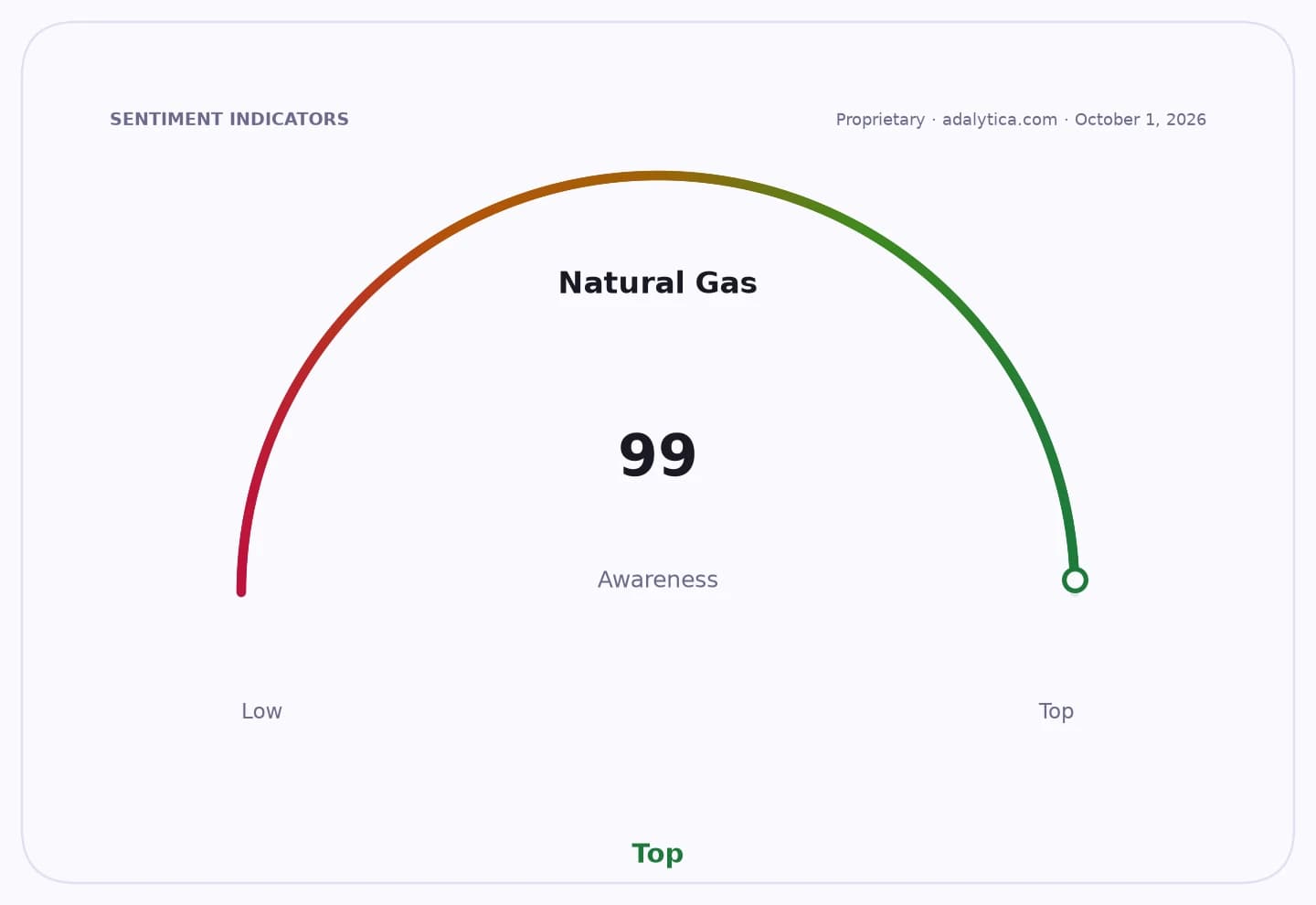
Sentiment IndicatorsⓘProprietary · adalytica.com · October 4, 2026
This is a snapshot — live sentiment, awareness and momentum for 130+ markets update continuously in the dashboard.Open AlphaPulse
The broader point is that weather is not just a short-term headline in China; it is a macro shock that can ripple through freight, industrial production and import demand. When temperatures fall abruptly, households and businesses draw more energy, utilities scramble to secure supply and refiners, pipeline operators and fuel distributors can see sudden changes in volumes. That matters especially when producer price inflation in the U.S. remains elevated at 288.03 on the latest forecast, leaving energy costs a live input into inflation expectations and central-bank thinking.
For investors, the cleanest read-through is that cold-weather stress tends to favor the energy value chain over the broader market. Natural gas exposure, as reflected by UNG, remains volatile but can re-rate fast when weather demand tightens balances; the fund recently traded around $10.47 after swinging above $16 earlier in the period. Energy equities, meanwhile, have held up better than many cyclical peers, with XLE still above its 200-day moving average and near the low $60s, a sign that the market continues to pay for scarcity, cash flow and geopolitical insurance.
The geopolitical overlay only raises the stakes. Adalytica’s US-China Relations Sentiment remains neutral at 57, but Global Stability Sentiment has collapsed to 4, or “Extreme Fear,” underscoring how fragile the macro backdrop has become. In that environment, a winter demand shock in China can compound existing volatility in commodities, shipping and industrial inputs, especially if it coincides with any supply disruption or policy response.
Our thesis is simple: the market underestimates how quickly a China cold snap can tighten energy balances and revive pricing power across the fossil-fuel complex. The immediate beneficiaries are oil and gas producers, LNG-linked names, pipeline operators and energy ETFs; the losers are energy-intensive manufacturers, import-dependent consumers and anyone betting on a smooth disinflation path. This is the kind of weather-driven inflection point that can create short-lived but profitable dislocations, and investors positioned early in energy exposure can still use volatility to their advantage.
| Entity | Gains | Losses |
|---|---|---|
| Oil & gas producers | ▲Higher realized prices | ▼Consumers facing fuel bills |
| LNG and fuel suppliers | ▲Demand spike | ▼Import-dependent buyers |
| Energy ETFs like XLE | ▲Cash-flow tailwind | ▼Underexposed longs |
| Energy-intensive industries | ▲— | ▼Margin pressure |