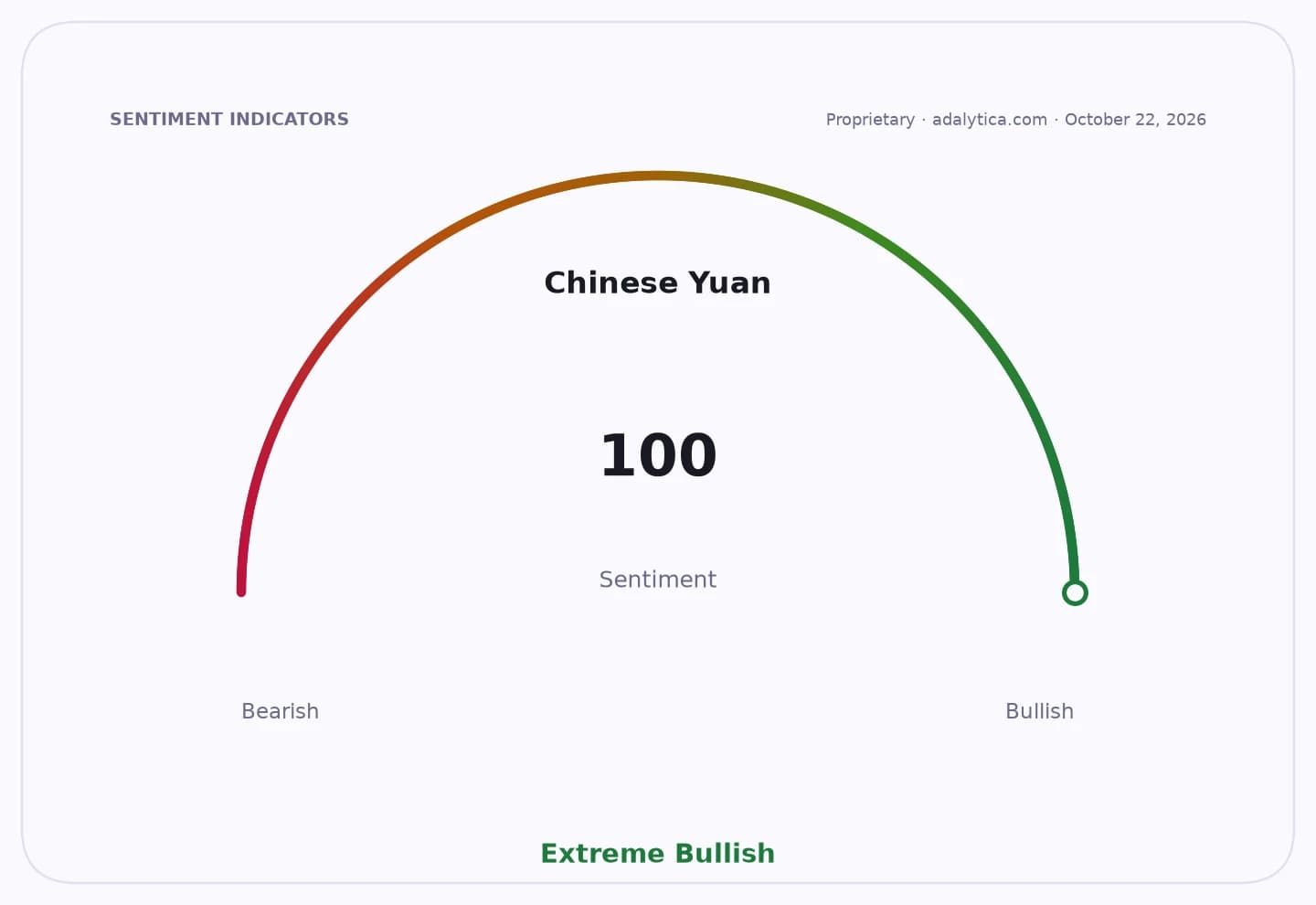
China’s consumer market is still the make-or-break question for European luxury investors, but the latest evidence says the easy growth story is over for now.
China Demand Keeps Pressure on European Luxury Stocks
That matters because brands like LVMH, Kering and Hermès have spent years relying on China’s wealthy shoppers to drive sales, pricing power and margin expansion. Today, China’s economy is still growing, but the growth engine is exports, not domestic spending. Third-quarter expansion of 4.5% came alongside a record trade surplus and a 36.3% jump in exports, while weak internal demand and subdued consumer confidence continue to cap the kind of luxury rebound investors once counted on.
Sentiment IndicatorsⓘProprietary · adalytica.com · October 23, 2026
This is a snapshot — live sentiment, awareness and momentum for 130+ markets update continuously in the dashboard.Open AlphaPulse
The market has already been voting with its feet. LVMH Moët Hennessy Louis Vuitton’s U.S.-listed shares have fallen to about $86.96 from above $147 late last year, while Kering’s ADR has slid to roughly $21.72 from more than $33 and Christian Dior has drifted to $120 from above $155 earlier in the year. Those moves show how quickly investors have gone from paying up for China exposure to questioning whether it is still an advantage at all.
The story is not that China has stopped mattering. It is that China is mattering differently. A trade-led economy can still support global supply chains and preserve the country’s position as a source of wealth, but it does far less for the domestic luxury buyer who shops for handbags, watches and couture. For European luxury houses, that distinction is crucial. These companies do not need China to become a growth drag forever; they need it to turn into a reliable source of discretionary spending again.
Technical indicators underline how deeply sentiment has reset. LVMH’s relative strength index recently touched 18.9, a sign the stock had been heavily sold, while Kering’s RSI sank to 35.8. Even after some stabilization in the shares, both names remain below their 200-day moving averages, suggesting investors still want proof before paying for a China recovery.
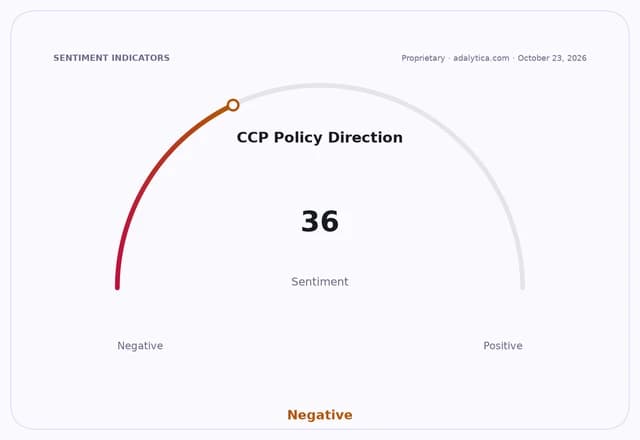
There is also a broader policy layer. Adalytica’s China CCP Policy Direction sentiment remains neutral, but with recent declines that suggest little urgency around a decisive consumption stimulus. Without a stronger push to revive household spending, the luxury sector is left depending on a patchy rebound in confidence rather than a clear policy tailwind.
For long-term investors, that does not mean European luxury is broken. These are still elite franchises with global brands, strong margins and the kind of pricing power most companies can only envy. But China no longer deserves blind optimism. If you own the sector, the right question is not whether China matters, but how much growth China can realistically deliver over the next three to five years. That makes selectivity essential, and patience even more so. For now, luxury stocks remain worth watching, but investors should keep expectations grounded and wait for clearer evidence that China’s consumers are finally ready to spend again.
| Entity | Gains | Losses |
|---|---|---|
| European luxury brands | ▲Global brand strength | ▼China-driven sales growth |
| Chinese exporters | ▲External demand | ▼Domestic consumption recovery |
| Investors in quality luxury | ▲Long-term moats | ▼Near-term valuation support |
| Chinese consumers | ▲Potential policy support | ▼Spending power from weak demand |