China’s naval and air drills near Scarborough Shoal are the latest sign that the South China Sea is becoming a more dangerous place for trade, shipping and regional investing.
China drills near Scarborough Shoal amid South China Sea tensions
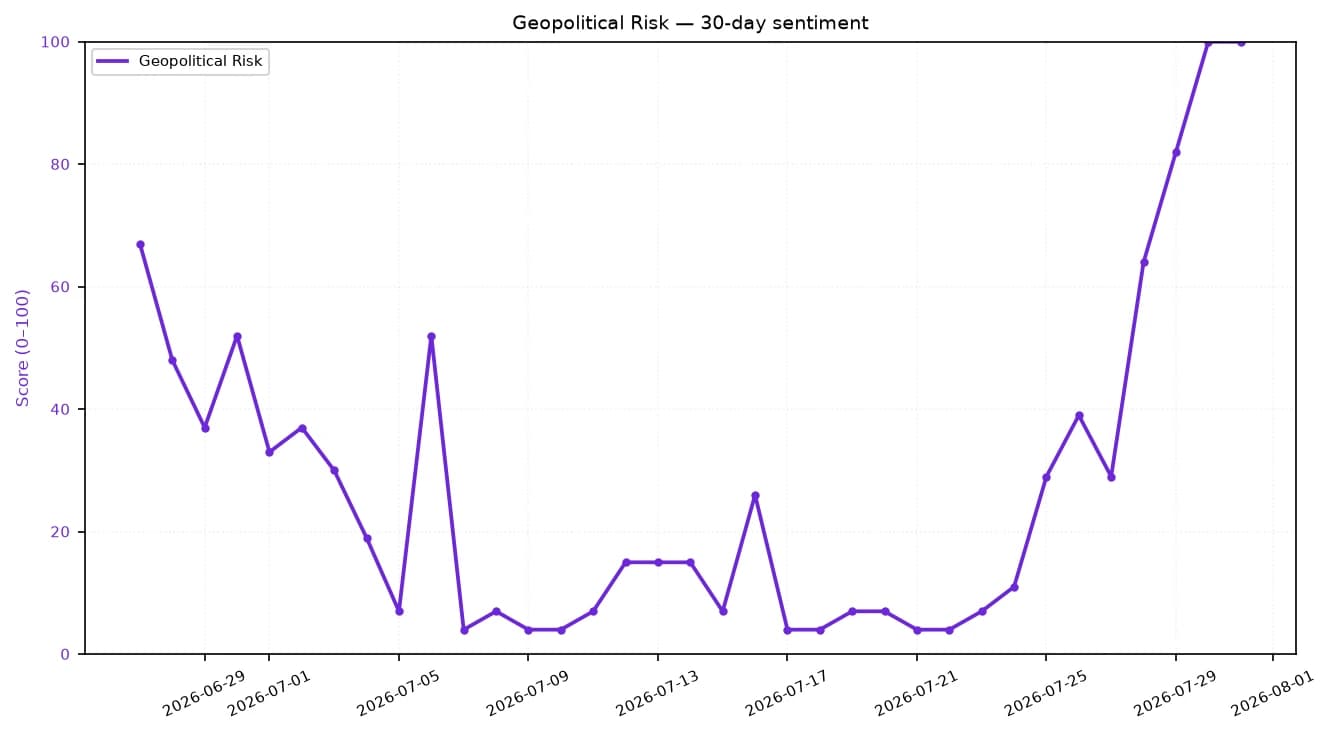
That matters because the sea lane is one of the world’s most important commercial corridors. Any rise in military activity near disputed waters increases the odds of accidents, miscalculation and temporary disruption to shipping routes that carry energy, consumer goods and industrial cargo between Asia and the rest of the world.
Sentiment IndicatorsⓘProprietary · adalytica.com · August 1, 2026
This is a snapshot — live sentiment, awareness and momentum for 130+ markets update continuously in the dashboard.Open AlphaPulse
The drills come as tensions with the Philippines remain elevated and as Beijing continues to answer what it calls infringements on its sovereignty. The message is straightforward: China is prepared to use regular military activity to reinforce its claims, even as other claimants and the U.S. argue that such moves are destabilizing.
For investors, the immediate reaction is usually less about one headline and more about the risk premium that builds over time. Higher geopolitical friction can support defense spending, lift insurance and freight costs, and make maritime logistics more volatile. It also keeps pressure on companies with heavy exposure to Asia-Pacific shipping lanes, port operations and energy transport.
There is also a weather overlay that investors should not ignore. Super Typhoon Dolphin is expected to intensify sea conditions around parts of the region, adding another layer of risk for vessels already navigating contested waters. When severe weather and military drills overlap, even routine shipping schedules can become harder to manage.
The broader takeaway is that the South China Sea remains a structural risk, not a one-off event. The dispute has not derailed regional commerce, but it has made the operating environment less predictable. That is exactly the kind of backdrop that can reward patience and diversification while punishing companies that are too concentrated in vulnerable trade routes.
Long-term investors should view this as another reminder that geopolitics can move faster than business fundamentals. The biggest winners are often the firms with resilient supply chains and pricing power; the biggest losers are the ones exposed to disruption, delays and higher transport costs. For now, the South China Sea remains a watchlist issue, but one that is worth taking seriously.
| Entity | Gains | Losses |
|---|---|---|
| China | ▲Leverage over disputed waters | ▼Diplomatic trust |
| Philippines | ▲International backing | ▼Access security |
| Shipping firms | ▲Higher risk premia | ▼Route stability |
| Regional exporters/importers | ▲None clearly | ▼Lower predictability |




