China’s proposal for a four-point framework for Middle East security is a direct bid to shape the region’s diplomatic architecture at a time when the Gaza war, Red Sea attacks and wider regional instability are keeping a premium on external guarantors, trade routes and energy flows.
China Egypt Middle East Security Plan

That matters because Beijing is not just offering rhetoric. Xi Jinping used a state visit to Egypt to pair the security pitch with a dense package of economic agreements — including cooperation in supply chains, telecoms, finance, cloud computing, data centers, semiconductors, EVs, shipbuilding, renewable energy and desalination — signaling that China wants its political influence to travel alongside capital, technology and infrastructure.
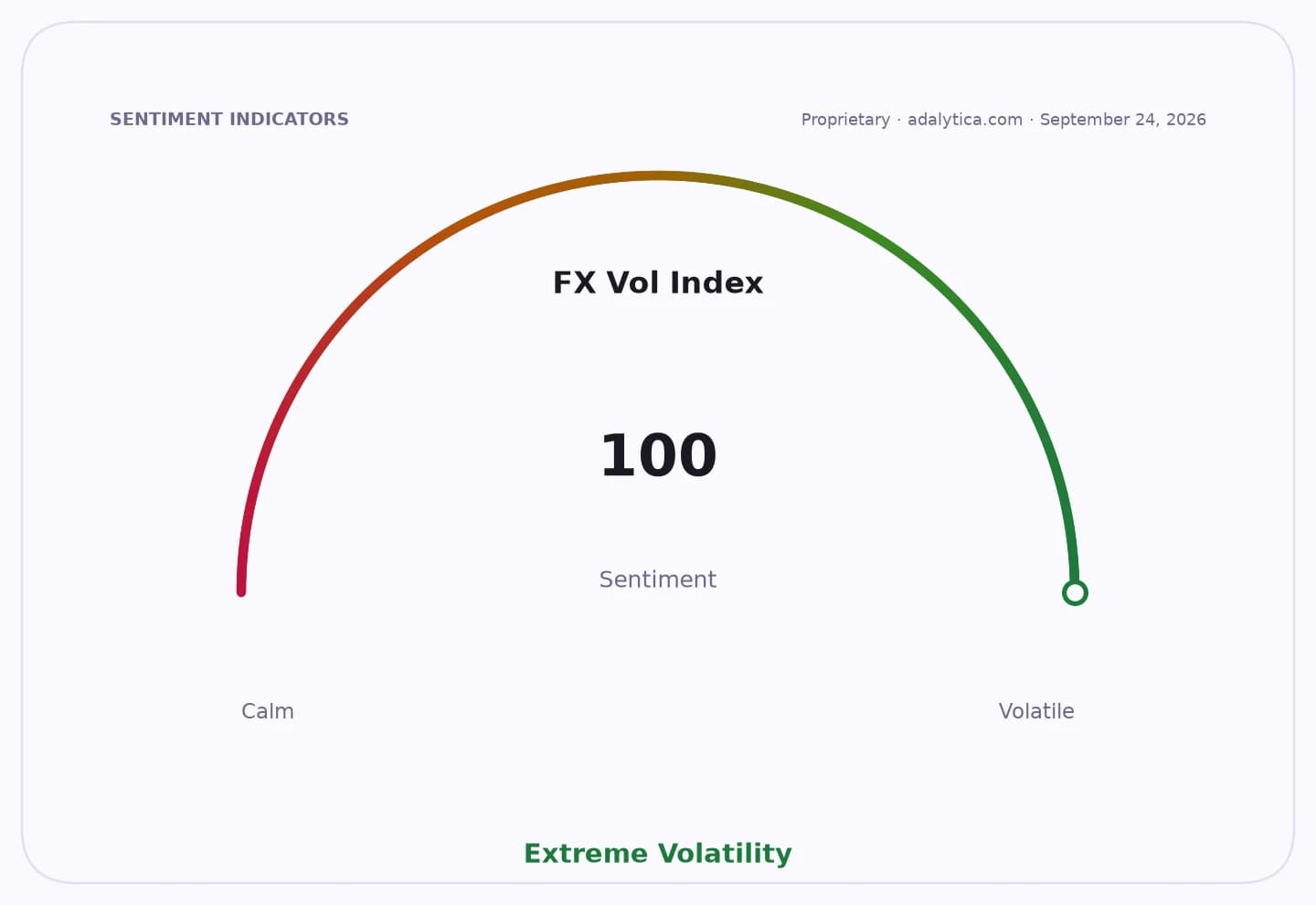
Sentiment IndicatorsⓘProprietary · adalytica.com · September 3, 2026
This is a snapshot — live sentiment, awareness and momentum for 130+ markets update continuously in the dashboard.Open AlphaPulse
The narrative here is simple: China is trying to convert its commercial footprint in the Middle East into strategic relevance. The four-point plan calls for regional powers to drive security from within, an overall approach to the conflict, development as a foundation for stability and broader international coordination. In practice, that is Beijing’s answer to a region where the U.S. has long been the dominant security actor, but where local governments increasingly want more room to maneuver and more partners to hedge against geopolitical risk.
The immediate economic relevance runs through the Suez Canal corridor, Red Sea shipping and energy markets. China and Egypt specifically said security and governance of the Red Sea should rest primarily with coastal states, a formulation that reflects how much the world’s trade lanes depend on a stable maritime order. Any deterioration in those routes raises logistics costs, complicates industrial supply chains and amplifies inflation pressure across import-dependent economies.

For investors, the deal flow is the bigger tell. Egypt sits at the intersection of Arab diplomacy, African trade and the Suez corridor, making it a natural anchor for China’s broader regional strategy. The two sides also plan to expand cooperation in the Suez Canal Economic Zone, a platform that can benefit companies tied to industrial parks, ports, shipping services, power equipment and digital infrastructure. In a world where governments are racing to secure resilient supply chains, Beijing is positioning Chinese firms as the default partners for buildout.
That creates a clear investable theme: the market may still underestimate how much geopolitical fragmentation is accelerating demand for infrastructure, defense-adjacent logistics and “toll road” assets in shipping, ports and data. If China succeeds in embedding itself deeper into Middle Eastern development projects, the winners are likely to be companies exposed to industrial capacity, electrification, cloud infrastructure and maritime services rather than only the most visible oil majors.
The political message is equally important. China and Egypt both backed an immediate Gaza ceasefire, unrestricted humanitarian access and a role for the Palestinian Authority in Gaza, while rejecting the displacement of Palestinians. That stance aligns Beijing with much of the Arab world and reinforces its effort to present itself as a diplomatic counterweight to Western powers without inheriting the security burden that comes with formal alliance commitments.
The near-term catalyst is whether this diplomacy translates into follow-on agreements, financing and project awards inside Egypt and across the wider region. If it does, the market will increasingly have to price Middle East geopolitics not only as an energy shock risk, but as a capital-allocation story — one where China is quietly building influence through trade, technology and infrastructure.
| Entity | Gains | Losses |
|---|---|---|
| China | ▲Strategic influence | ▼U.S. diplomatic primacy |
| Egypt | ▲Investment inflows | ▼Security dependence |
| Middle East regional powers | ▲More autonomy | ▼External control |
| Shipping/importers | ▲Stability if plan advances | ▼Higher costs if unrest persists |