July 3, 2026 — China-focused ETFs are hovering near 2026 lows even as U.S. equity sentiment improves, underscoring a widening investor divide between Chinese growth risk and dollar-backed U.S. assets.
China ETFs Slump as Dollar, U.S. Sentiment Rise

The iShares China Large-Cap ETF, FXI, closed at $31.91 on July 2, down about 16% from its May high in the supplied data and almost 15% below its 200-day moving average. The iShares MSCI China ETF, MCHI, ended at $50.91, about 14% below its May level and also roughly 14% under its 200-day average. That puts two of the most widely watched U.S.-listed China equity proxies in clear downtrends at a time when broader risk appetite is not collapsing.
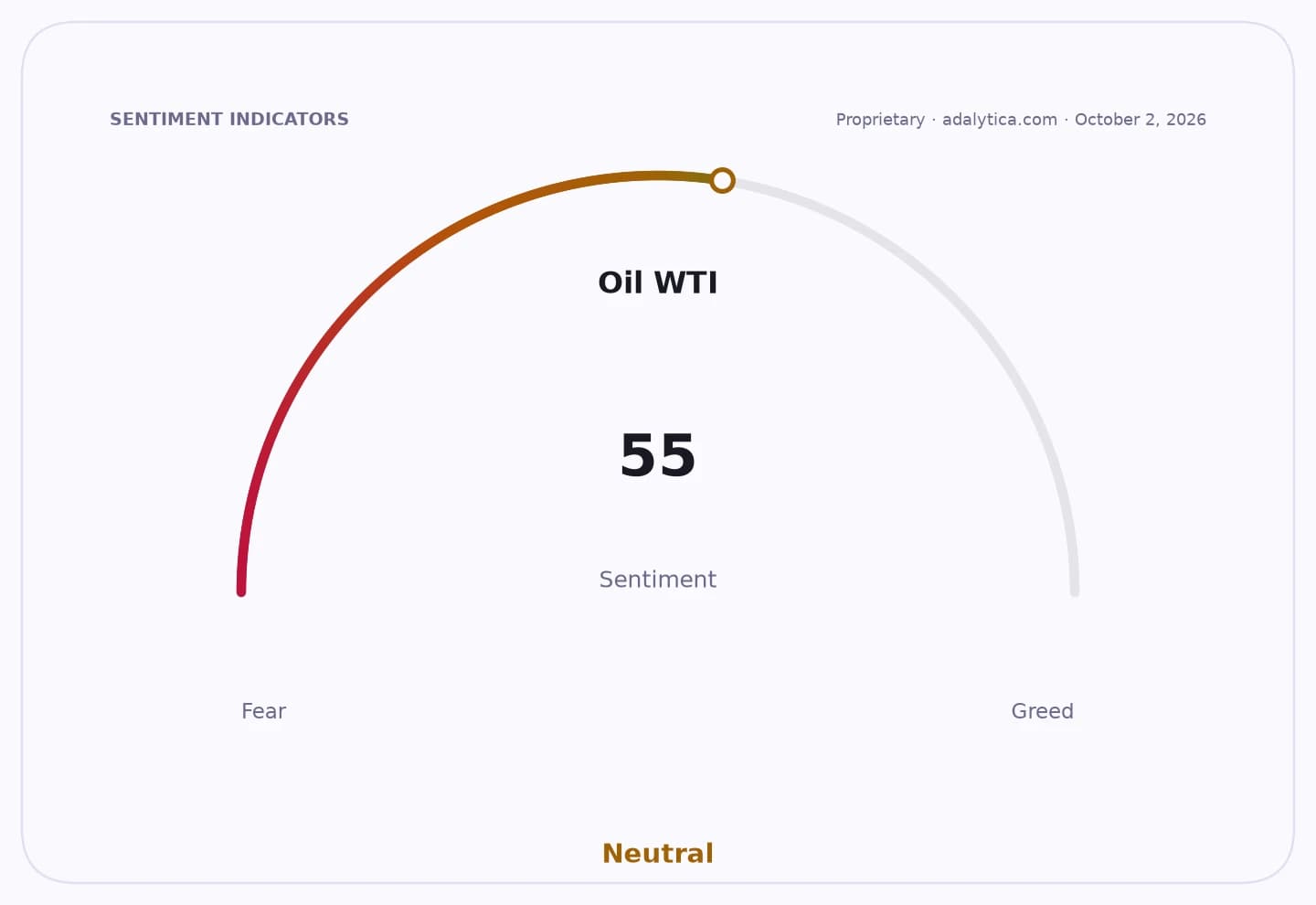
Sentiment IndicatorsⓘProprietary · adalytica.com · July 3, 2026
This is a snapshot — live sentiment, awareness and momentum for 130+ markets update continuously in the dashboard.Open AlphaPulse
The economic signal is that investors are demanding a higher discount for Chinese earnings, policy uncertainty and capital-flow risk. Equity weakness can feed back into corporate financing conditions, household confidence and foreign portfolio flows, particularly when it is occurring alongside a stronger U.S. dollar. A firm dollar tightens global financial conditions and often weighs on emerging-market and China-linked assets by reducing the appeal of non-dollar returns.
The market split is stark. Proprietary indicators from Adalytica.com show U.S. dollar trade sentiment at 76, labeled “Greed,” up 20 points over seven days and 60 points over 30 days. S&P 500 trade sentiment is also in “Greed” territory at 78, up 60 points over the week. China ETFs, by contrast, are trading well below conventional 50-day and 200-day moving averages, while RSI readings for FXI and MCHI are near oversold territory at 22.2 and 28.8, respectively.
Those technical readings may tempt short-term dip buyers, but the broader message is caution. FXI’s 50-day moving average stands at $35.06 and its 200-day average at $37.51, both well above the latest close. MCHI’s comparable averages are $55.13 and $59.26. Until prices reclaim those levels, the rally case rests more on mean reversion than on confirmed momentum.
Trading activity suggests investors are not ignoring the move. MCHI volume rose to 9.18 million shares on July 2, more than double the previous session’s level, as the ETF slipped 1.2%. FXI volume remained elevated at 32.3 million shares. The heavier trading near lows points to active repositioning rather than a quiet drift lower.
The divergence also matters for global allocation. If U.S. stocks and the dollar continue to draw inflows, China exposure becomes harder to justify for global funds unless there is a clearer improvement in earnings expectations, policy support or the currency backdrop. High U.S. consumer-related sentiment reinforces that contrast: Adalytica’s credit-card usage sentiment remains elevated at 85, though it has fallen from 93 a day earlier, suggesting spending optimism is still present but less one-sided.
Credit markets are sending a similar message of selectivity rather than blanket risk aversion. Recent rating actions outside China, including S&P Global Ratings’ upgrade of Adani Ports to BBB and Moody’s affirmation of Munich Re at Aa2, show investors are still rewarding stronger balance sheets. That makes the pressure on China ETFs more notable: the selloff is not simply a global flight from risk.
For Chinese policymakers, the market action raises the cost of waiting. Sustained weakness in offshore China ETFs can amplify concerns over growth, foreign capital participation and corporate valuations. For investors, the key question is whether oversold signals produce a tradable rebound or whether dollar strength and relative U.S. momentum keep pulling money away from Chinese equities.
| Entity | Gains | Losses |
|---|---|---|
| U.S. dollar bulls | ▲Momentum inflows | ▼Short-dollar carry trades |
| U.S. equity longs | ▲Relative allocation | ▼Valuation cushion |
| China ETF holders | ▲Oversold rebound potential | ▼Downtrend pressure |
| Chinese policymakers | ▲Stimulus urgency | ▼Market confidence |