China’s top diplomat is again stressing partnership with Europe, but the real market story is whether Beijing can keep one of its most important external demand channels open as geopolitical friction rises and investors remain on edge.
China-Europe Diplomacy Could Lift China Equities
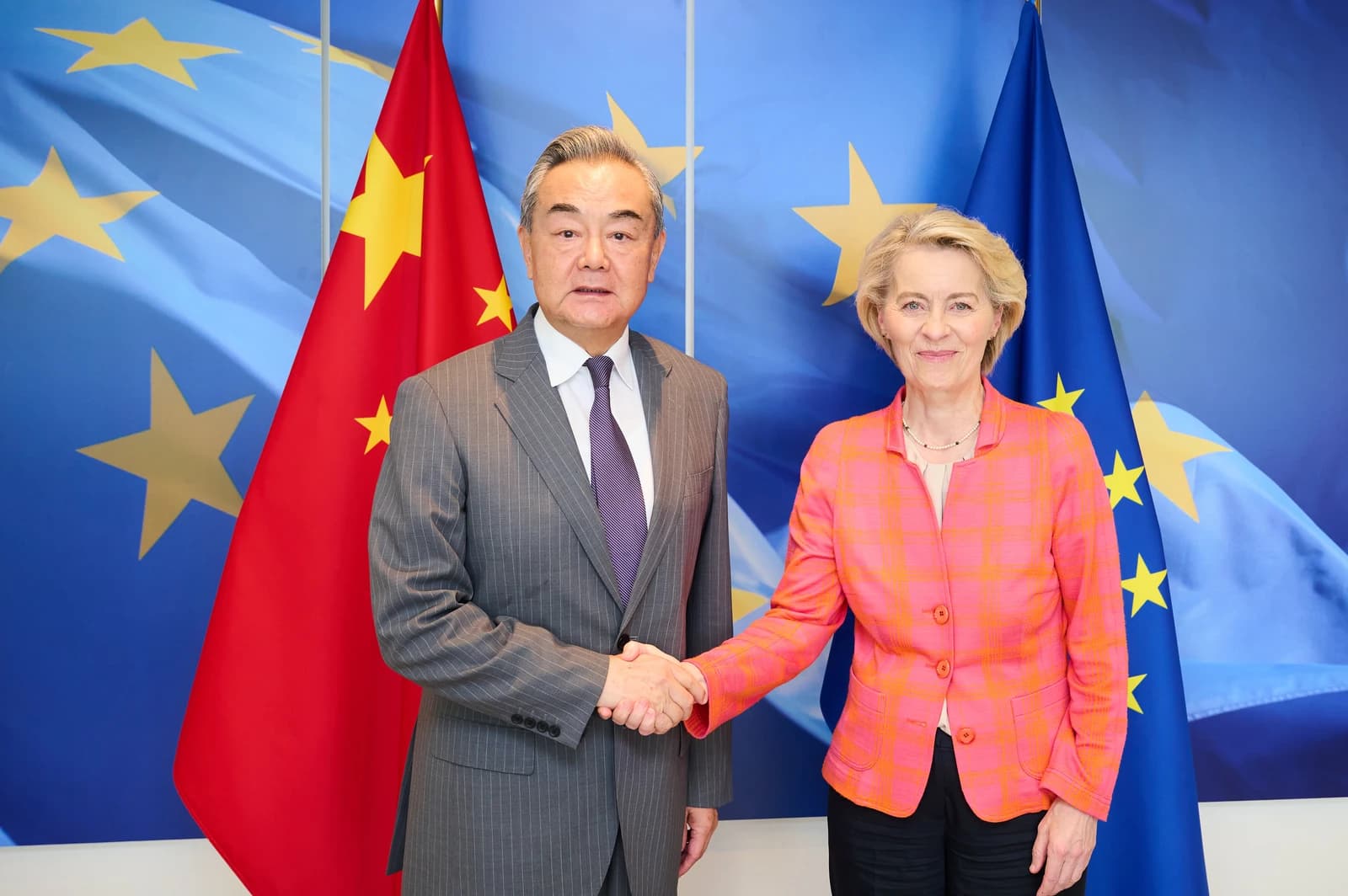
That matters because Europe is not just a diplomatic counterpart for China — it is a crucial market for Chinese exporters, a source of industrial supply chain depth and a swing factor for capital flows into China-linked assets. When Beijing leans into “partnership” language, it is trying to contain the risk premium around trade, sanctions and technology restrictions before it hardens into something far more costly for growth.
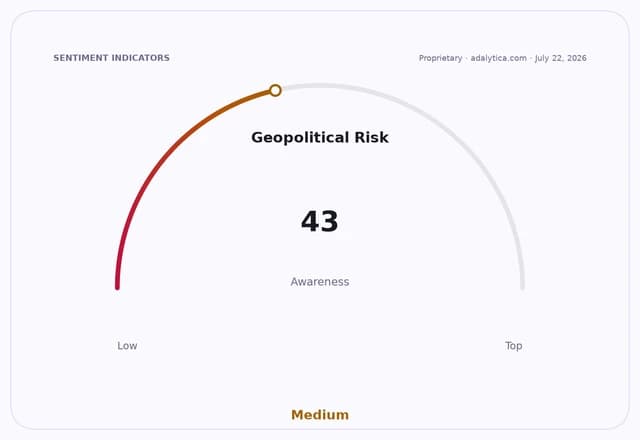
Sentiment IndicatorsⓘProprietary · adalytica.com · July 22, 2026
This is a snapshot — live sentiment, awareness and momentum for 130+ markets update continuously in the dashboard.Open AlphaPulse

The market is already signaling that this is a fragile equilibrium. The iShares China Large-Cap ETF has recovered from recent lows, with FXI trading around 34.63 after hitting 34.13 on July 17, while still sitting below its 200-day moving average near 37.13. That tells you investors are willing to buy the China rebound narrative, but they are not yet paying up for a clean resolution in Europe ties. The technical picture looks constructive but not decisive: RSI readings have pushed into overbought territory at times, yet the longer-term trend remains capped beneath the 200-day line.
Europe is a more complicated prize than it looks. On one hand, Chinese policymakers need the continent as a counterweight to U.S. pressure and as an outlet for goods, especially as domestic demand remains uneven. On the other, European governments are increasingly focused on trade imbalances, industrial subsidies and strategic dependency, which means any “partnership” rhetoric has to survive hard policy realities. That is why these diplomatic signals matter to investors: they can influence whether tariff threats, anti-dumping actions and tighter investment screening accelerate or ease.
CCP Policy Direction vs FXIadalytica.com
Explore this data interactively — full history, time series and cross-market comparisons.Open AlphaPulse
The implication for markets is straightforward. If China can stabilize relations with Europe, Chinese equities could attract a broader rerating through exporters, autos, industrials and consumer cyclicals that benefit from external demand. If the relationship deteriorates, the pressure shifts to the downside through weaker sentiment, more policy retaliation and a higher discount rate on China assets. In that scenario, defensive positioning and trades that benefit from global risk aversion gain appeal.
There is also an important cross-asset angle. The Europe story does not sit in isolation; it intersects with currency hedges, industrial metal demand, and broader geopolitical positioning. The continued resilience of Europe equities, with VGK holding near 88.76 and above both its 50-day and 200-day moving averages, suggests investors are not yet pricing a full-blown rupture. But the message from the broader stability gauges is less reassuring: geopolitical fear remains elevated, and that tends to favor caution over conviction.
Our thesis is that the market underestimates how much of the next leg in China assets will be driven not by domestic stimulus alone, but by whether Beijing can de-risk its external relationships fast enough to restore confidence in its export engine. China-Europe diplomacy is therefore not a soft-news sideshow; it is a direct input into earnings, valuation and capital allocation.
For investors, the asymmetric setup is in the companies and funds exposed to any détente: Chinese exporters, global industrial suppliers, European autos and logistics names that rely on cross-border trade. The losers are those caught on the wrong side of a worsening strategic decoupling — import-sensitive manufacturers, tariff-exposed supply chains and sentiment-driven China bearish bets.
The actionable takeaway: stay focused on the policy tone coming out of Beijing and Brussels, because a stable China-Europe channel could be the catalyst that unlocks a sharper rebound in China-linked equities, while a breakdown would quickly reprice the risk premium across the entire complex.
| Entity | Gains | Losses |
|---|---|---|
| Chinese exporters | ▲Easier market access | ▼Tariff pressure |
| European industrials | ▲Trade stability | ▼Supply chain friction |
| China equity bulls | ▲Lower risk premium | ▼Range-bound FXI |
| Geopolitical hedges | ▲Less demand | ▼Higher if tensions fade |