China is tightening exit controls on high-tech talent in a move aimed at preventing technology leakage, and the risk is that scrutiny could widen to visitors heading to Japan as Beijing sharpens its countermeasures in the U.S.-China tech fight.
China tightens exit controls on high-tech talent
That matters because the battle over semiconductors, advanced manufacturing and dual-use technologies is no longer confined to export licenses and customs checks. China is moving further up the enforcement chain, using people as well as products as vectors of control. For global supply chains, that raises the cost of doing business, slows cross-border collaboration and increases the odds of tit-for-tat restrictions that hit capital spending, travel and corporate planning.
Sentiment IndicatorsⓘProprietary · adalytica.com · August 8, 2026
This is a snapshot — live sentiment, awareness and momentum for 130+ markets update continuously in the dashboard.Open AlphaPulse
For investors, the immediate message is that geopolitical friction is becoming more operational. The market underestimates how quickly compliance risk can spread from gadgets and chips to engineers, researchers and business travelers. That is bad news for firms whose China exposure depends on smooth movement of talent and equipment, and it is a tailwind for companies positioned behind the walls: domestic Chinese technology players, strategic suppliers tied to localization, and defense-adjacent names that benefit when governments prioritize security over efficiency.
The reaction in markets shows the tension. TSM, the world’s most important foundry and a key barometer for the AI buildout, has been volatile but still trades near $420, well above its 200-day moving average around $359, underscoring how strong the AI cycle remains even as geopolitical risk hangs over the sector. FXI, the China large-cap ETF, is still only around $36, below its 200-day average near $36.9, reflecting how little confidence investors have in a clean reopening or a durable policy thaw. The yen proxy, JPY, has also firmed, with the ETF near $38.77, a reminder that regional risk premiums can spread quickly when Beijing signals tighter controls.
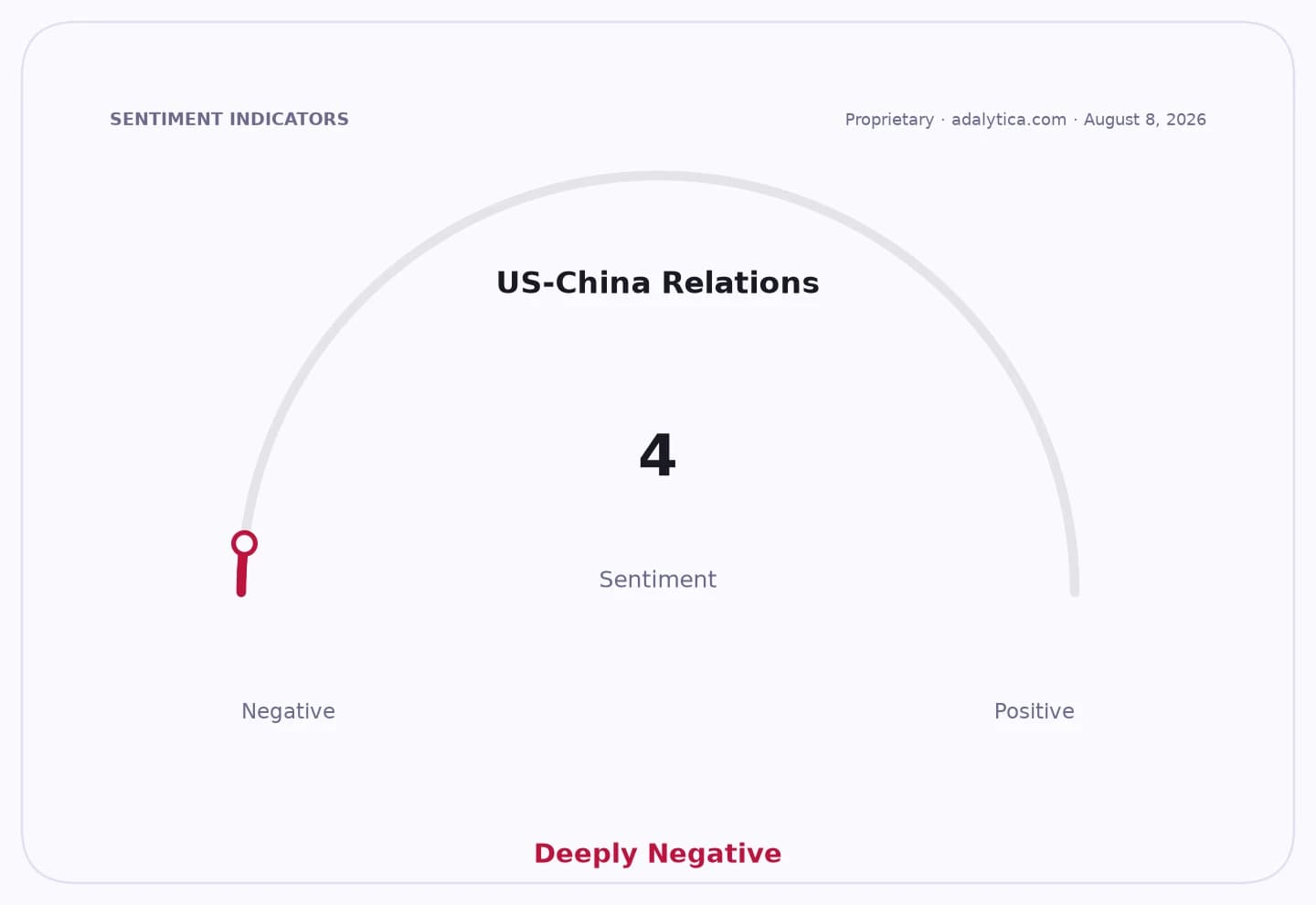
US-China Relations — 30-day sentimentadalytica.com
Explore this data interactively — full history, time series and cross-market comparisons.Open AlphaPulse
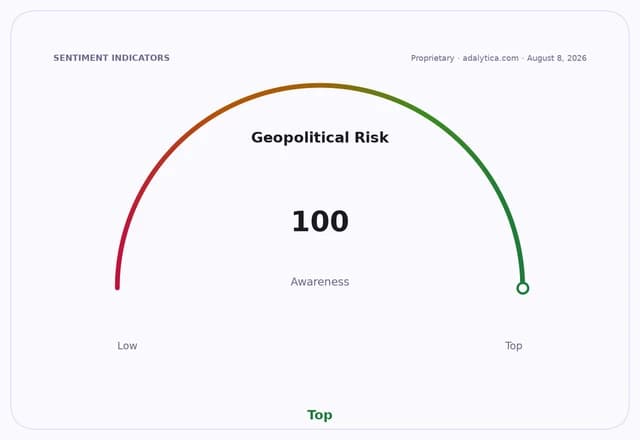
Technical readings reinforce that investors are pricing in uncertainty rather than clarity. TSM’s RSI sits near 57, consistent with a market still willing to buy the AI story on dips, while FXI’s RSI near 66 suggests a rebound that is vulnerable to fresh policy headlines. At the macro level, Adalytica’s US–China Relations Sentiment sits at 4, or Extreme Fear, while its awareness measure is at 100, showing this is now a fully crowded geopolitical theme. That is exactly when policy shocks can move fastest through semis, industrials and travel-sensitive equities.
The bigger narrative is that China is choosing strategic insulation over openness. If restrictions on visitors to Japan broaden, the message will be even clearer: Beijing is prepared to make mobility part of its national-security toolkit. That keeps pressure on multinational firms to regionalize operations, localize sensitive R&D and harden their supply chains.
Investors should treat this as a warning, not a one-day headline. The best positioning is to own the picks-and-shovels of fragmentation — chip equipment, secure infrastructure, defense and domestic technology supply chains — while staying selective on names that rely on frictionless access to China. In a world where talent itself is being treated like controlled technology, the next upside is in the businesses that help countries build around the blockade, not through it.
| Entity | Gains | Losses |
|---|---|---|
| Chinese domestic tech firms | ▲More policy protection | ▼Slower foreign collaboration |
| Chip equipment suppliers | ▲Security-driven capex demand | ▼Export-license risk |
| Taiwan Semiconductor Manufacturing Co. | ▲AI foundry demand | ▼Geopolitical headline risk |
| Global multinationals | ▲None | ▼Higher compliance and travel costs |




