China’s economy is increasingly being propped up by exports and advanced manufacturing rather than a stronger domestic consumer, a shift that matters because it keeps the world’s second-largest economy growing while deepening trade tensions with the U.S.
China Exports Boost Growth as U.S. Demand Slips

That backdrop is important for oil markets and investors because China remains the biggest driver of global demand growth for many commodities, even as its exports to the U.S. have fallen 21% amid persistent tariff friction and softer bilateral demand. OPEC’s read suggests Beijing is leaning more heavily on industrial production to offset a weaker consumption cycle, a pattern that can sustain freight, metals and energy flows without restoring the broad-based demand strength that supports a more durable cyclical upswing.
The export mix also shows how China is trying to rewire its trade engine. Shipments of gasoline jumped 320% in July, car exports have grown so quickly that shipping capacity is becoming a bottleneck, and trade with markets including Russia and Ethiopia is expanding as companies diversify away from the U.S. and other traditional buyers.
For investors, that means China-linked assets can still get support from manufacturing-led growth, but the quality of that growth matters. The iShares China Large-Cap ETF, FXI, rose to $35.68 on Wednesday from $35.06 a day earlier, while the bearish China ETF YANG fell to $27.98 from $29.53, reflecting a modest bid for Chinese equities even as FXI remains below its 200-day moving average of $36.73. RSI readings on both funds point to a market still digesting the growth mix rather than pricing a clean acceleration.
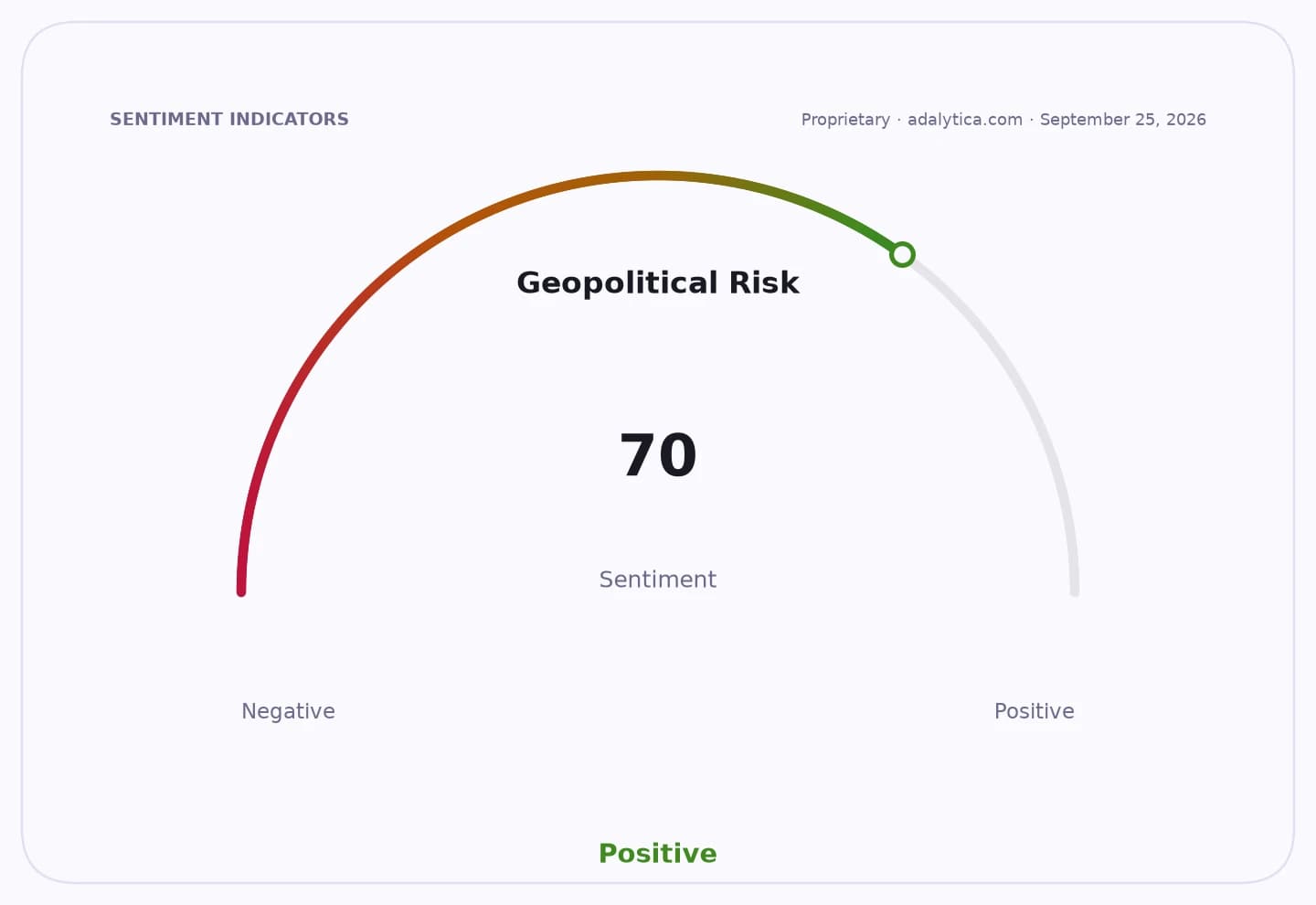
Macro signals are not helping the dollar or risk appetite. Adalytica’s U.S. Dollar Trade Signals gauge shows “Extreme Fear,” while its Global Stability Sentiment also sits in “Extreme Fear,” underscoring how currency and geopolitical volatility are amplifying the market’s focus on China’s export dependence.
The story now is whether China can translate industrial strength into steadier domestic demand without triggering another round of trade retaliation. Upcoming trade data, shipping capacity constraints and any new policy support from Beijing will help determine whether exports can keep carrying growth through the rest of the year.
| Entity | Gains | Losses |
|---|---|---|
| China exporters | ▲Higher overseas sales | ▼Tariff and shipping strain |
| Commodity producers | ▲Steadier China demand | ▼Weak consumer-led demand |
| U.S. exporters | ▲ | ▼Lost China market share |
| FXI holders | ▲Export-led growth support | ▼Growth quality uncertainty |