China’s export model is facing a broader, coordinated challenge as 19 nations backed a G20 proposal targeting “excessive and persistent external surpluses,” underscoring that the response to Chinese industrial overcapacity is no longer confined to Washington.
China exports face broader tariff push
That matters because the new tariff wall around Chinese goods is increasingly being built by economies with very different politics and development levels but a common complaint: Beijing’s manufacturing scale, subsidies and weak market access are distorting trade and pricing rivals out of key sectors. The report cited tariff barriers of 102% in the United States, 75%-125% in India, 80%-125% in Thailand, 60% in Pakistan, 65%-95% in Egypt, a quota-plus-100% arrangement in Canada and a flat 200% levy on Chinese light manufactured goods in Indonesia.
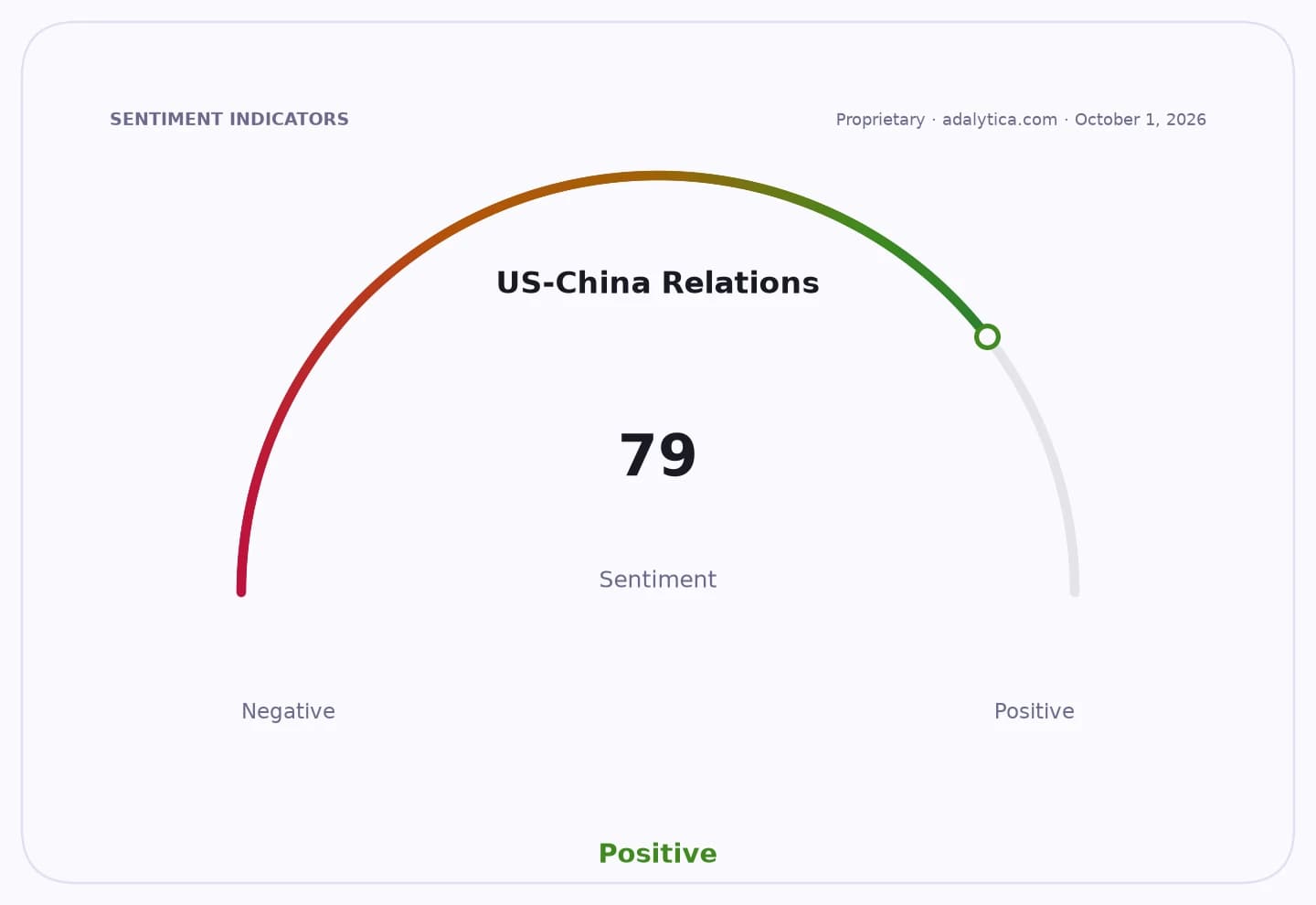
Sentiment IndicatorsⓘProprietary · adalytica.com · October 2, 2026
This is a snapshot — live sentiment, awareness and momentum for 130+ markets update continuously in the dashboard.Open AlphaPulse
For investors, the implication is that China’s trade pressure is becoming structural rather than episodic. If the current wave of tariffs reflects a global policy convergence, not just a US-China dispute, then exporters, Chinese manufacturers and multinationals tied to China’s supply chain face a more durable margin squeeze. The risk is not only higher landed costs for Chinese goods abroad, but also retaliatory friction, redirected trade flows and a tougher operating environment for sectors from autos to consumer electronics and industrials.
The report’s core argument is that China’s manufacturing rise has outpaced the world’s ability — or willingness — to absorb it. It noted that China’s industrial output, which was half that of the United States in 2004, is now double. It also pointed to a protected home market, heavy state support and an IMF view that the renminbi has been undervalued by 20% to 40%, all of which have helped Chinese producers sell cheaply overseas while making foreign goods less competitive in China.
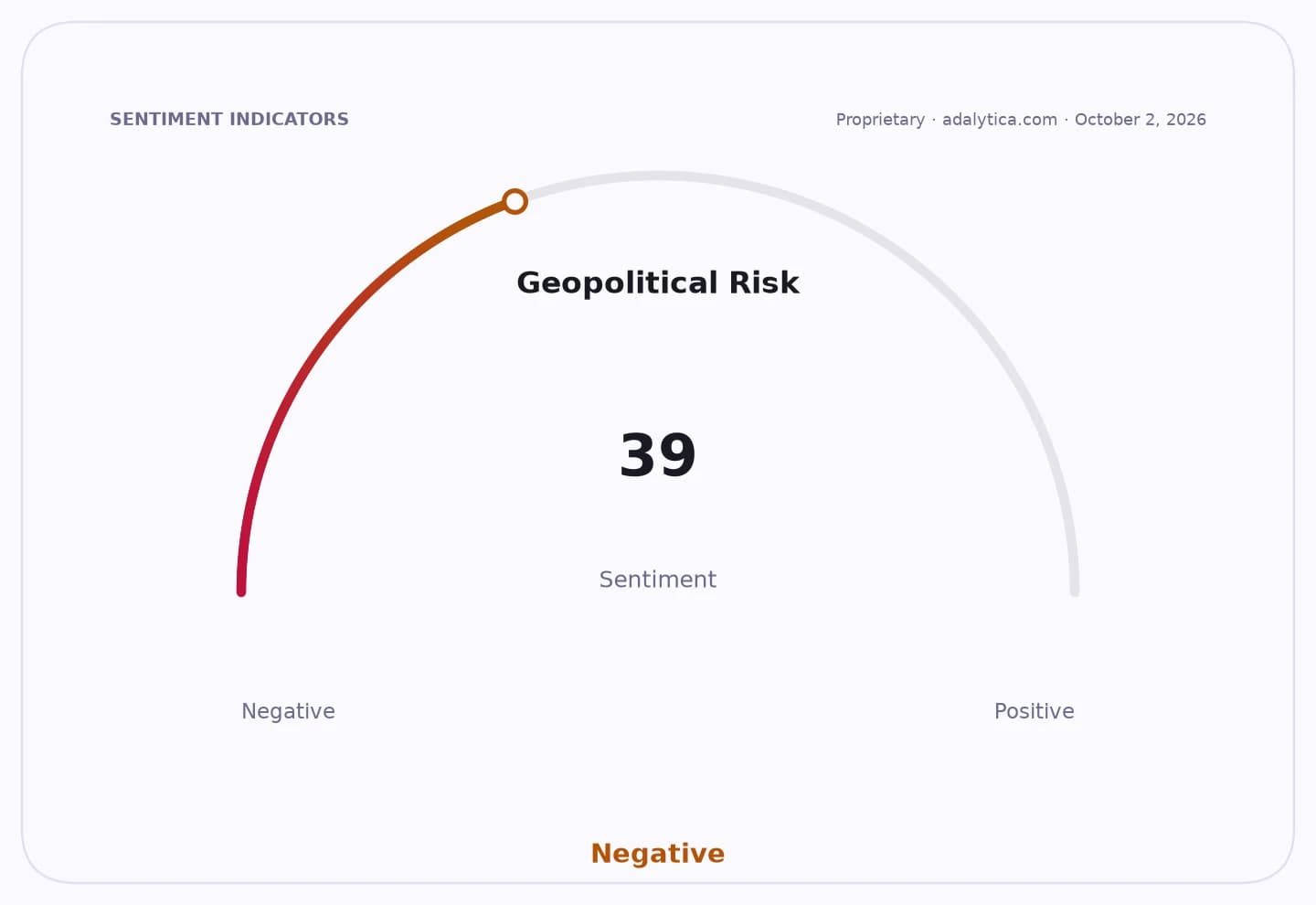
Geopolitical Risk — 30-day sentimentadalytica.com
Explore this data interactively — full history, time series and cross-market comparisons.Open AlphaPulse
That dynamic helps explain why the backlash is spreading beyond the US. The G20 proposal, supported by 19 countries and opposed by China alone, suggests Beijing is becoming more isolated in multilateral trade forums even as it retains leverage through its central role in global manufacturing and supply chains. For policymakers elsewhere, the issue is not whether to tolerate Chinese overcapacity, but how aggressively to defend domestic industry without sparking a wider downturn.
Markets are likely to read this as a warning that trade policy risk is rising again even if Washington and Beijing have recently extended their truce and agreed to cut tariffs on $30 billion of non-sensitive goods. That relief may buy time, but it does not resolve the larger strategic reset in global trade policy. The message for investors is that China exposure can no longer be assessed solely through the lens of US tariffs; the more important question is how many governments decide they now need their own barriers.
In the near term, the next catalysts are further tariff announcements, G20 follow-up, and any signs that Beijing responds with policy easing or new export support. If the tariff response broadens further, pressure will deepen on Chinese equities, offshore manufacturers and countries that rely on low-cost imports, while domestic producers in tariff-raising economies could gain pricing power and market share.
| Entity | Gains | Losses |
|---|---|---|
| Domestic producers outside China | ▲Pricing power | ▼Chinese import competition |
| Chinese exporters | ▲Larger global market access | ▼Higher tariff barriers |
| Tariff-raising governments | ▲Industrial protection | ▼Cheaper consumer imports |
| Multinational supply chains | ▲Short-term diversification opportunities | ▼Margin pressure and uncertainty |