Value stocks are doing exactly what they are supposed to do: outperform when investors stop paying any price for growth. And right now, the clearest signal is not just in stock prices, but in the emotional collapse around China’s growth story, where extreme fear has replaced the chase for momentum and pushed capital back toward cheaper, cash-generating parts of the market.
Fear in China Revives Value Stocks
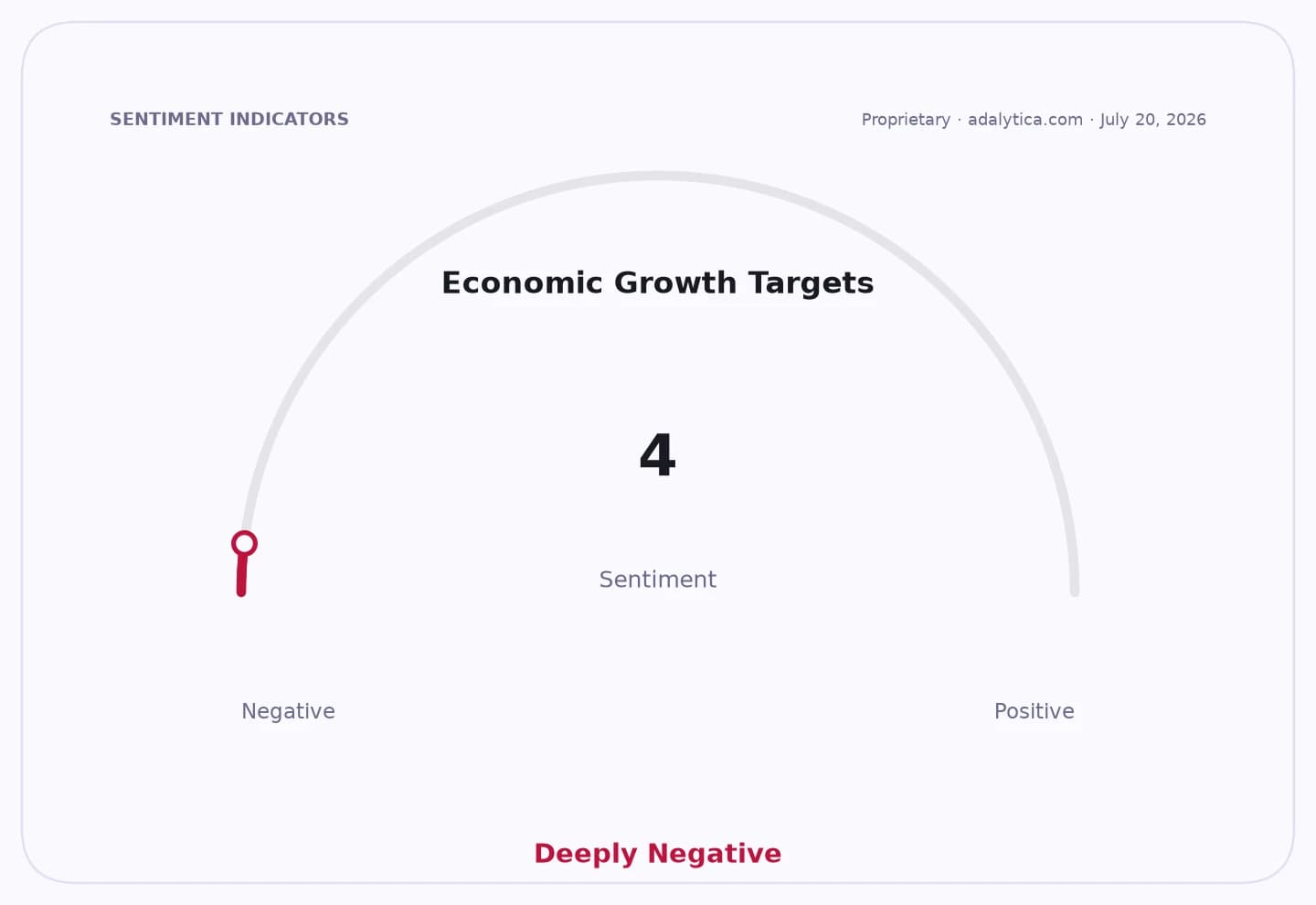
That matters because valuation is no longer a philosophical debate — it is becoming a performance edge again. The Adalytica China Economic Growth Target Sentiment gauge has dropped to 4, an “Extreme Fear” reading, while awareness sits at 98, a sign that the slowdown narrative is fully crowded. When expectations are that depressed, the market usually stops rewarding promises and starts rewarding earnings, dividends and balance-sheet strength. That is the environment value investors have been waiting for.
Sentiment IndicatorsⓘProprietary · adalytica.com · July 20, 2026
This is a snapshot — live sentiment, awareness and momentum for 130+ markets update continuously in the dashboard.Open AlphaPulse
The move is showing up elsewhere too. The S&P 500 trade-signal snapshot is in fear, not euphoria, and that usually favors stocks tied to tangible cash flow over long-duration growth names that depend on multiple expansion. At the same time, conventional technical indicators on DFEMX, a value-oriented emerging-markets fund, show a recent pullback from the mid-40s while price remains well above the 200-day moving average, a pattern that often marks consolidation inside a larger uptrend rather than a breakdown. In plain English: the market has not abandoned value; it is pausing after a strong run.
For investors, the opportunity is in the second-order effects. When growth sentiment cracks, capital rotates toward sectors that look boring until they are suddenly the only thing working: banks, energy, industrials, ports, defense and other hard-asset businesses with pricing power. That rotation can be especially powerful in emerging markets and in countries exposed to China’s policy swings, where valuations are still far below U.S. tech and where even modest multiple re-rating can drive outsized returns.
The market is also underestimating how durable this setup can be. If China growth expectations keep sliding, global investors will keep searching for assets that are simply less fragile. That is good for dividend-heavy stocks, commodity-linked names and value ETFs, while richly priced growth stocks lose one of their biggest supports: the assumption that macro will stay perfectly benign. Even in the U.S., where tech still dominates index performance, a fearful tape tends to narrow leadership and widen the relative appeal of value.
I believe this is where the asymmetric opportunity lies now: not in chasing the fastest-moving momentum trade, but in owning the assets that benefit when the market rediscoveres that cheap is not the same as broken. If the next phase of the cycle is driven by lower expectations, tighter capital discipline and a return to fundamentals, value stocks could keep winning long after the crowd assumes the trade is over.
The actionable takeaway: lean into value exposure now, especially through ETFs and sectors with real cash flow and low expectations. When sentiment is this fearful, the best returns often come from simply owning what the market has ignored.
| Entity | Gains | Losses |
|---|---|---|
| Value stocks | ▲Multiple expansion | ▼Relative neglect |
| Growth stocks | ▲— | ▼Slower rerating |
| China-exposed equities | ▲Cheap-entry rebound | ▼Growth scare |
| Value ETFs | ▲Inflows and rotation | ▼Momentum-heavy funds |