China’s fiscal revenue grew steadily in the first nine months of the year, a sign that activity is holding up well enough to support the state’s budget even as spending remains restrained.
China fiscal revenue rises 5.1% in first nine months
General public budget revenue rose 5.1% from a year earlier to about 17.23 trillion yuan, the finance ministry said, with the pace quickening from the first half of the year. Tax revenue, the main gauge of underlying economic strength, increased 6.1% to about 14.07 trillion yuan, also an improvement on the January-June period. Public budget spending climbed just 1%, to about 21.02 trillion yuan, underscoring Beijing’s preference for preserving fiscal room while keeping support targeted.
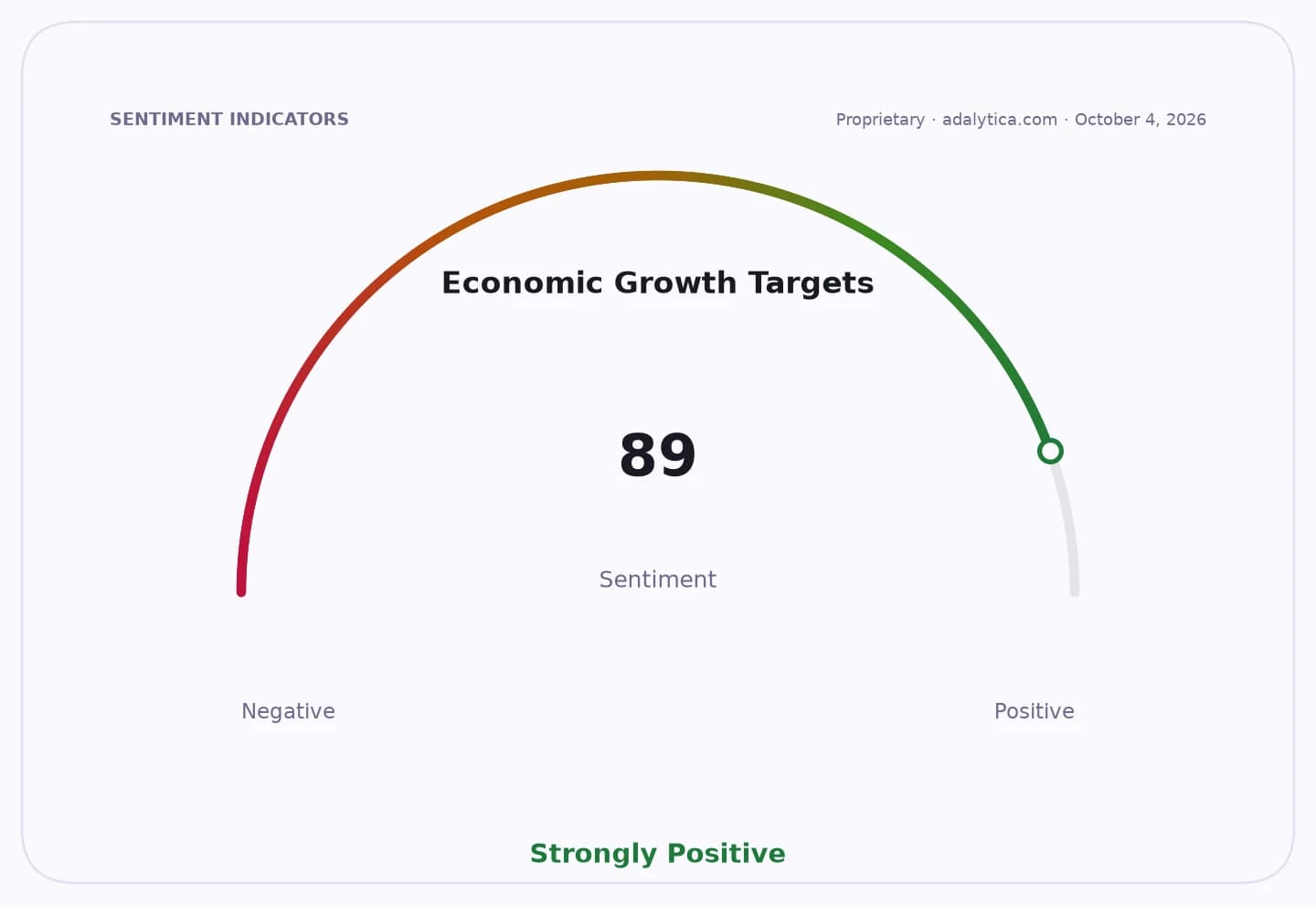
Sentiment Indicators
The numbers matter because China’s fiscal position is one of the clearest windows into the health of domestic demand, corporate earnings and local government financing. Faster tax growth suggests the economy is generating more nominal income, even if the recovery remains uneven across sectors. For policymakers, steadier revenue eases pressure to lean more heavily on debt-financed stimulus at a time when officials are balancing growth support against financial stability.
For investors, the report points to a modestly firmer macro backdrop rather than a broad-based acceleration. Better revenue collection can support infrastructure, social spending and policy continuity, but the sluggish rise in expenditure indicates authorities are not yet unleashing a large fiscal push. That tempers the near-term outlook for Chinese equities and industrial commodities, while keeping focus on whether Beijing will step up support if growth loses momentum later in the year.
The latest data also fits a narrative of improvement without exuberance. Revenue growth accelerated by 0.4 percentage point from the first half, while tax revenue outpaced overall receipts, a combination that tends to be viewed as healthier than one driven mainly by non-tax income or one-off measures. At the same time, spending growth of only 1% suggests local and central authorities are still managing budgets carefully, likely reflecting the need to contain debt risks and preserve policy flexibility.
The key question now is whether this steadier fiscal income can translate into stronger support for domestic demand. If tax revenue keeps improving, Beijing may have more room to fine-tune policy without resorting to a large stimulus package. If growth slows again, the current restraint on spending could become a constraint rather than a virtue.
| Entity | Gains | Losses |
|---|---|---|
| Chinese central government | ▲Better revenue base | ▼Less urgency for big stimulus |
| Local governments | ▲More fiscal headroom | ▼Continued pressure to manage debt |
| Chinese corporates | ▲Healthier demand backdrop | ▼Higher tax collection burden |
| Bondholders | ▲Greater budget stability | ▼Slower fiscal expansion |