Foreign investors left their holdings of China’s onshore yuan bonds unchanged at the end of September, a sign that the market is still struggling to pull in meaningful overseas money even after Beijing has worked to keep its domestic bond market open and liquid.
China onshore yuan bond foreign holdings unchanged

That matters because China needs foreign capital not just for trading flows, but for confidence. Stable external demand helps deepen the yuan bond market, supports the currency over time and makes it easier for global funds to treat China as a core fixed-income allocation rather than a tactical trade. When foreign ownership stalls, it suggests investors are still balancing China’s yield appeal against policy uncertainty, growth worries and the complications of getting in and out of the market.
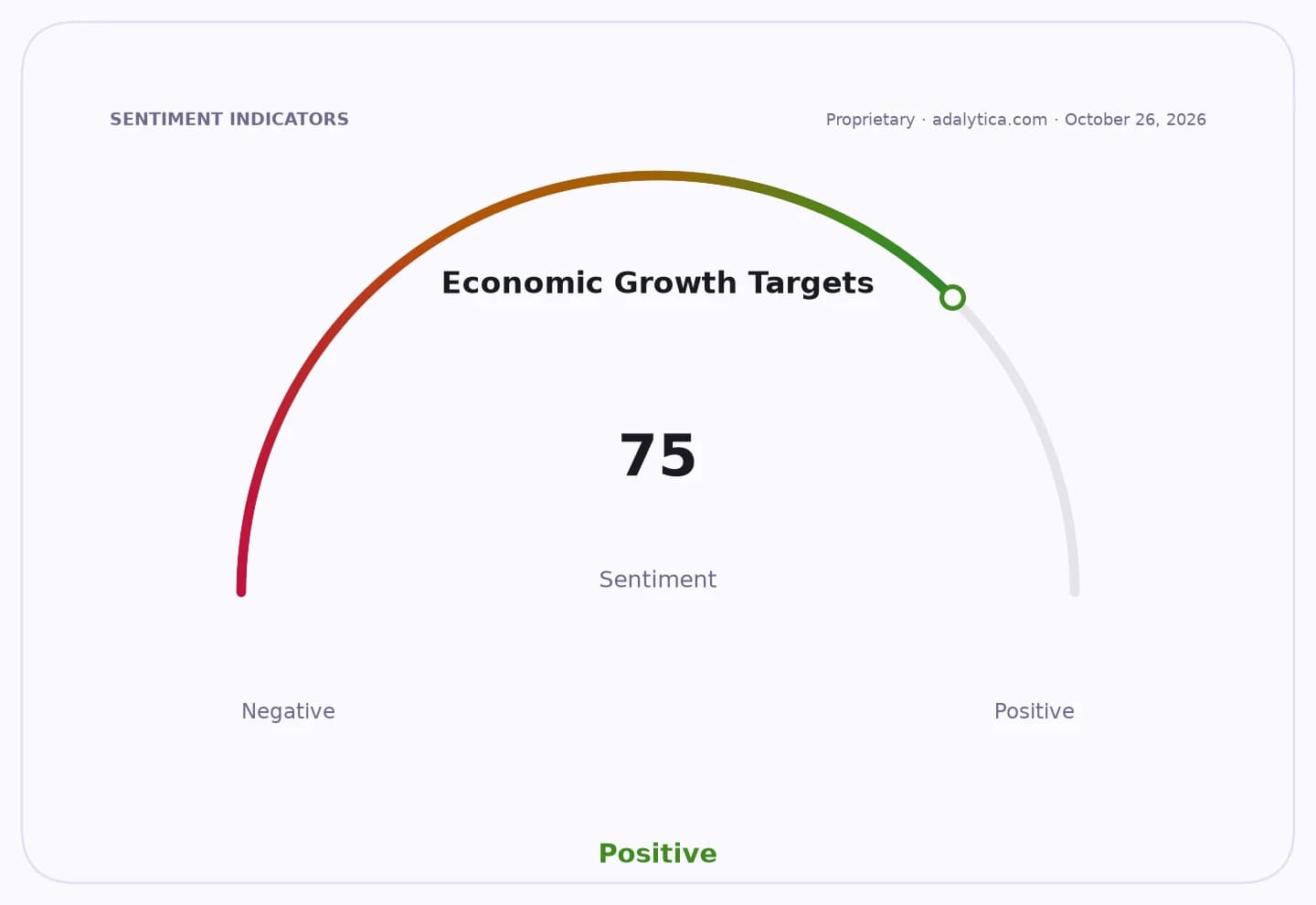
Sentiment IndicatorsⓘProprietary · adalytica.com · October 24, 2026
This is a snapshot — live sentiment, awareness and momentum for 130+ markets update continuously in the dashboard.Open AlphaPulse
For investors, the message is less about a dramatic selloff than about a lack of conviction. China’s bond market remains enormous, and foreign participation has improved over the years, but this latest reading shows that inflows are not yet accelerating. In a world where global money can choose among U.S., European and emerging-market debt, China still has to compete on transparency, hedging access and return prospects.
That hesitation also fits the broader backdrop. China has been issuing large amounts of long-dated government debt to support the economy, including 1.3 trillion yuan of ultra-long-term treasury bonds for 2026, while its U.S. Treasury holdings have fallen to an 18-year low. Those shifts point to a more cautious, selective approach to fixed income on both sides of the Pacific, not a rush into Chinese assets.
For long-term investors, the bigger takeaway is that China’s bond market is still in a credibility-building phase. If growth stabilizes and policy remains supportive, foreign demand could recover. If not, overseas participation may stay range-bound, leaving domestic institutions to carry most of the load. That is worth watching, especially for investors seeking exposure to China through broad equity funds, yuan assets or global bond portfolios.
| Entity | Gains | Losses |
|---|---|---|
| China’s policymakers | ▲Stability in domestic funding | ▼Faster foreign inflows |
| Domestic Chinese borrowers | ▲Reliable local capital base | ▼Lower overseas demand |
| Global bond investors | ▲Waiting for better entry points | ▼Missed diversification opportunities |
| Foreign banks and funds | ▲Optionality in a huge market | ▼Stronger conviction in China allocations |