China’s central bank chief has signaled support for a tougher International Monetary Fund role in policing fiscal risks, a move that matters because it places sovereign debt strains in advanced economies back at the center of the global policy debate just as markets are already jittery about public-finance sustainability.
China backs tougher IMF fiscal risk scrutiny

People’s Bank of China Governor Pan Gongsheng said Beijing supports the IMF in boosting surveillance of fiscal risks in “major advanced economies” and assessing their spillover effects, according to comments made at the IMF’s International Monetary and Financial Committee meeting during the annual IMF-World Bank gatherings in Bangkok.
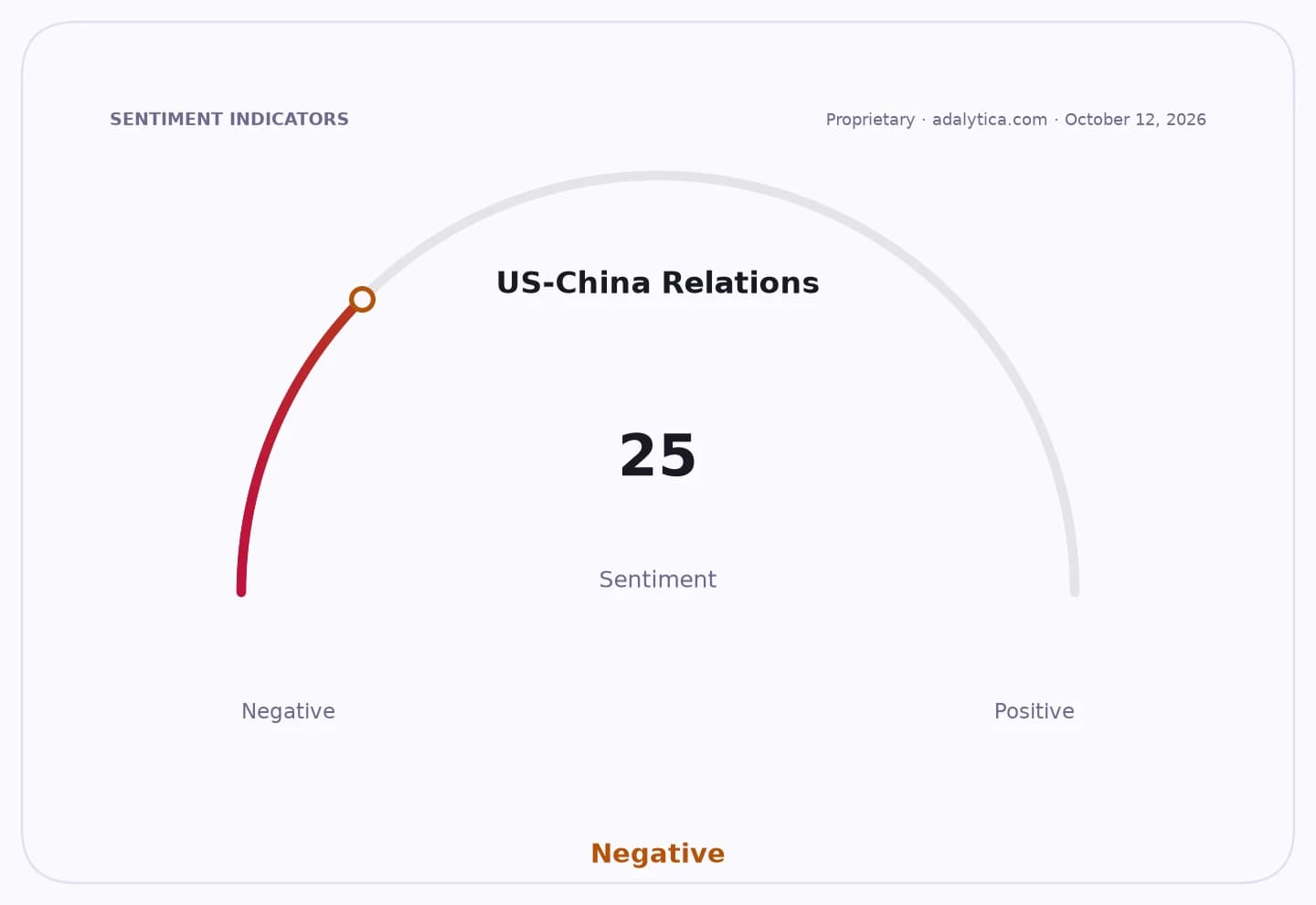
Sentiment IndicatorsⓘProprietary · adalytica.com · October 21, 2026
This is a snapshot — live sentiment, awareness and momentum for 130+ markets update continuously in the dashboard.Open AlphaPulse
The message is economically significant for two reasons. First, it underscores how large and persistent deficits in the U.S., Europe and other rich economies have become a global macro issue rather than a domestic one. Higher borrowing needs in reserve-currency markets can push up benchmark yields, tighten global financial conditions and amplify volatility across equities, credit and emerging markets. Second, it reflects China’s effort to position itself as a defender of multilateral oversight at a time when global institutions are under pressure to scrutinize the fiscal trajectory of the world’s biggest economies more openly.
For investors, the implication is that sovereign risk is not fading back into the background after years of crisis-era support and inflation shocks. Bond markets have already been forcing a repricing of duration risk as governments finance heavier interest bills, defense spending and slower growth. If the IMF steps up its surveillance, that could sharpen focus on debt sustainability in the U.S. and Europe, potentially adding pressure to long-end yields and reinforcing the case for a higher-for-longer fiscal premium embedded in asset prices.
The remarks also carry geopolitical weight. Beijing has frequently criticized Western fiscal and monetary policy in the context of spillover effects on the rest of the world. By backing closer IMF scrutiny, China is aligning itself with a broader call for discipline that resonates with emerging markets, many of which bear the brunt of dollar strength, capital outflows and imported financing costs when advanced-economy borrowing surges.
The market backdrop remains fragile. Adalytica’s Global Stability Sentiment gauge is in “Fear” territory, while its China policy-direction snapshot shows only neutral sentiment and extreme-fear awareness, suggesting investors remain alert to policy and macro shocks. Chinese equity proxies have also weakened in recent sessions, with the FXI and MCHI ETFs both trading below their 50-day and 200-day moving averages, a sign of cautious positioning toward China-linked assets despite periodic policy support hopes.
The bull case for Pan’s stance is that stronger IMF surveillance could improve transparency and help slow the buildup of systemic fiscal risk before it becomes a crisis. The bear case is that Washington and other major capitals are unlikely to welcome closer external scrutiny of their budgets, limiting the practical impact of the proposal even if it gains rhetorical backing.
What investors should watch next is whether the IMF turns that language into sharper country assessments, especially around the fiscal outlooks of the U.S., France, Japan and the U.K. Any sign that the Fund is willing to confront debt trajectories in advanced economies more directly could matter for sovereign spreads, currency volatility and the pricing of global growth risk into year-end.
| Entity | Gains | Losses |
|---|---|---|
| IMF | ▲Stronger relevance | ▼Political pushback |
| China | ▲Multilateral credibility | ▼Little direct market lift |
| Advanced economies | ▲Early warning on debt risks | ▼Heavier scrutiny of deficits |
| Bond investors | ▲Clearer risk signals | ▼Higher fiscal premium |