Chinese consumers spent less on each domestic trip during Golden Week, a sign that Beijing’s efforts to revive household demand are still running into weak confidence even as travel volumes remained high.
China Golden Week spending falls as travel stays strong
Average spending per domestic trip fell 1.9% to 893.92 yuan ($133.51) during the seven-day National Day holiday, the lowest since 2022 and a four-year low excluding the pandemic shutdown period. The bigger issue for policymakers and investors is that the holiday, normally one of the clearest readouts on consumer appetite, showed Chinese households were willing to travel more, but still reluctant to spend more at home.
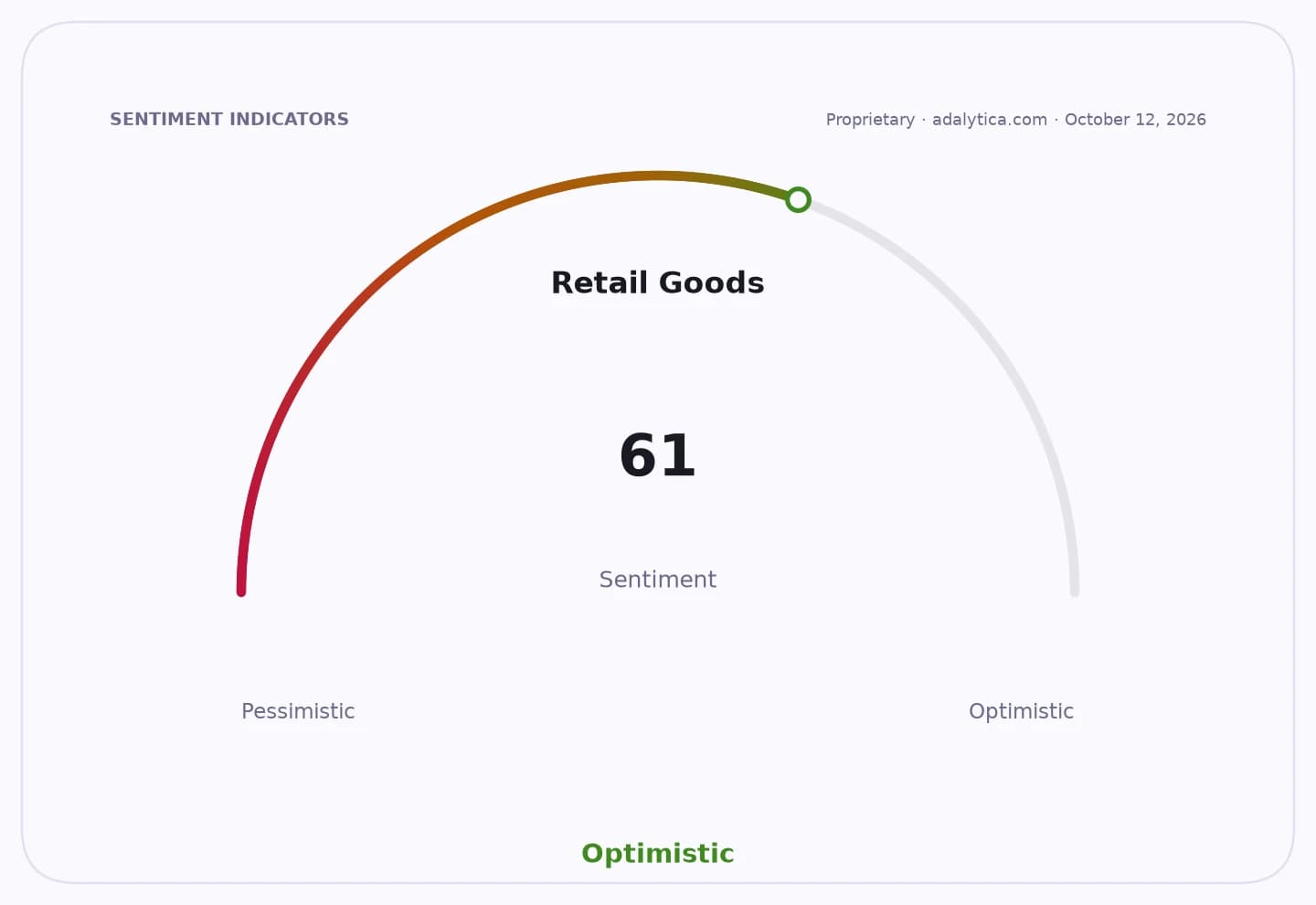
Sentiment IndicatorsⓘProprietary · adalytica.com · October 12, 2026
This is a snapshot — live sentiment, awareness and momentum for 130+ markets update continuously in the dashboard.Open AlphaPulse
That matters because China’s recovery has increasingly depended on consumption rather than credit-fueled investment, yet households are still constrained by the property slump, sluggish wage growth and a soft labor market. The holiday period was supposed to provide a clean test of whether pent-up travel demand could spill into broader retail spending. Instead, the mix suggested consumers are choosing experiences, but doing so carefully and often outside the domestic economy.
A longer-than-usual break helped push more of that spending offshore. The National Day holiday was one day shorter than last year’s, but it followed the Mid-Autumn Festival, effectively creating as much as a 13-day travel window. Trip.com said more than half of outbound flight bookings were for departures before Oct. 1, with average trips longer than nine days. Bookings for foreign hotel stays of at least seven nights jumped 123% from a year earlier, while multidestination itineraries rose 84%.
Consumer Spending vs TCOMadalytica.com
Explore this data interactively — full history, time series and cross-market comparisons.Open AlphaPulse
That shift is economically significant because it diverts spending from domestic hotels, restaurants and attractions just as Beijing is trying to bolster internal demand. It also suggests Chinese consumers still have an appetite for discretionary travel, but are spending selectively and getting better value abroad. Dragon Trail International said 54% of survey respondents planned overseas trips over the holiday, up from 35% a year earlier, though only 5% expected to stay in luxury hotels.
Domestic travel data reinforced the same pattern. Jefferies analysts said average revenue per available room slipped 0.5% in the first five days of the holiday, while average daily room rates fell about 2%, pointing to restrained pricing power in China’s hotel sector. The film market told a similar story: National Day box-office revenue came in at 1.16 billion yuan, down 36.6% year on year and the weakest holiday performance since 2014, according to Maoyan.
For investors, the read-through is mixed. Outbound travel platforms and international airlines stand to benefit from a structural reopening in cross-border mobility, while domestic tourism operators, hotels and consumer-facing names may keep seeing demand leakage into overseas trips. Booking demand is still there, but the willingness to spend appears to be migrating toward value-seeking travel rather than broad-based consumption.
Shares of travel-related names underscored that divergence. Trip.com’s U.S.-listed stock has held above its 50-day moving average but remains below its 200-day average, while Booking Holdings has also been under pressure recently, reflecting a choppy backdrop for travel equities more broadly. By contrast, cruise operator Carnival has outperformed on signs that leisure demand remains resilient, though that strength has not translated into a clear rebound in China-linked domestic spending.
The broader narrative is that Chinese households are not retreating from consumption so much as reallocating it. They are still willing to travel farther, book longer and cross borders, but the domestic economy is not yet capturing the full benefit of that spending. Unless income expectations and employment confidence improve, Golden Week may keep looking less like a nationwide spending boom and more like a reminder that China’s consumers remain cautious, even when they are on the move.
| Entity | Gains | Losses |
|---|---|---|
| Overseas airlines and travel agents | ▲More outbound bookings | ▼Domestic tourism leakage |
| Trip.com and cross-border platforms | ▲Longer trip volumes | ▼Lower per-trip domestic spend |
| Chinese domestic hotels and cinemas | ▲Higher holiday footfall | ▼Weak pricing and ticket sales |
| Beijing policymakers | ▲Clearer demand signal | ▼Evidence of fragile consumer confidence |