China has cut hidden local government debt by nearly half in two years, a sharp cleanup that reduces refinancing risk for municipalities and gives Beijing more room to manage growth without a fresh credit shock.
China cuts hidden local government debt
That matters because local government financing vehicles have long been one of the biggest fault lines in China’s financial system. By swapping off-balance-sheet borrowing for more transparent bonds, Beijing is not eliminating debt so much as changing its form — lowering near-term default risk, extending maturities and making obligations easier to monitor. For investors, that is a big deal: it trims the probability of a disorderly funding squeeze while reinforcing the view that the state will keep stress contained rather than allow a cascading property-and-credit unwind.
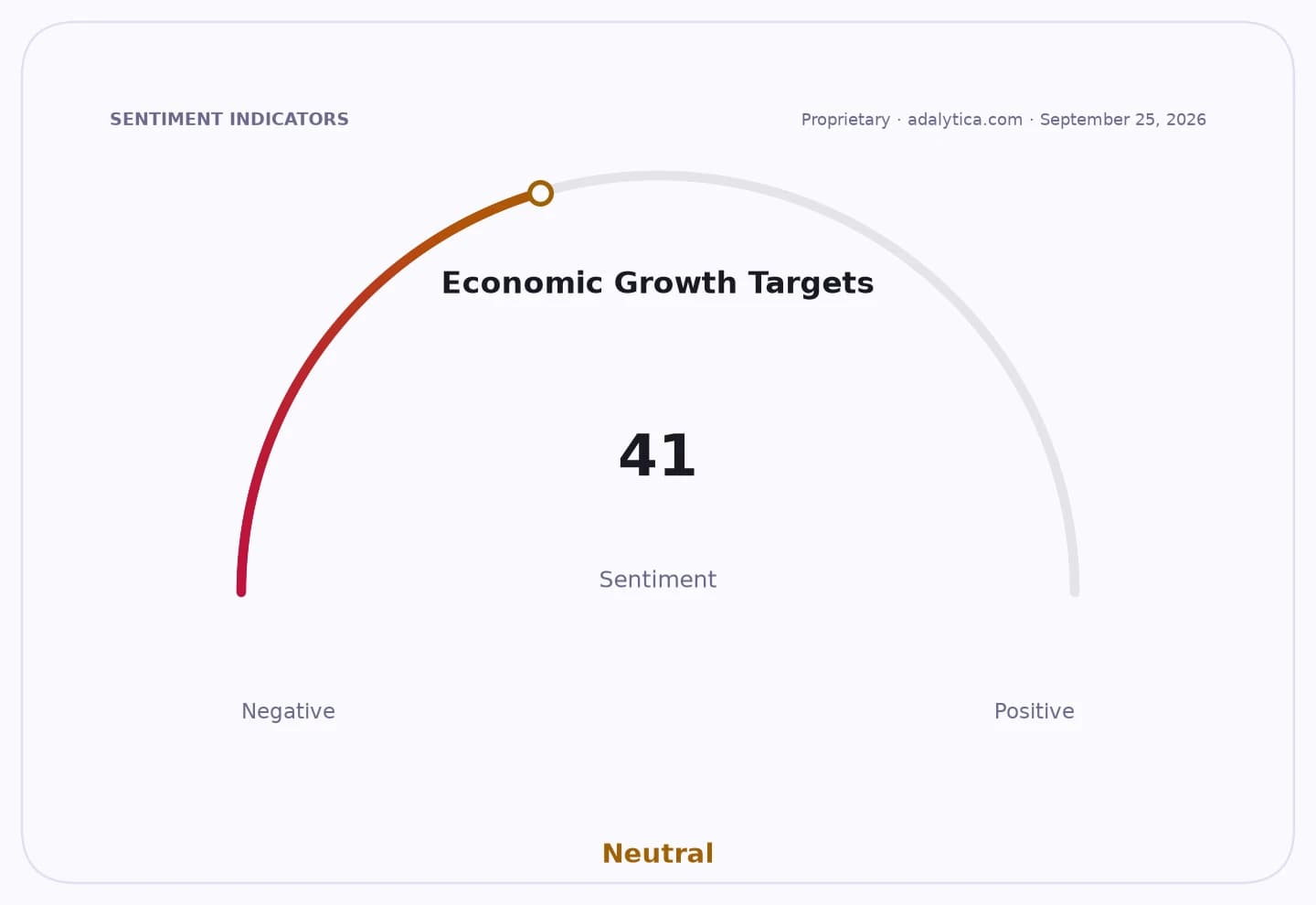
Sentiment IndicatorsⓘProprietary · adalytica.com · September 1, 2026
This is a snapshot — live sentiment, awareness and momentum for 130+ markets update continuously in the dashboard.Open AlphaPulse

The move also has broader macro significance. China is trying to support growth while preventing a debt spiral, and local governments sit at the center of that balancing act. Cleaner balance sheets can help preserve spending on infrastructure and public services, while reducing the drag from opaque liabilities that have weighed on bank confidence, land-sale revenues and private-sector lending appetite. In practical terms, the reduction in hidden debt suggests Beijing is gaining traction in one of its most politically sensitive reforms: converting risky shadow liabilities into instruments the market can price and the state can oversee.
For markets, the signal is mixed but ultimately constructive. The cleanup lowers tail risk for Chinese financial institutions and helps support sentiment toward onshore credit, policy banks and select infrastructure-linked borrowers. It also helps explain why China-tracking equities can stabilize even when headline growth remains uneven: the market is not pricing a boom, but a slower, more managed deleveraging path. FXI, the large-cap China ETF, has been grinding in a narrow range near $35 after recovering from earlier weakness, while the inverse China ETF YANG has also been volatile — a reminder that traders still see policy support as a counterweight to cyclical weakness rather than a clean growth inflection.
The larger narrative is that China is choosing containment over confession. Hidden debt is being brought into the open, but not at a pace that forces an immediate balance-sheet reckoning. That reduces the odds of a hard landing and improves the odds of a prolonged, policy-managed adjustment. Investors should treat that as a call to favor the most insulated beneficiaries — major state-owned banks, policy-linked infrastructure plays and companies tied to central-government stimulus — while remaining selective on regions and sectors still dependent on local fiscal firepower.
The next catalyst is whether Beijing keeps converting more off-balance-sheet obligations into formal bonds without reigniting borrowing growth. If it can do that, the cleanup becomes not just a one-off accounting fix but a durable support for Chinese assets and a warning to global investors not to underestimate the state’s capacity to backstop the system.
| Entity | Gains | Losses |
|---|---|---|
| Beijing | ▲More control over risk | ▼Less room for complacency |
| Local governments | ▲Lower refinancing pressure | ▼Less borrowing opacity |
| Chinese banks | ▲Cleaner credit outlook | ▼More exposure to formalized debt |
| China bears | ▲Harder landing less likely | ▼Tail-risk trade weakens |