China’s household debt problems are turning from a private strain into a macroeconomic drag, with record payment defaults threatening to blunt Beijing’s efforts to engineer a broad recovery in consumption and credit demand.
China Household Defaults Weigh on Recovery

The significance is bigger than a single bad data point. Household defaults are a late-cycle warning that the economy’s most important transmission channel — the consumer — is still under pressure even as policymakers try to stabilize growth. When households fall behind on payments, lenders tighten, credit creation slows and spending weakens, making it harder for stimulus to gain traction.
Sentiment IndicatorsⓘProprietary · adalytica.com · July 16, 2026
This is a snapshot — live sentiment, awareness and momentum for 130+ markets update continuously in the dashboard.Open AlphaPulse
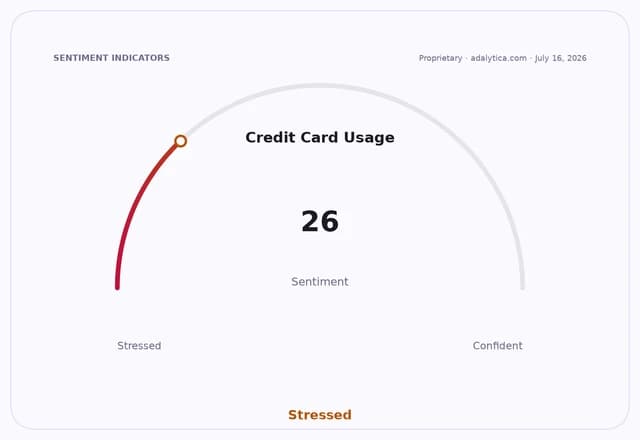
That is why the latest market signals matter. Adalytica’s household debt stress gauge remains elevated even after a sharp one-day pullback, suggesting the underlying strain has not disappeared. At the same time, its credit card usage sentiment has slipped back into “fear,” a sign that borrowers are becoming more cautious about revolving debt. For Beijing, that combination is awkward: it points to a consumer base that is neither confident enough to borrow nor healthy enough to accelerate demand.
The problem also spills beyond households. Chinese banks and non-bank lenders face a tougher collection environment, higher provisions and slower asset growth if defaults keep rising. That can weigh on margins at a time when the financial system is already being asked to support property repair, local government refinancing and the broader industrial economy. If delinquency pressure persists, lenders may ration credit further, especially to lower-income borrowers and smaller merchants, reinforcing the downturn in domestic demand.
Credit Card Usage — 30-day sentimentadalytica.com
Explore this data interactively — full history, time series and cross-market comparisons.Open AlphaPulse
Investors have been watching Chinese equities for signs that policy support is translating into better earnings and stronger consumption. But the recent price action in Hong Kong-listed China funds has been mixed, with the FXI and MCHI ETFs still below their longer-term averages even after short rebounds. That suggests markets remain skeptical that the recovery story is durable. The rally in YANG, a bearish China ETF, earlier in the period underscored how quickly investors still move toward defensive China positioning when growth disappoints.
The stakes go beyond retail credit. Household defaults usually track broader weakness in employment, wages and confidence, and they can be a symptom of stress in sectors that have already been under pressure, including property-linked lending and consumer finance. Beijing can lean on targeted rate cuts, bank guidance and consumption support, but those tools work best when households believe their income outlook is improving. If that belief is missing, policy can slow the damage but not fully reverse it.
For investors, the key question is whether the default wave is a temporary post-pandemic hangover or evidence that China’s growth model is still struggling to pivot from investment to consumption. If defaults keep climbing, the more likely outcome is slower credit growth, softer retail demand and renewed pressure on financials, insurers and consumer lenders. If they stabilize, Beijing gets more room to push household spending and rebuild confidence. For now, the balance of evidence suggests the recovery is still being held hostage by the household balance sheet.
| Entity | Gains | Losses |
|---|---|---|
| Beijing | ▲More urgency for stimulus | ▼Confidence in recovery narrative |
| Banks and consumer lenders | ▲None | ▼Higher defaults and provisions |
| Cautious consumers | ▲Lower borrowing pressure | ▼Weak income outlook |
| China equity bulls | ▲Policy support if defaults stabilize | ▼ETF upside if stress deepens |




