China’s humanoid robot startups are moving faster than Japan’s incumbents, and the gap was on display at back-to-back exhibitions in Chiba that underscore where the next industrial competition is already forming.
China Humanoid Robot Startups Gain on Japan
The most important takeaway from CEATEC 2026 and Japan Mobility Show Bizweek 2026 is not the spectacle of dancing robots. It is that China’s emerging humanoid players are already showing more polished products, clearer use cases and stronger commercial momentum than Japanese rivals, even in Japan’s own showcase. That matters because humanoid robotics is shifting from research novelty to a capital-intensive race for data, software and manufacturing contracts — and the first movers will shape who captures the supply chain, the services layer and the export market.
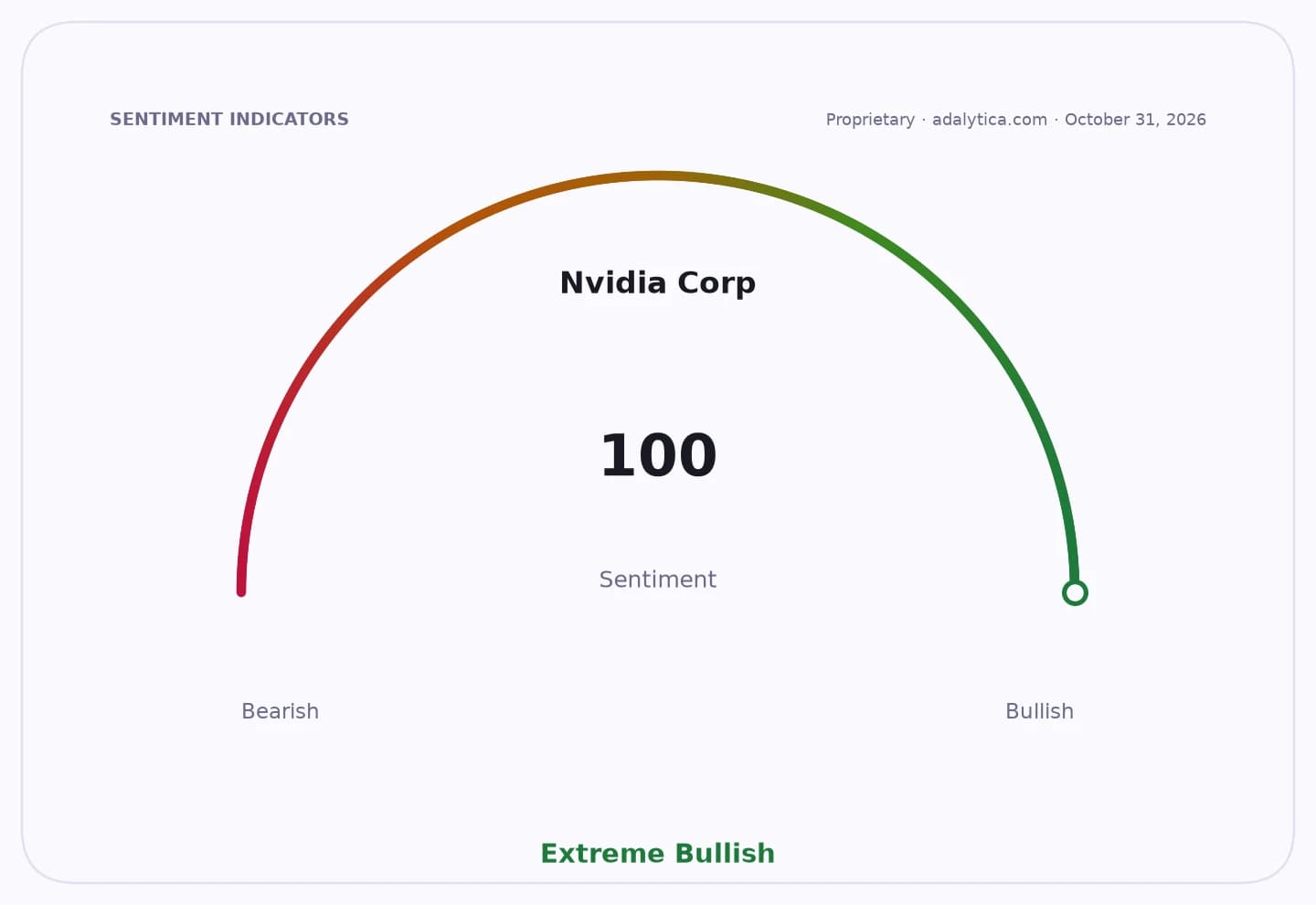
Sentiment Indicators
The crowd magnet was LimX Dynamics, a Shenzhen startup founded in 2022, which drew sustained attention with a lineup of AI-enabled two-legged robots. Its entertainment robot “Luna” performed extended dances, while its industrial model “Ori” was pitched for factory use with sensors and an agent OS that lets it move autonomously. The company also showed a multimodal robot, TRON, with interchangeable “feet” for different tasks — a reminder that the winners will not just build humanoid hardware, but adaptable platforms that can be retrained and redeployed.
That is the economic story the market should be pricing in now. Humanoid robots are becoming a test case for industrial AI, where success depends less on mechanical novelty and more on accumulated training data, cloud infrastructure and recurring software revenue. Once a robot platform is embedded in a factory workflow, the moat widens: data improves performance, performance lowers deployment friction, and deployment creates more data. That flywheel is exactly why the sector could become one of the most asymmetric opportunities in AI infrastructure over the next decade.
Japan is not standing still, but its pitch looked more cautious. Highlanders, a Tokyo University-born startup, demonstrated its “N” humanoid robot at the AWS booth with NVIDIA’s Jetson Thor module, signaling the direction of travel toward cloud-connected, GPU-heavy robotics. The company said development is expensive and that robots must be priced near Chinese levels to sell, an admission that margins may be thin even as the market expands. It is already pursuing automotive manufacturing, and it recently announced a collaboration with Mitsubishi Motors aimed at commercialization.
That points to the most investable second-order effect: robotics is moving from demo floors into industrial capex budgets, especially in autos, logistics and other labor-constrained manufacturing lines. Toyota and Honda also showcased robots, but their demonstrations felt more symbolic than disruptive. The real competition is between startups that can turn AI into repeatable factory labor and the chip, cloud and component suppliers enabling them.
For investors, that makes the picks-and-shovels trade more compelling than betting on a single robot brand. The likely beneficiaries are Nvidia and other AI compute suppliers, cloud operators such as AWS, and robotics ETFs like BOTZ, ROBO and ARKQ that give broad exposure to the automation stack. The risk, however, is that hardware commoditization arrives faster than expected, squeezing standalone robot makers while enriching the ecosystem around them.
The broader implication is that China’s robotics push is no longer confined to consumer electronics or factories at home; it is becoming an exportable industrial platform, and Japan is now playing catch-up on its own turf. If this competition keeps accelerating, the next catalyst will not be a flashy exhibition demo but the first wave of real deployment contracts. That is where the valuation gap will start to matter — and where the market may still be underestimating the scale of the opportunity.
| Entity | Gains | Losses |
|---|---|---|
| LimX Dynamics and Chinese peers | ▲Export momentum, investor attention | ▼Japanese rivals’ share of mind |
| Japanese startups and incumbents | ▲Urgency to commercialize | ▼First-mover advantage |
| Nvidia, AWS, robotics supply chain | ▲AI compute and cloud demand | ▼Low-margin robot OEMs |
| BOTZ, ROBO, ARKQ holders | ▲Broader robotics exposure | ▼Stock-picking risk on single names |