China’s import expo is doing more than showcasing foreign brands — it is exposing how Asia-Pacific companies are weaving China deeper into their manufacturing, innovation and distribution chains, a shift that could reshape regional trade flows and who captures the next wave of industrial growth.
China import expo deepens Asia-Pacific supply chains

That matters because the most important economic story here is not simply that firms want access to China’s consumer market. It is that they increasingly want China’s factories, engineers, logistics networks and digital commerce platforms as part of their own operating model. In other words, the China International Import Expo is becoming a live demonstration of industrial interdependence, at a time when global supply chains are being redrawn and investors are hunting for the businesses best positioned to benefit from that realignment.
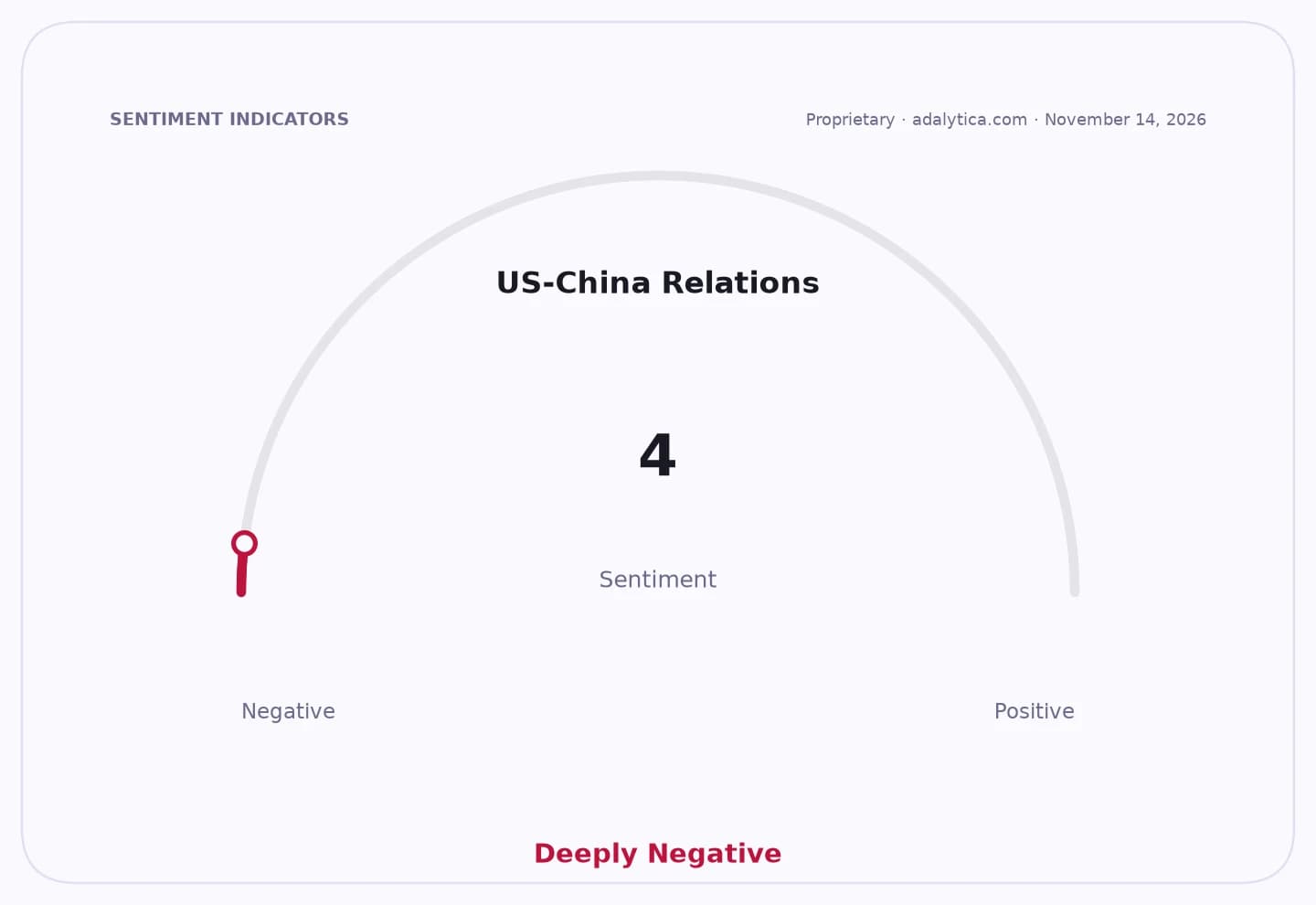
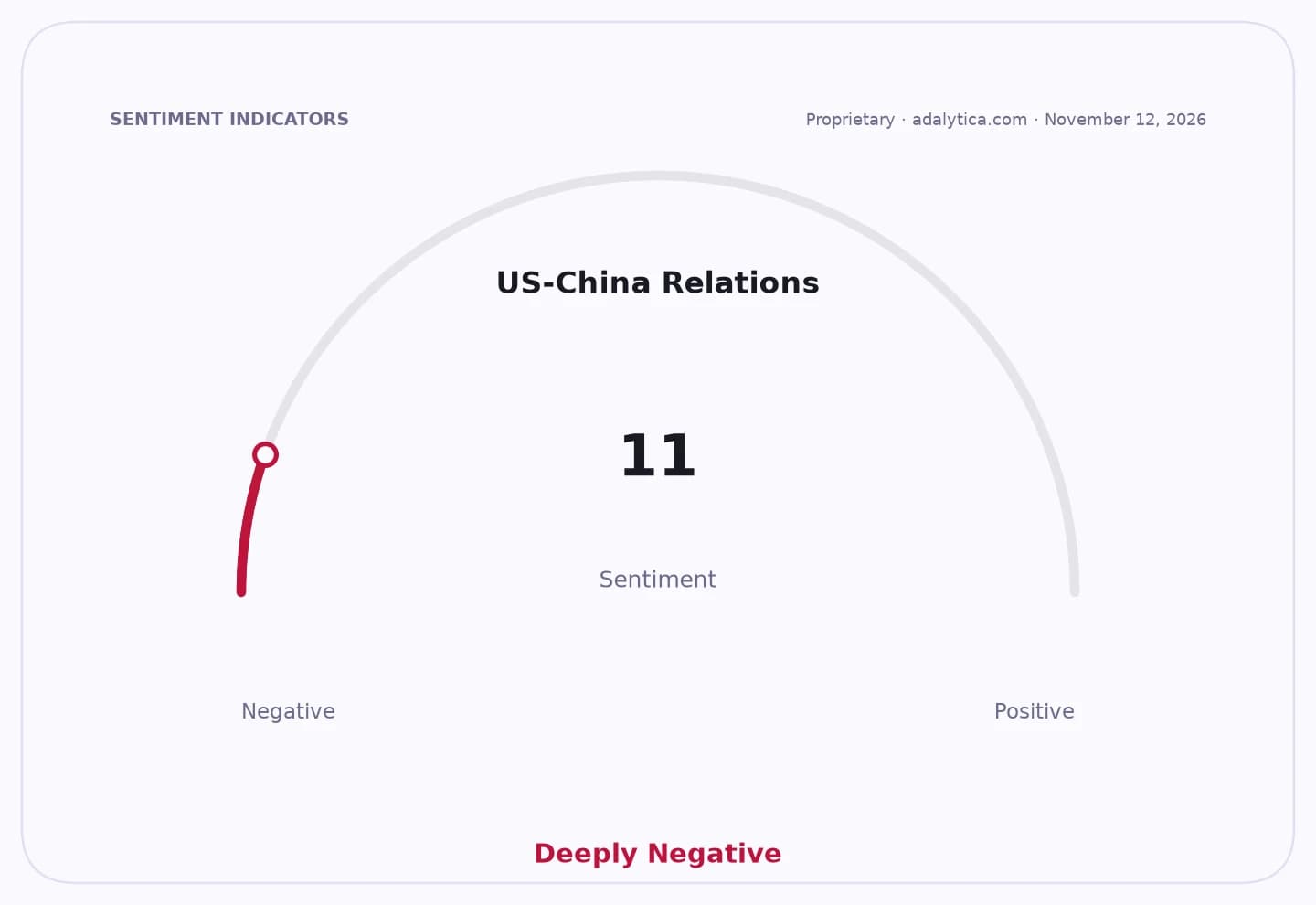
Sentiment Indicators
The numbers show why the expo carries weight. Since its launch in 2018, the event has generated more than $580 billion in intended deals across its first eight editions, with over 3,400 new products, technologies and services debuting there. This year’s participation from APEC economies is especially notable: Canadian and New Zealand exhibitors took their largest exhibition areas on record, Australian companies expanded space by 25%, and U.S. exhibitors held the biggest footprint for the eighth straight year. That is a sign that even amid geopolitics, global firms still see China as too large and too central to ignore.
The bigger takeaway for markets is that the value chain is moving beyond simple import-and-sell relationships. New Zealand’s Pacific Alpacas said its CIIE journey led it from a small booth to shipping 3.3 tonnes of alpaca fiber to China for processing in 2022, then into partnerships with Chinese textile and marketing firms and, later, e-commerce platforms. That is the kind of second-order opportunity investors should care about: not just the exporter, but the Chinese manufacturer, logistics provider, and digital commerce player that captures recurring business once a product gains traction.
Japan’s Panasonic is making the same point from the other side of the ledger. The company says it is shifting from “China for China” to “China for Global,” using a network of more than 3,000 suppliers in China to support research, development and worldwide supply-chain capabilities. That is a powerful clue for investors looking at the next phase of industrial upgrading in China: the payoff may not come only from domestic demand, but from multinational firms using China as an innovation and export hub.
Thailand’s TCP Group, the maker of Red Bull, shows how this model is spreading across consumer and industrial sectors. Its new vitamin electrolyte drink for China was developed with local teams and supply-chain partners, while its production bases in Sichuan and Guangxi have deepened its integration into the country’s supply system. Malaysian agricultural sellers are also using the expo to connect with Chinese buyers for tropical fruits, reinforcing the same pattern — market access is evolving into channel-building, brand-building and manufacturing collaboration.
The macro backdrop makes the message even more important. APEC economies account for 3 billion people and 61.6% of global real GDP, according to official APEC statistics. With China set to host the APEC Economic Leaders’ Meeting in Shenzhen later this month, the policy signal is clear: openness, innovation and cooperation remain the preferred framework, even as global trade turns more fragmented elsewhere.
For investors, the implication is straightforward. The market underestimates how much value can be created by the companies sitting in the middle of these regional supply chains — manufacturers, packaging firms, logistics operators, cross-border e-commerce platforms, and industrial suppliers tied to China’s consumer and export ecosystems. Exchange-traded funds such as FXI, EWY and AAXJ may capture different slices of that theme, but the real opportunity lies in the underlying beneficiaries of deeper Asia-Pacific industrial cooperation.
Adalytica’s US-China Relations Sentiment is flashing “Extreme Fear,” even as awareness remains high, a setup that often leaves investors overfocused on geopolitical friction and underexposed to commercial integration. That disconnect is the opportunity. The expo is not just a trade fair; it is evidence that cross-border industrial cooperation is still expanding, and that the companies building around China’s manufacturing base may be the ones with the most asymmetric upside over the next several years.
| Entity | Gains | Losses |
|---|---|---|
| China manufacturers | ▲More regional production partnerships | ▼Pure import dependence |
| APEC exporters | ▲Better access to China’s market | ▼Firms outside regional supply chains |
| Logistics and e-commerce platforms | ▲More cross-border volume | ▼Traditional one-off distributors |
| Geopolitical skeptics | ▲— | ▼Missed industrial integration upside |