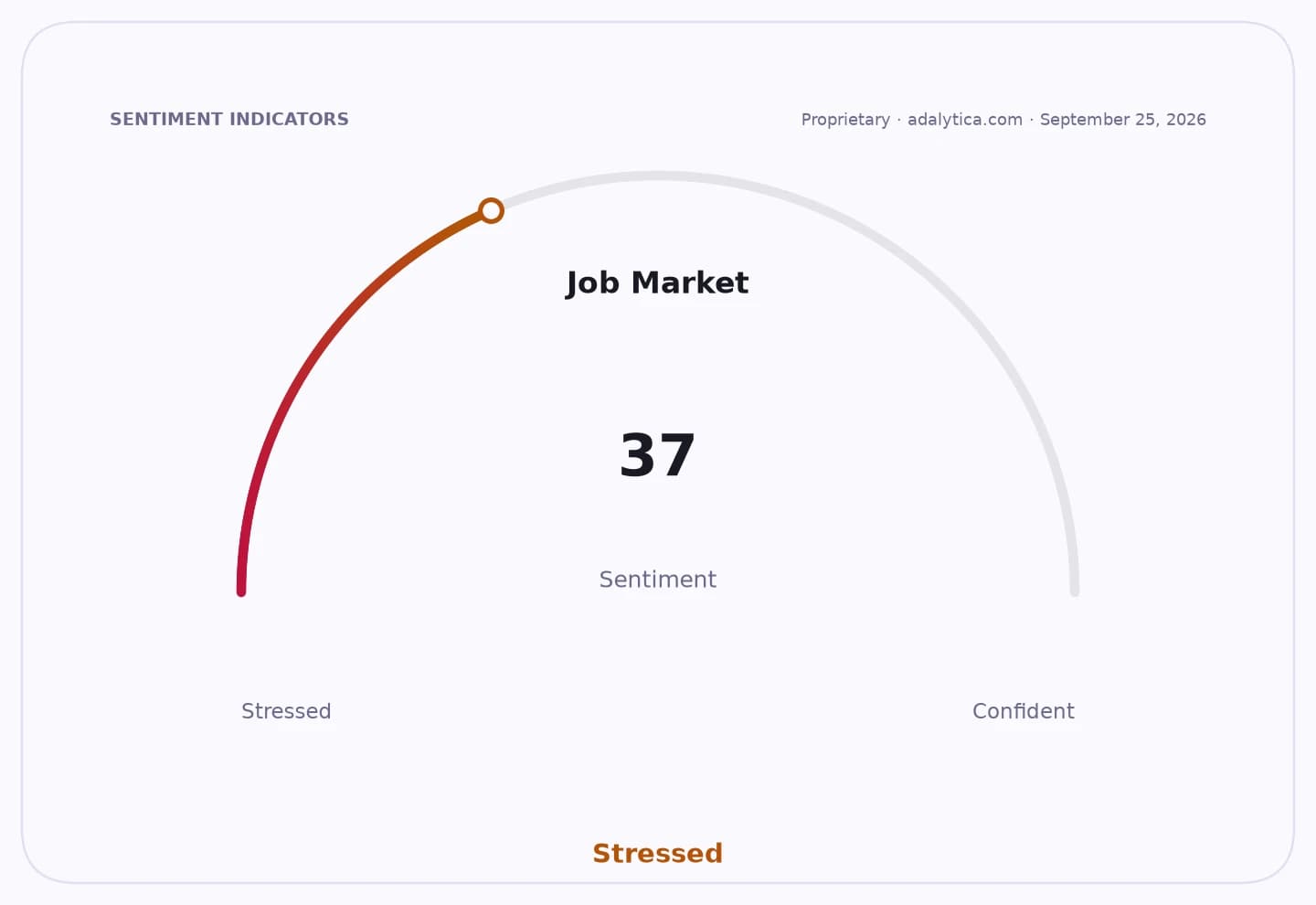
China’s viral “dream job” contests are turning into a proxy for a weaker labor market, and that matters because scarce, stable work is reshaping wages, spending and policy expectations in the world’s second-largest economy.
China Labor Market Weakness Pressures Consumption

The fever around prestigious openings is not just a social-media curiosity. It is a sign that young workers are crowding into a narrower pool of quality jobs as growth stays uneven and businesses remain cautious on hiring. When the best-paid, best-branded roles attract outsize attention, it usually means the broader labor market is not offering enough attractive alternatives.
Sentiment IndicatorsⓘProprietary · adalytica.com · August 8, 2026
This is a snapshot — live sentiment, awareness and momentum for 130+ markets update continuously in the dashboard.Open AlphaPulse
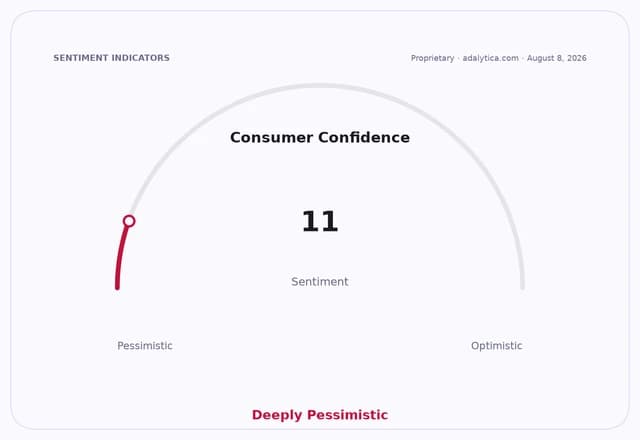
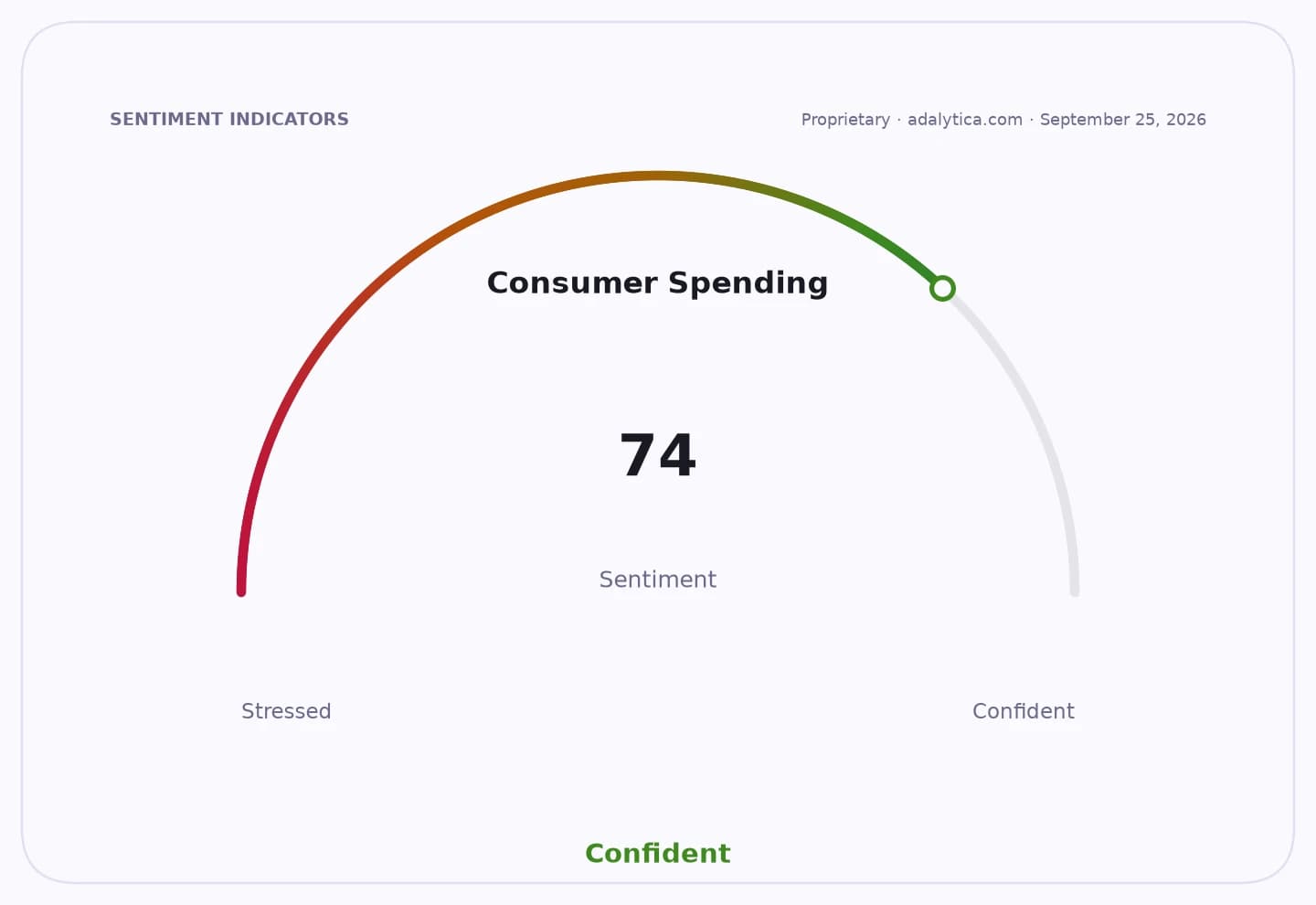
That is economically important because a slack labor market keeps wage gains restrained, delays household confidence and weighs on consumption — still the missing engine of China’s recovery. It also reinforces the case for more support from policymakers, who have been trying to stabilize demand without reigniting debt and property excesses.
For investors, the message is straightforward: China’s job market stress is another reason to stay selective. Companies tied to employment, skills training, online recruitment and lower-cost consumer staples can benefit from the scramble for security, while cyclical retail, discretionary spending and leveraged domestic plays remain vulnerable if incomes and confidence stay weak.
Consumer Confidence vs FXIadalytica.com
Explore this data interactively — full history, time series and cross-market comparisons.Open AlphaPulse

The market has already been trying to price that divide. The iShares China Large-Cap ETF, FXI, has been bouncing around the mid-30s, with technical readings showing the fund above its 50-day moving average but still below the 200-day average, a sign that sentiment has improved without fully confirming a durable trend. Alibaba, by contrast, has held up better, reflecting investor interest in firms with scale, cash flow and exposure to digital activity rather than pure consumer beta. YANG, the bearish China ETF, has lost momentum as traders continue to lean toward stimulus hopes, but the underlying labor narrative argues that any rally in domestic demand needs proof, not just policy promises.
The deeper investment thesis is that China’s labor strain is not a one-off headline; it is part of a broader adjustment where families are more cautious, firms are more selective and the state is under pressure to cushion the transition. That creates an asymmetric setup for investors willing to look past the noise: beneficiaries of job scarcity and policy easing may outperform, while broad China exposure still depends on whether Beijing can turn employment anxiety into real income growth.
The next catalyst is whether official data and policy signals confirm that the job market is cooling enough to force more support. If they do, the strongest opportunities will likely be in the companies that help people find work, reduce costs or capture resilient spending — not in the parts of the market still waiting for a clean consumer rebound.
| Entity | Gains | Losses |
|---|---|---|
| Recruitment and training firms | ▲More applicants, higher demand | ▼Job-seekers’ bargaining power |
| Consumer staples | ▲Defensive spending holds up | ▼Discretionary retailers |
| Alibaba and large digital platforms | ▲Scale, cash flow, resilience | ▼Smaller cyclicals |
| Broad China equity bulls | ▲Stimulus hopes | ▼Weak labor and consumption data |