China’s top leadership is putting the economy back at the center of policy at a moment when investors are betting Beijing will do more to stabilize growth, support property and counter external trade pressure. The meeting chaired by President Xi Jinping on economic issues comes as U.S.-China talks on rare earth exports and agricultural purchases show tentative progress ahead of a Trump-Xi summit, helping keep risk appetite alive in Chinese assets.
China Leadership Meeting Supports FXI Near 200-Day Average
The policy backdrop matters because China’s growth outlook remains the key driver for everything from industrial metals and commodities to global trade and emerging-market positioning. If the leadership meeting points to additional support, investors could see a floor under domestic demand, while any sign of restraint would keep pressure on sentiment in a market still wrestling with weak consumption and a fragile property sector.
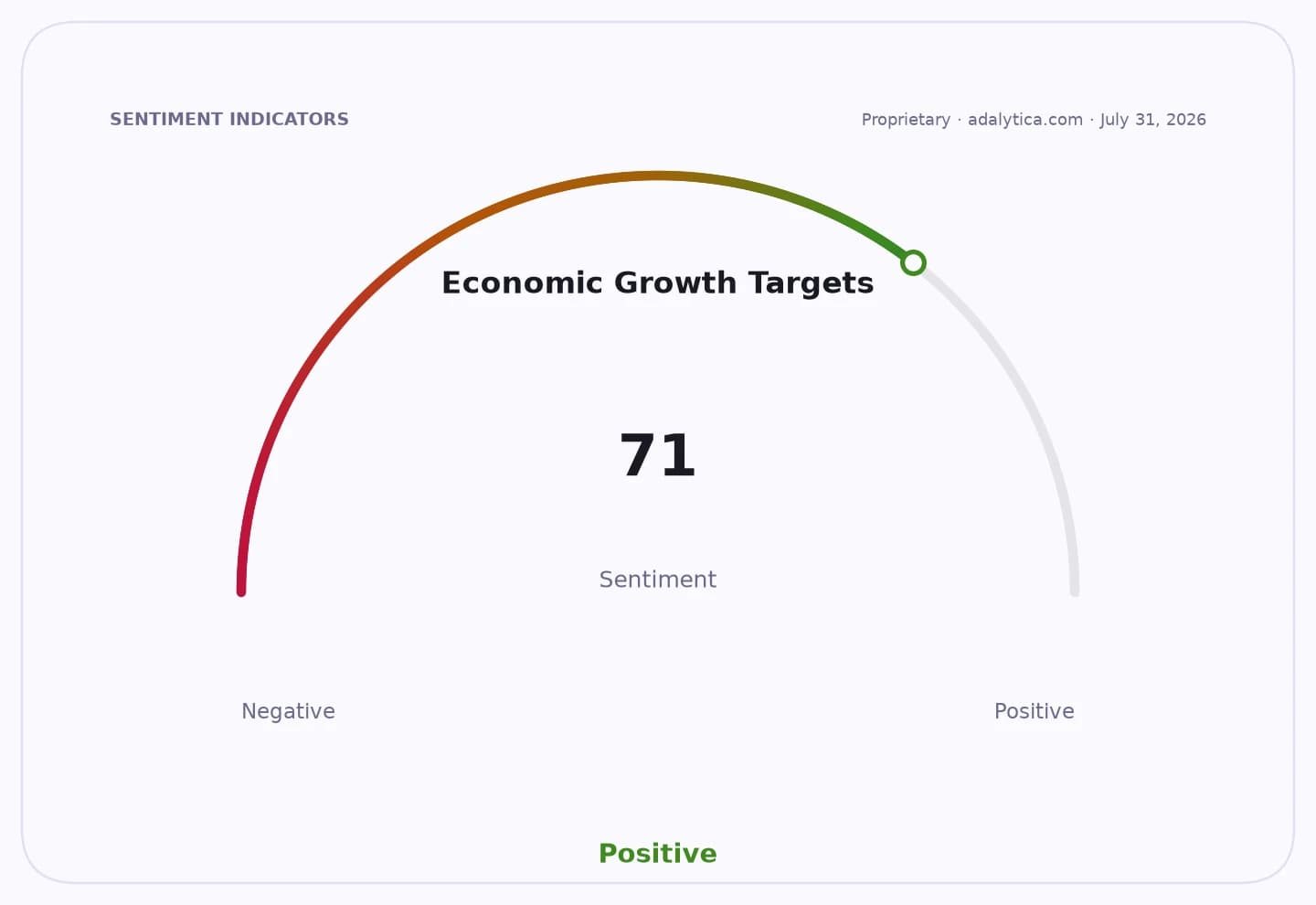
Sentiment IndicatorsⓘProprietary · adalytica.com · July 31, 2026
This is a snapshot — live sentiment, awareness and momentum for 130+ markets update continuously in the dashboard.Open AlphaPulse
Chinese equity markets are already reacting to the prospect of policy backing. FXI, the iShares China Large-Cap ETF, closed at $36.35 on July 31, near its 50-day moving average of $34.21 and just below its 200-day average of $36.95, with RSI readings at 77.5 and MACD above its signal line, a combination that points to strong momentum but also a stretched short-term technical setup. The ETF has climbed from $34.13 on July 17, when it was trading well below both averages, to $36.35, reflecting a sharp rebound in sentiment around China policy and diplomacy.
The move in FXI also shows how sensitive China-related assets remain to any hint of official support. The broad China growth-target sentiment gauge from Adalytica.com sits at 71, described as “Greed,” while Chinese yuan trade signals are in “Extreme Fear,” underscoring a split between optimism about policy and caution about the currency and broader macro outlook.
Economic Growth Targets vs FXIadalytica.com
Explore this data interactively — full history, time series and cross-market comparisons.Open AlphaPulse
The meeting in Beijing adds to a week in which Washington and Beijing have kept channels open despite friction over the South China Sea and trade commitments. That means investors will be watching not just for fresh stimulus language, but for whether the leadership meeting translates into concrete measures on credit, consumption or industrial demand before the summit.
| Entity | Gains | Losses |
|---|---|---|
| Chinese equities / FXI | ▲Policy support hopes | ▼Risk of profit-taking if stimulus disappoints |
| Chinese exporters | ▲Better trade backdrop | ▼Tariff and geopolitical uncertainty |
| Chinese yuan | ▲Potential stability from policy action | ▼Pressure if growth concerns deepen |
| U.S. and China negotiators | ▲Summit momentum | ▼More leverage if talks stall |




