China’s decision to build full-scale mockups of American warships in a remote desert test range is a sign that the U.S.-China maritime rivalry has moved from abstract deterrence to hard-nosed operational planning, with implications for defense spending, supply chains and the valuation of U.S. contractors.
China Mock Warships Boost Defense Demand

The immediate significance is not the spectacle itself but what it reveals: Beijing is investing in training, targeting and intelligence collection against the platforms that anchor U.S. power projection in the Pacific. That matters economically because a more contested Western Pacific implies a longer period of elevated defense procurement, higher readiness spending and continued pressure on industrial capacity across shipbuilding, missiles, sensors and electronic warfare.
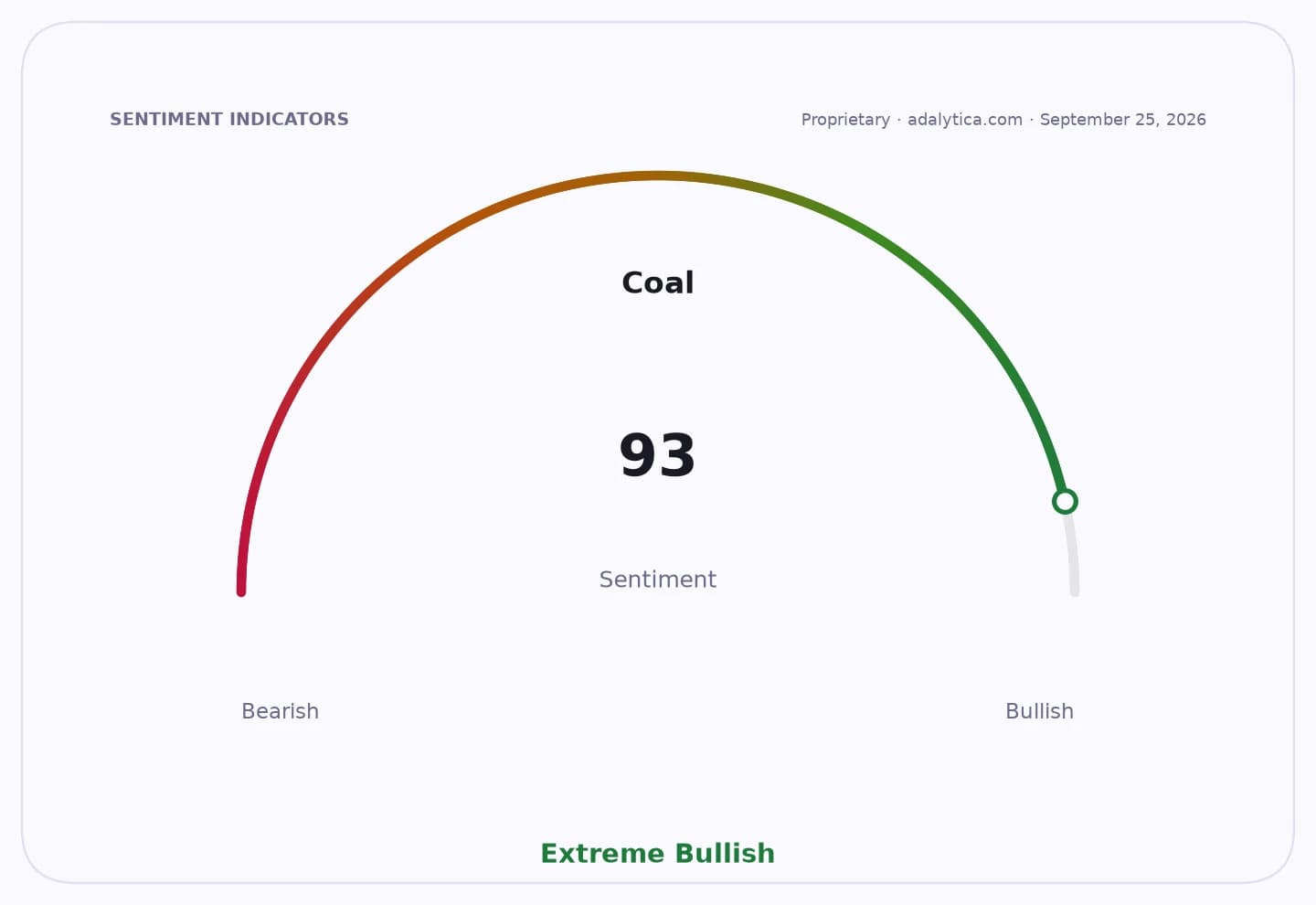
Sentiment IndicatorsⓘProprietary · adalytica.com · July 20, 2026
This is a snapshot — live sentiment, awareness and momentum for 130+ markets update continuously in the dashboard.Open AlphaPulse
For investors, the message is that the contest is increasingly about systems, not just ships. If China is rehearsing strikes or refining anti-ship targeting against replica carriers and destroyers, it reinforces the case for sustained demand in the U.S. defense ecosystem, including missile defense, submarine production and naval survivability upgrades. It also raises the risk that budgets shift further toward capabilities that can deny access, protect fleets and harden bases, rather than toward platforms alone.
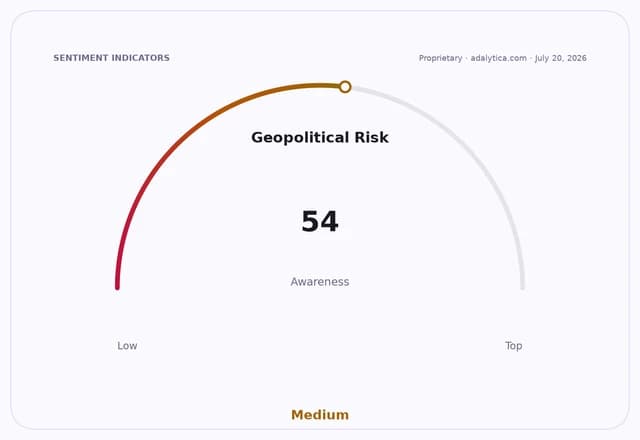
The stock market already reflects that tension. Lockheed Martin has climbed well above its 50-day moving average, with the shares recently around $508 after a sharp run from roughly $496 in October, though momentum has cooled from overbought levels. Northrop Grumman has also rallied, trading near $522 after rebounding from a spring trough, while General Dynamics has moved higher to about $369, helped by expectations for shipbuilding and submarine demand. The broader backdrop is one of elevated geopolitical stress: Adalytica’s Global Stability Sentiment is in “Extreme Fear,” underscoring how fragile the international environment has become, while U.S.-China relations remain volatile even after recent swings in sentiment.
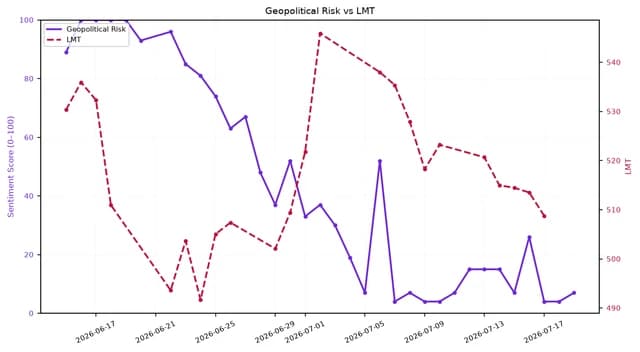
That volatility matters because the defense sector is now tied to two forces at once: threat escalation and industrial constraints. Pentagon and congressional priorities have increasingly centered on munitions, missile defense, shipbuilding and the Pacific theater, and contractors have been saying for months that demand is outpacing capacity in key programs. Northrop’s filing flagged the pressure from a dynamic security environment, while General Dynamics pointed to significant U.S. Navy shipbuilding demand, particularly submarines. Lockheed, for its part, cited a $760 billion weapons-procurement and modernization effort that would support missiles, Golden Dome missile defense and a major shipbuilding push if Congress follows through.
The bull case is straightforward: China’s preparation suggests the threat environment is not easing, which should keep Western procurement elevated and extend backlogs for prime contractors and suppliers. The bear case is valuation and execution. After the recent share gains, investors are paying up for expectations that have to be sustained by funding, delivery and margins, and the sector remains exposed to program delays, cost inflation and political risk in Washington.
The strategic takeaway is that China’s desert ship replicas are a reminder that the next phase of naval competition will be shaped as much by simulations, sensors and strike range as by hull counts. For investors, that keeps the defense trade alive — but it also shifts the focus toward the companies best placed to sell the tools that find, track, jam and sink ships, and to the shipbuilders that can replace them faster than adversaries can target them.
| Entity | Gains | Losses |
|---|---|---|
| U.S. defense contractors | ▲Higher demand outlook | ▼Execution pressure |
| U.S. Navy / Pentagon | ▲Better funding case | ▼More contested Pacific |
| China’s military planners | ▲Targeting realism | ▼Signals strategic intent |
| Defense buyers / taxpayers | ▲Potentially better deterrence | ▼Higher procurement costs |