Kim Jong Un’s surprise trip to China underscores a renewed effort by Beijing and Pyongyang to deepen coordination at a time of rising U.S.-China tension and persistent security friction in Asia.
China, North Korea Coordination Raises Asia Market Risk
The visit matters economically because any closer alignment between North Korea and its main patron can complicate regional trade, defense planning and investor sentiment across northeast Asia, especially as Washington and Beijing remain locked in disputes over technology, tariffs and military posture. It also raises the political risk premium for markets that are already sensitive to escalation in the South China Sea and on the Korean peninsula.
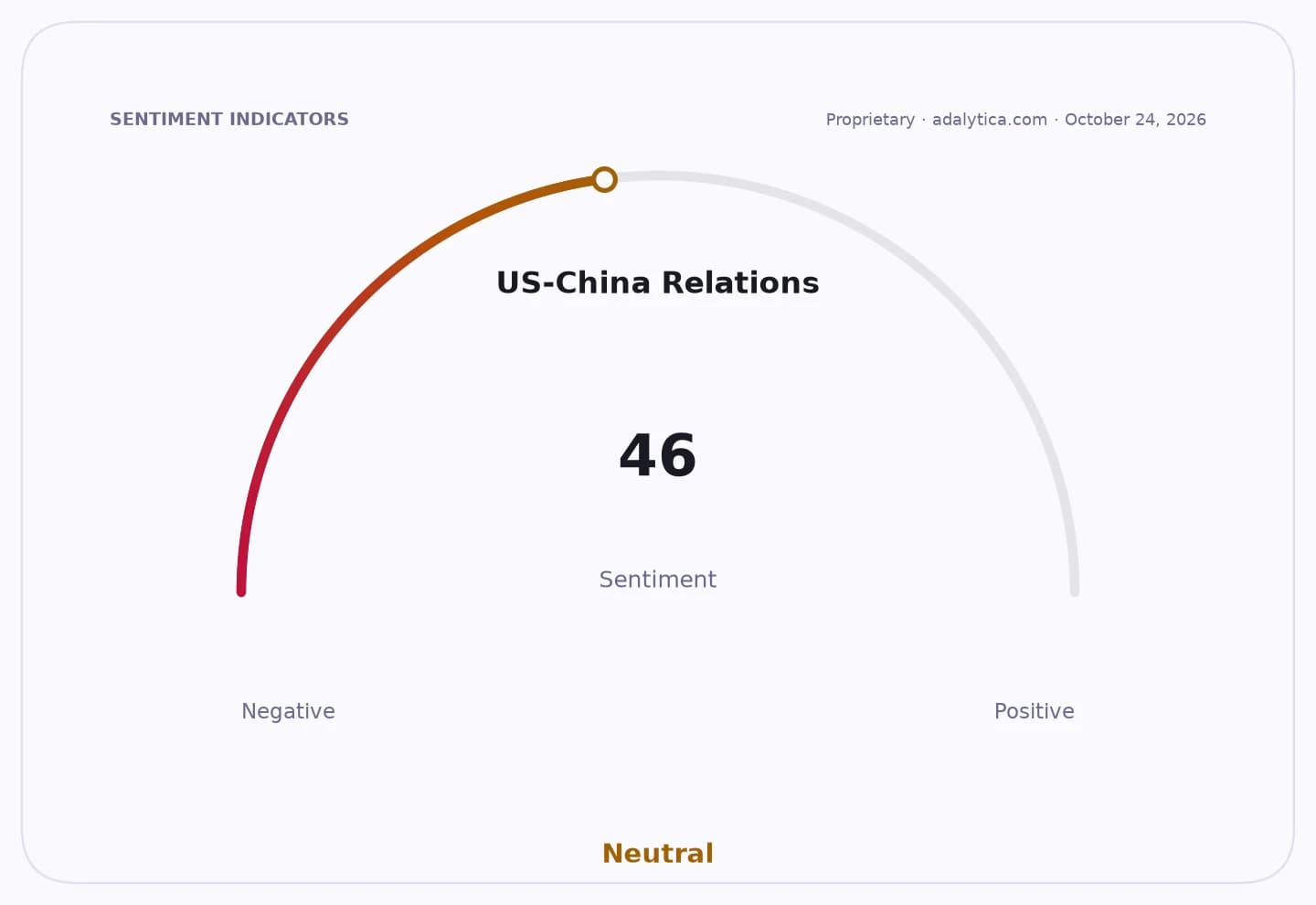
Sentiment Indicators
China’s willingness to host Kim suggests Beijing is keeping North Korea close as it manages pressure from the United States and seeks leverage in broader strategic talks. For investors, that adds another variable to an already fragile geopolitical backdrop that can move currencies, defensive assets and Asia equities, even when the immediate market impact is muted.
That backdrop is visible in regional exchange-traded funds: the iShares MSCI China ETF, FXI, has slipped to $33.08 from $34.26 on Oct. 15 and remains below its 50-day and 200-day moving averages, while the iShares MSCI South Korea ETF, EWY, fell to $152.89 from $161.83 the prior day after a sharp run-up earlier in the year. The Hong Kong ETF, EWH, rose to $22.52 and is holding closer to its 50-day average, suggesting more resilience in a market still pricing policy support and lower direct security exposure.
US-China Relations vs FXIadalytica.com
Explore this data interactively — full history, time series and cross-market comparisons.
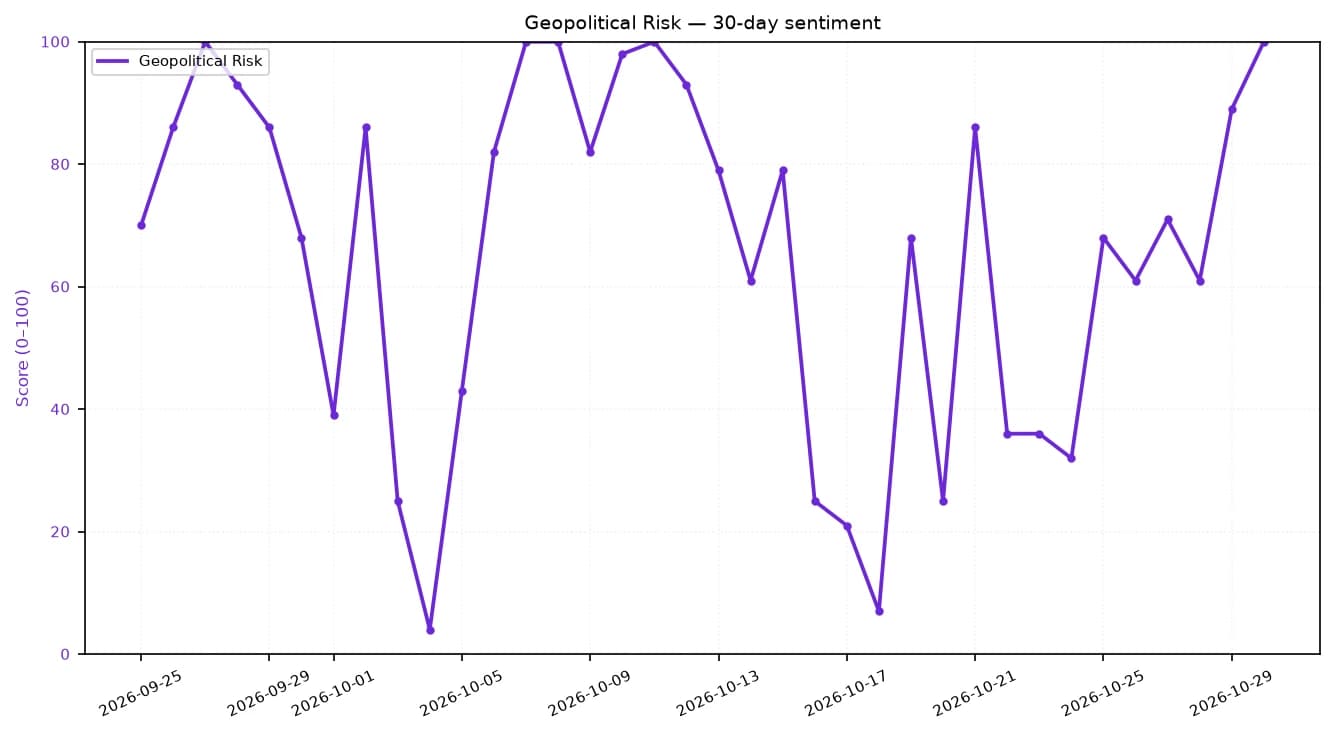
Adalytica’s US–China Relations Sentiment gauge sits at 68, labeled Neutral, but awareness remains at Extreme Fear, showing how quickly headline risk can return to the front of the market. Global Stability Sentiment is at 93, also in Extreme Greed, reflecting how investors are still balancing strong risk appetite against a low visibility geopolitical environment.
The immediate focus now turns to whether the visit produces any concrete military or economic signal, and whether Washington responds with tougher rhetoric or fresh sanctions pressure that could spill over into Asian assets.
| Entity | Gains | Losses |
|---|---|---|
| China | ▲regional leverage | ▼diplomatic pressure |
| North Korea | ▲patron support | ▼isolation risk |
| U.S. allies in Asia | ▲policy clarity | ▼security uncertainty |
| Asia equities | ▲brief relief if talks continue | ▼risk premium if tensions rise |