China is moving to strengthen its influence in North Korea as Pyongyang’s ties with Moscow deepen, a shift that could reshape sanctions enforcement, regional security and investor sentiment across Northeast Asia.
China Reasserts Influence as North Korea Tilts
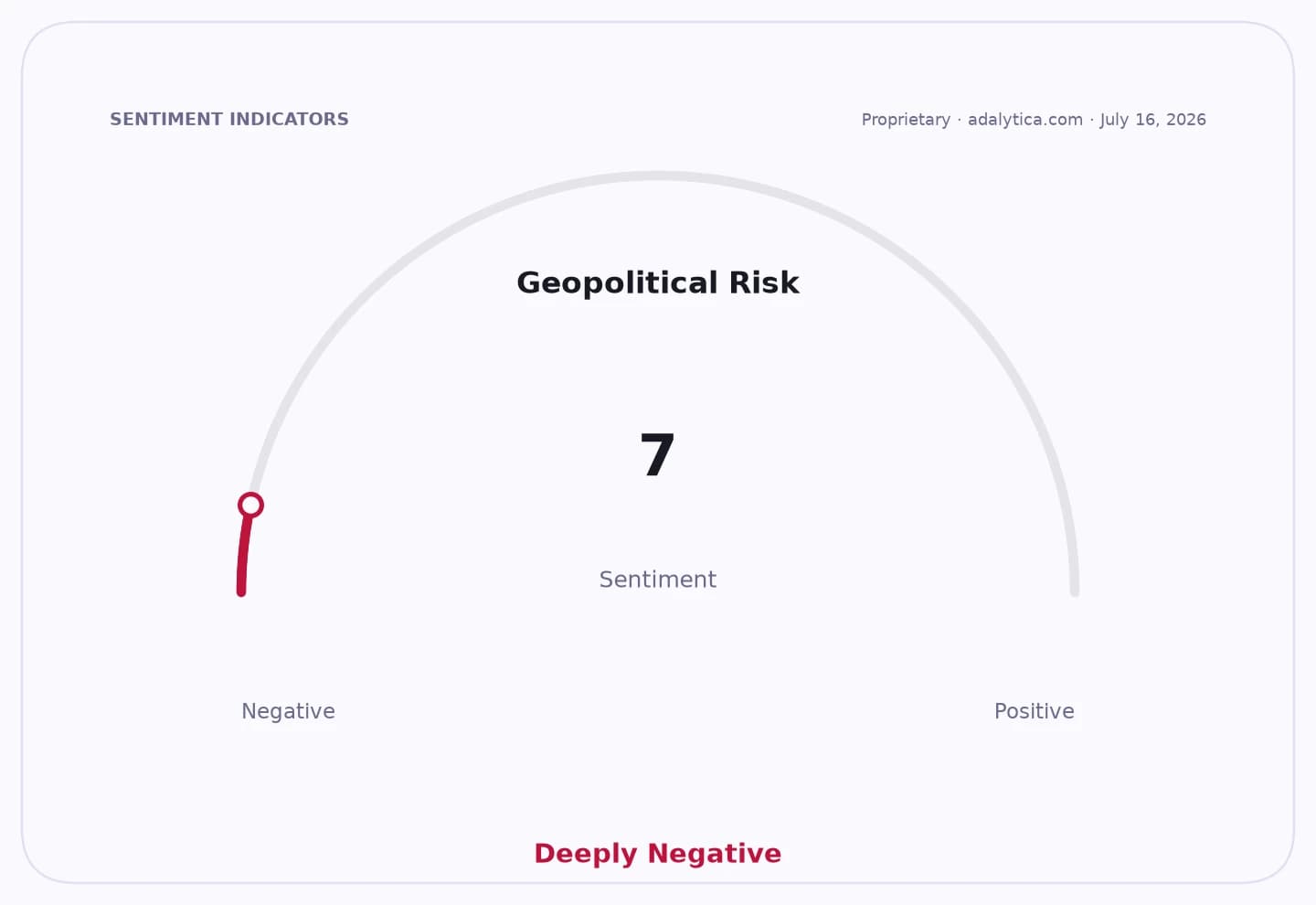
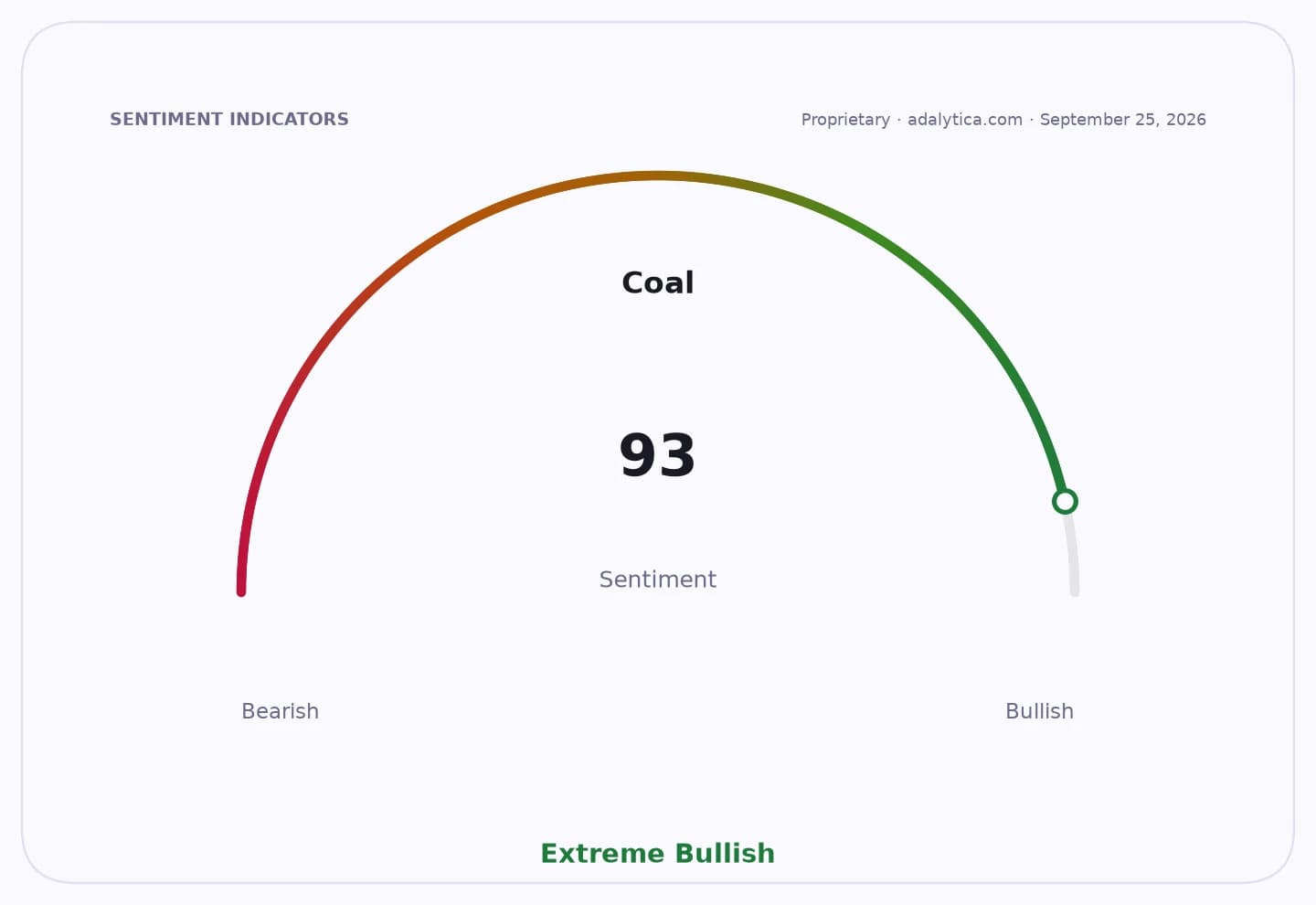
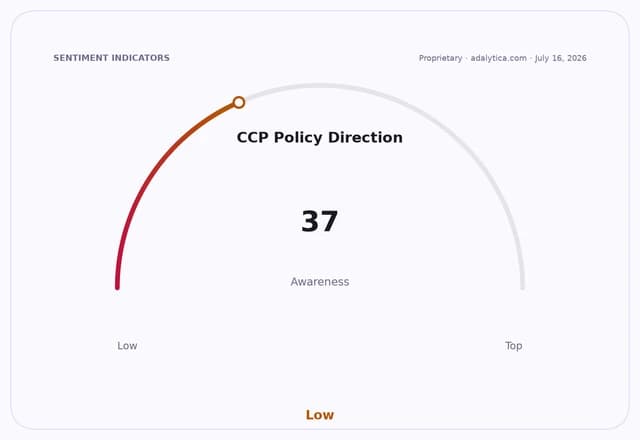
For markets, the immediate implication is not a direct trade shock but a higher geopolitical risk premium around the Korean Peninsula and China’s strategic perimeter. Beijing’s effort to consolidate leverage in Pyongyang comes as global stability sentiment tracked by Adalytica plunges to 7, or “Extreme Fear,” while awareness spikes to 89, reflecting rising attention to flashpoints even as risk tolerance collapses.
Sentiment IndicatorsⓘProprietary · adalytica.com · July 16, 2026
This is a snapshot — live sentiment, awareness and momentum for 130+ markets update continuously in the dashboard.Open AlphaPulse

The new alignment matters economically because North Korea remains heavily dependent on outside support for fuel, food and trade flows. If China is reasserting itself after Russia’s rapprochement with Pyongyang, Beijing can shape the regime’s access to essentials, reinforce sanctions circumvention channels and preserve its role as the dominant power broker on the peninsula.
That also raises the stakes for the U.S. and its allies, who face a harder task in isolating North Korea if China and Russia are coordinating more closely. Beijing’s detention of Chinese-American seismologist Yulin Chen, held nearly two years on espionage charges tied to research on North Korea’s nuclear tests, underscores how sensitive China remains about outside scrutiny of the country’s weapons program.
Geopolitical Risk vs FXIadalytica.com
Explore this data interactively — full history, time series and cross-market comparisons.Open AlphaPulse
Investor implications are most visible in China-related risk assets and regional equities rather than in North Korea itself, which is largely off-limits to capital markets. The iShares China Large-Cap ETF, FXI, has fallen to $34.28 from $40.34 in January, while technically it is still below its 200-day moving average of $37.24, signaling persistent pressure on Chinese risk sentiment.
South Korea-linked assets have also been volatile. The iShares MSCI South Korea ETF, EWY, has swung sharply and still trades well below its 200-day moving average at $171.64 versus $131.79, after a powerful run earlier this year, suggesting investors are trimming exposure as geopolitics and trade uncertainty rise. The iShares MSCI Taiwan ETF, EWT, has likewise retreated from its recent highs, closing at $102.49 versus a March peak above $111, with momentum indicators cooling.
The bigger narrative is that China is trying to prevent North Korea from drifting fully into a Russia-led orbit while keeping the peninsula stable enough to avoid a crisis on its border. That balancing act could keep diplomacy active, but it also increases the risk of tighter U.S.-China friction over sanctions, intelligence sharing and regional deterrence in the months ahead.
| Entity | Gains | Losses |
|---|---|---|
| China | ▲More leverage in Pyongyang | ▼Higher U.S. scrutiny |
| North Korea | ▲Broader backing options | ▼Less room to maneuver |
| Russia | ▲Stronger anti-U.S. alignment | ▼Reduced sole influence |
| South Korea/Investors | ▲Potential stability if managed | ▼Higher geopolitical risk premium |