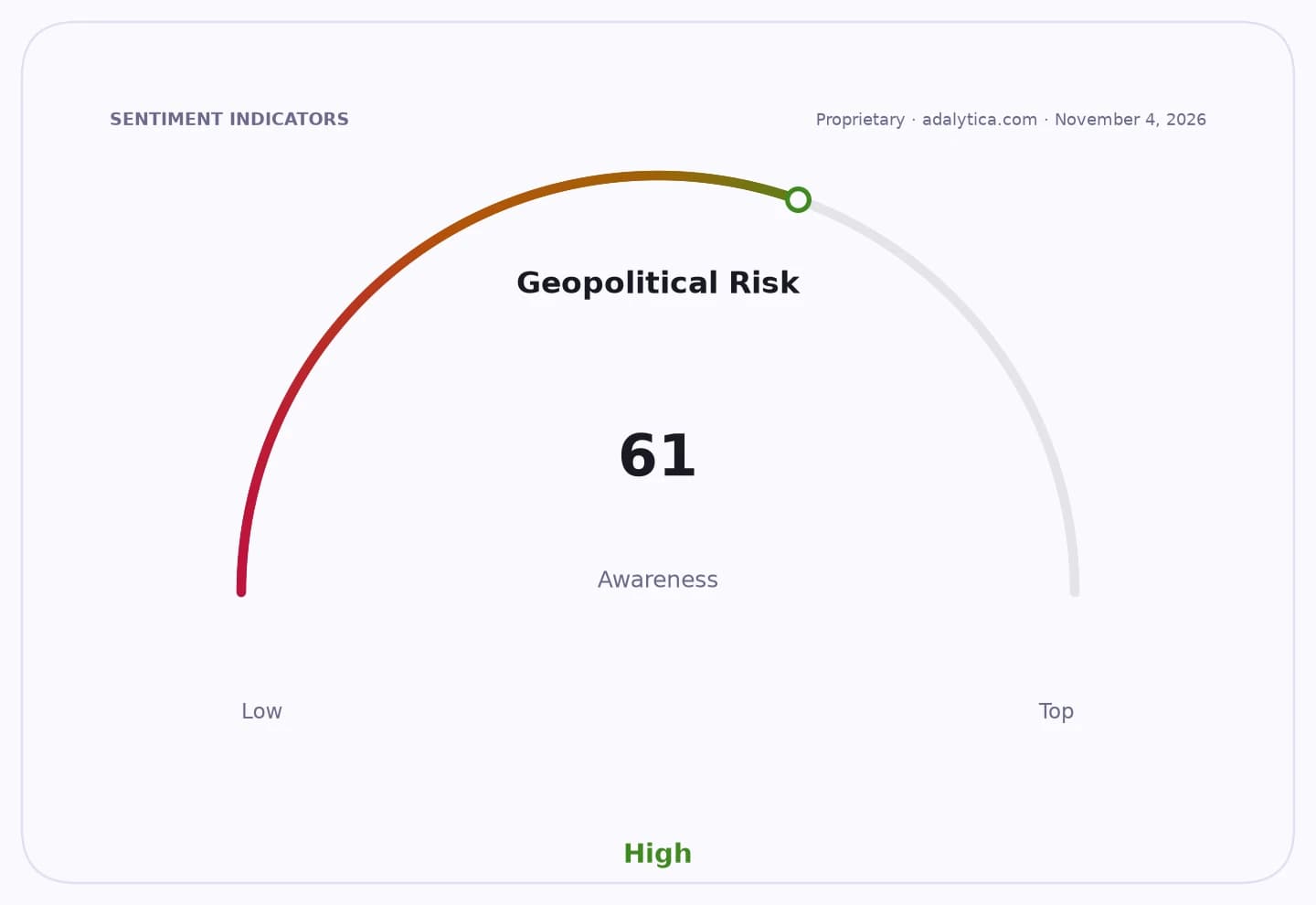
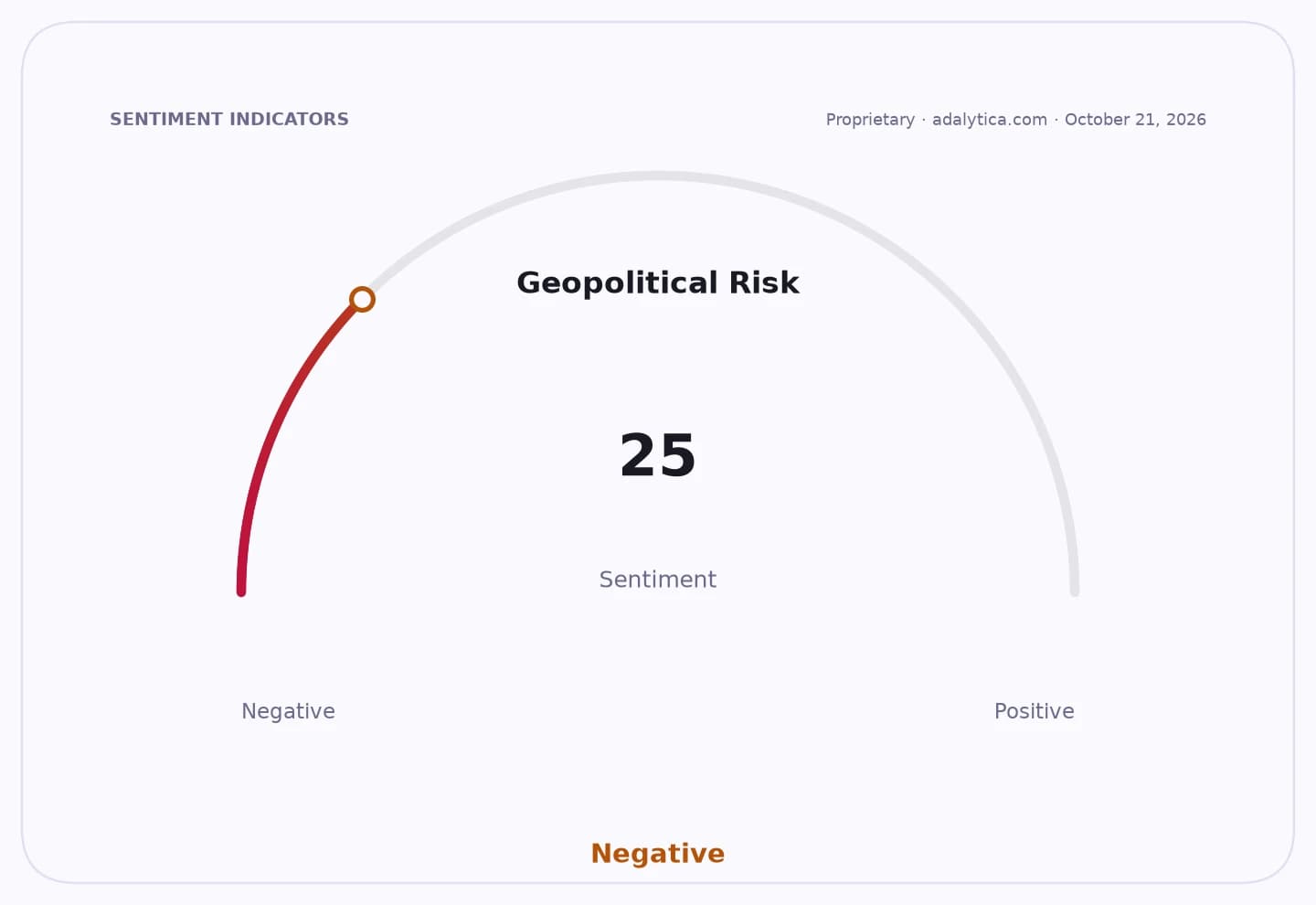
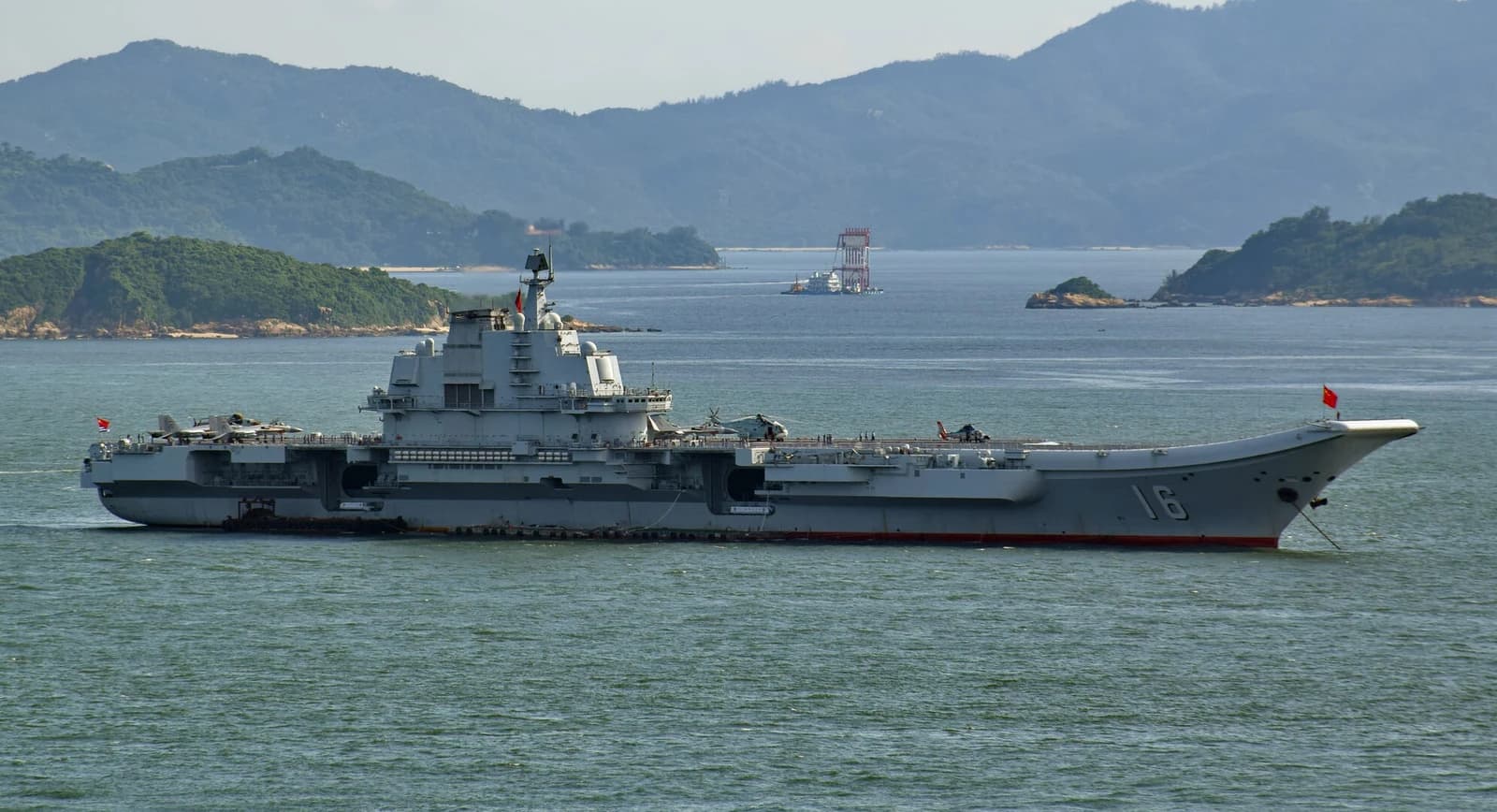
China’s reported work on a nuclear-powered tank that could fire on targets as far as 450 kilometers would, if ever realized, mark a major attempt to rethink armored warfare around nearly unlimited onboard power rather than diesel logistics.
China nuclear tank study and defense tech demand
US-China Relations
That matters economically because the concept sits at the intersection of military-industrial investment, energy-density engineering and a wider shift in defense spending toward systems that can support electromagnetic weapons, active protection and unmanned operations. It also matters for investors because it points to more demand for the kind of companies that build propulsion, power-management, sensors, munitions and battlefield electronics — even if the tank itself never leaves the study stage.
Sentiment Indicators
US-China Relations
The proposal, published in June in the state-run journal Acta Armamentarii, was developed by researchers at Beijing Institute of Technology and Inner Mongolia First Machinery Group, a key maker of military vehicles. The paper sketches a 60-ton platform that would move through three phases, beginning with a diesel-generator-powered chassis fitted with electromagnetic weapons, then scaling to a more powerful gun and active protection suite, and only after 2045 reaching a version powered by a 10-megawatt small modular reactor.
The final concept is the most striking and the least credible in practical terms. The design calls for a reactor small enough to fit in a two-cubic-meter space, with shielding capped at three tons and fuel endurance of at least five years. The tank would mount a 50-megajoule railgun that could theoretically launch projectiles at 3.5 kilometers per second and hit targets 450 kilometers away. But even the study concedes the system still requires vehicle testing, and specialists quoted by the South China Morning Post said the reactor, cooling, shielding and power-conversion demands could make the concept unrealistic in a 60-ton armored vehicle.
That skepticism is central to the investment case. The military value of a manned tank carrying a reactor is questionable in an era when cheap drones, anti-tank missiles and loitering munitions have sharply reduced the survivability of heavy armor, as seen in Ukraine. A reactor could increase range and power, but it also adds a catastrophic vulnerability to a vehicle already exposed to increasingly inexpensive kill chains. That makes the more plausible near-term takeaway not a nuclear tank fleet, but a broader Chinese push into high-energy weapons, electric power systems and autonomous ground platforms.
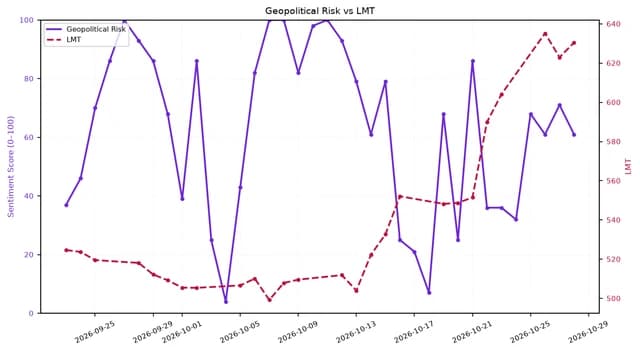
For defense contractors, the story is less about one exotic vehicle than about the technological direction it implies. If Beijing continues to fund railguns, electromagnetic armor, advanced power storage, radar and electronic warfare systems, suppliers tied to those domains stand to benefit from a longer procurement cycle. U.S. peers such as Lockheed Martin, Northrop Grumman and General Dynamics have already been buoyed by expectations of higher defense budgets and by rising demand for missile defense and munitions, while the geopolitical backdrop keeps attention fixed on survivability, long-range strike and counter-drone capabilities.
The broader market signal is that militaries are still willing to back extreme concepts in order to solve the power problem behind next-generation weapons. But the deeper lesson from this Chinese study is that the most valuable battlefield asset may not be the tank itself. It is the ability to generate, store and direct energy under combat conditions — an engineering challenge that is reshaping procurement priorities across the defense sector.
| Entity | Gains | Losses |
|---|---|---|
| Chinese defense R&D | ▲Funding for advanced weapons research | ▼Credibility if concept remains impractical |
| Power-systems and electronics suppliers | ▲Demand for high-energy systems | ▼Traditional armor-focused programs |
| U.S. defense primes | ▲Higher Western defense spending | ▼Margin pressure if budgets get diverted |
| Tank crews / manned armor | ▲None | ▼Greater battlefield vulnerability |