China has crossed a strategically important threshold in satellite communications, establishing a home-grown polar broadband link that removes one more layer of dependence on foreign technology and strengthens Beijing’s push for resilient, military-grade space infrastructure.
China Builds Polar Satellite Broadband Link

That matters because polar coverage is not a niche capability. It is essential for Arctic shipping routes, Antarctic research, remote energy and mining operations, and, above all, secure state communications in some of the hardest-to-serve parts of the planet. By proving domestic satellites can support video links between the Arctic and China’s Qinling station in Antarctica, Beijing is showing it can build a communications architecture that is less exposed to geopolitical choke points and sanctions pressure.

State media said the trials, conducted during China’s 16th Arctic expedition, gave the country “fully self-controlled polar communications.” In practical terms, that means China is narrowing the gap with Elon Musk’s Starlink, which has become the benchmark for low-latency satellite broadband and a reminder of how space networks can shape both commerce and security. Beijing is not there yet in scale or global reach, but the direction is clear: China is building its own sovereign alternative rather than renting critical connectivity from foreign systems.
For investors, the implication is bigger than a one-off scientific milestone. This is part of a secular capex cycle in space, defense and communications infrastructure that favors companies positioned around launch, satellites, ground systems, semiconductors and secure networking. The market still tends to frame these breakthroughs as symbolic. They are not. Every step toward a self-contained Chinese space stack increases demand for domestic suppliers, reduces reliance on U.S. and allied technology, and reinforces the long-term case for strategic-industrial policy on both sides of the Pacific.
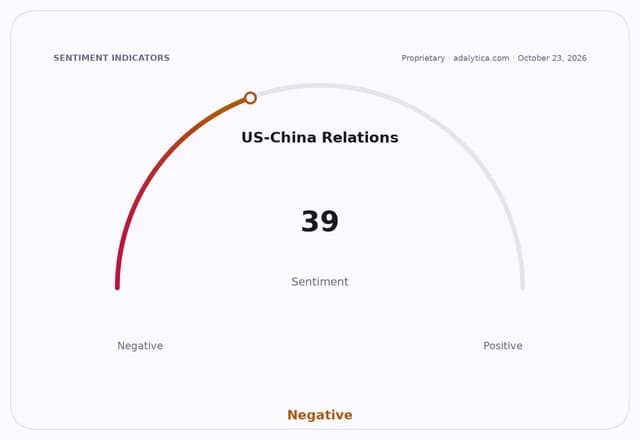
The broader geopolitical backdrop only amplifies the investment case. U.S.-China relations remain fragile, and export controls continue to shape how both countries build their technology ecosystems. That creates a second-order opportunity: as China substitutes foreign systems with local ones, it accelerates domestic content requirements and the need for indigenous chips, RF components, optics and satellite hardware. At the same time, it raises the stakes for Western vendors that remain exposed to Chinese demand and must navigate tighter licensing and compliance risks.
In market terms, the winners are the companies supplying the tools of sovereign connectivity, not the firms selling the finished dream of global coverage. The losers are foreign platforms that could be excluded from sensitive polar, government and infrastructure deployments. Over the next several years, I believe the real upside lies in the infrastructure layer beneath the headlines: the picks-and-shovels of space, defense electronics and semiconductor tooling. China’s polar satellite milestone is another sign that the satellite internet race is moving from novelty to national strategy — and that is where the capital will flow.
| Entity | Gains | Losses |
|---|---|---|
| China’s space and telecom suppliers | ▲More domestic demand | ▼Less foreign dependence |
| Government and defense users | ▲Secure polar links | ▼Reliance on overseas systems |
| Starlink and other foreign satellite networks | ▲Niche global growth | ▼Access to sensitive Chinese-linked deployments |
| U.S. export-control exposed vendors | ▲Strategic demand from allies | ▼China-related revenue risk |