China is shifting its anti-poverty campaign from lifting people out of poverty to preventing millions from slipping back, a move that underscores how weakening growth, a fragile labor market and softer consumer demand are forcing Beijing to prioritize social stability over faster reform.
China Shifts Toward Poverty Prevention
The change matters economically because the government is trying to preserve one of its key post-pandemic policy achievements without adding fresh pressure to an already stretched fiscal system. A stronger basic livelihood security network can cushion households, support consumption at the margin and reduce the risk that local downturns feed into broader social stress.
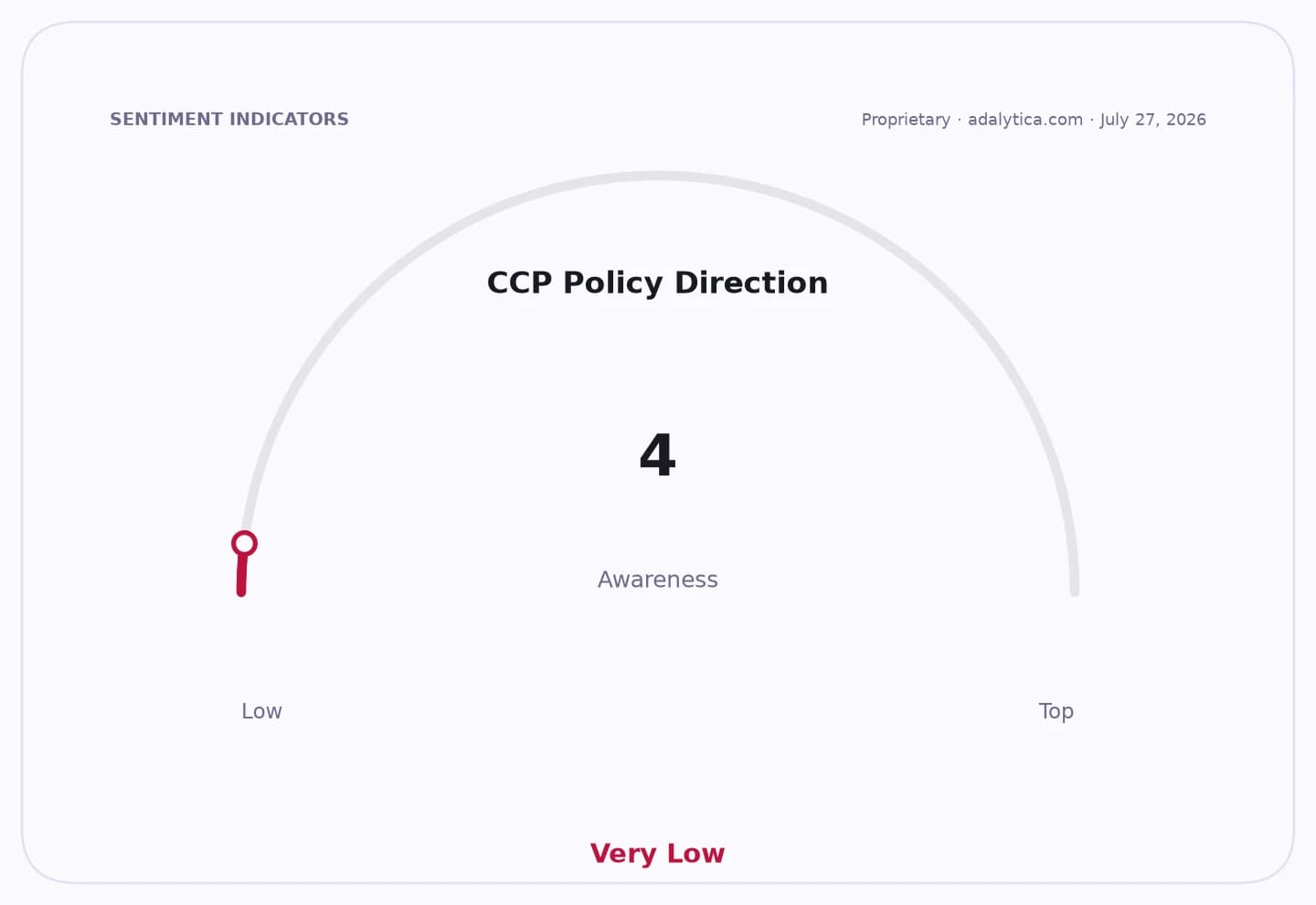
Sentiment IndicatorsⓘProprietary · adalytica.com · July 27, 2026
This is a snapshot — live sentiment, awareness and momentum for 130+ markets update continuously in the dashboard.Open AlphaPulse
Beijing’s focus also signals that officials see the next phase of policy as defensive rather than expansionary. That is a notable shift after years of headline-grabbing poverty eradication campaigns, and it suggests more resources may be steered toward subsidies, welfare support and local safety nets rather than aggressive stimulus.
Investors tend to read that as a sign China is still managing structural weakness rather than curing it. The policy emphasis can help stabilize sentiment around domestic demand, but it also reinforces the view that growth is still vulnerable to unemployment, weak income growth and lingering confidence problems.
The backdrop is a China market that has already struggled to sustain gains. The FXI China large-cap ETF is down to 34.58 from 37.97 in mid-May and remains below its 200-day moving average of 37.04, while the broader MCHI China ETF is at 53.33, also well under its 200-day average of 58.45, showing investors have yet to fully buy into a durable recovery story.
Alibaba, one of the biggest China-facing names for global investors, has also rolled over sharply. The stock closed at 112.14, down from 144.48 in mid-May and far below its 200-day moving average of 141.30, reflecting skepticism that policy support alone can offset softer macro conditions.
Adalytica’s China CCP Policy Direction Sentiment gauge has fallen to 7, labeled Extreme Fear, while US-China relations sentiment is also in Extreme Fear territory at 11. That combination points to a market still wary of policy execution risk, slower growth and the possibility that Beijing leans more on stability measures than on measures that would reaccelerate earnings.
For investors, the key question is whether poverty-prevention spending becomes a meaningful demand floor for retailers, consumer lenders, insurers and local services, or whether it simply offsets further deterioration. The next catalyst is any sign of broader fiscal support, labor-market stabilization or concrete spending programs tied to household protection and rural incomes.
| Entity | Gains | Losses |
|---|---|---|
| Vulnerable households | ▲stronger safety net | ▼less downside from income shocks |
| Local governments | ▲more policy backing | ▼higher fiscal burden |
| China-focused stocks | ▲stability support | ▼weaker growth narrative |
| Short sellers | ▲policy caution | ▼less downside if support deepens |