China’s slow-walking rare earth export permits are becoming the key obstacle in extending its trade truce with the U.S., with the issue now spilling over into Japan as well and underscoring how Beijing is using critical minerals as leverage ahead of the summit.
China rare earth permit delays hit U.S. Japan trade
The timing matters because rare earths sit at the center of EV motors, defense systems and advanced electronics, making any disruption a supply-chain risk rather than just a diplomatic irritant. U.S. and Chinese officials left the latest ministerial talks without a deal on how long to extend the pause on tariff escalations, and the permit delays are now the clearest sign that China’s export controls remain in force even as overall shipment volumes rise.
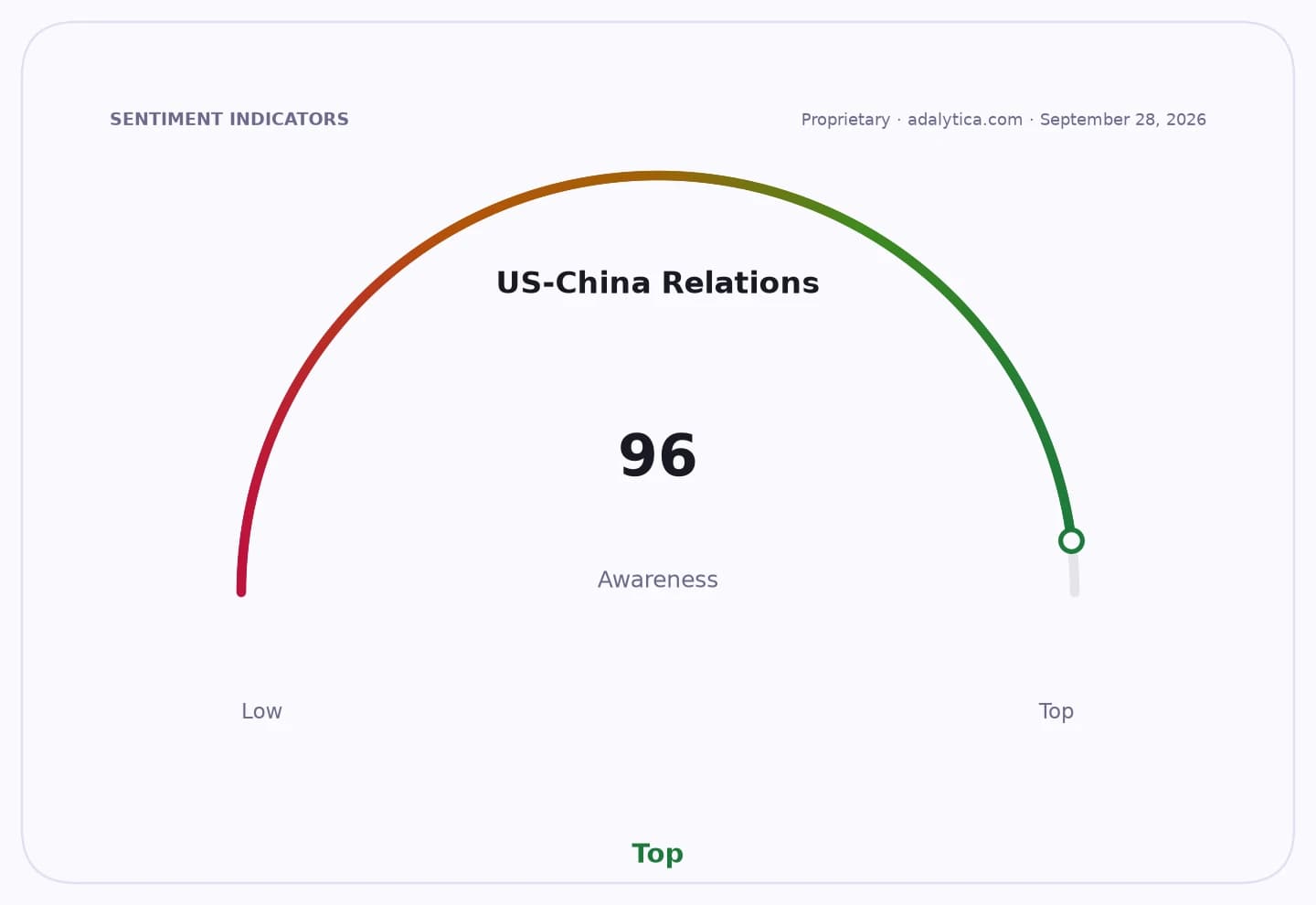
Sentiment IndicatorsⓘProprietary · adalytica.com · September 28, 2026
This is a snapshot — live sentiment, awareness and momentum for 130+ markets update continuously in the dashboard.Open AlphaPulse
Japan has become a fresh pressure point. Chinese exports of rare earths to Japan fell 50% in July from a year earlier, according to the Japanese report, after bilateral relations deteriorated and Beijing tightened controls on dual-use goods. Exports of permanent magnets needed for EVs to the U.S. were still about 20% below last year’s level, even though China’s total rare earth exports hit about 63,000 metric tons in 2025, the highest in a decade.
For investors, the immediate implication is that supply risk is still not normalized. That keeps a floor under pricing and margins for producers outside China while leaving manufacturers in autos, semiconductors and defense exposed to sudden bottlenecks, especially if permit delays persist or widen to additional markets. MP Materials, a key U.S. rare earth name, has seen sharp volatility in recent months, while Japanese and Taiwanese industrial groups such as Toyota and TSMC remain tied to the broader risk of disrupted input flows and renewed trade friction.
The political backdrop is just as important. Washington, as G20 chair, pushed for language on supply-chain stability in critical minerals, and singled out China as the only country opposing it. President Donald Trump’s meeting with Japanese Prime Minister Sanae Takaichi also centered on securing stable access to rare earths, showing how the issue is now binding together U.S., Japanese and European industrial policy.
The next catalyst is whether Beijing issues enough export licenses to show the truce is holding, or whether the permit backlog becomes the pretext for a broader slowdown in rare earth flows. If talks fail to produce a longer extension before the Nov. 10 deadline, investors should expect another round of volatility in mining, auto and advanced-manufacturing stocks tied to China’s mineral grip.
| Entity | Gains | Losses |
|---|---|---|
| China | ▲Negotiating leverage | ▼Trade-truce credibility |
| Japan | ▲U.S. supply-chain alignment | ▼Rare earth imports |
| U.S. rare earth producers | ▲Pricing power | ▼If permits normalize |
| Auto and semiconductor makers | ▲None | ▼Input security, margins |