Chinese rare earth suppliers are refusing some shipments to the U.S. to avoid retaliation from Beijing, tightening access to critical minerals and threatening delays for American manufacturers just weeks before President Xi Jinping is due to visit Washington.
China rare earth shipments tighten before Xi visit

The disruption matters because rare earths sit inside defense systems, chips, medical devices and energy equipment, giving Beijing a lever over industries that U.S. officials have spent months trying to insulate from trade shocks. It also underscores how the mineral fight is spilling beyond tariffs into supply-chain enforcement, with Chinese firms now weighing not only U.S. licensing rules but also the risk of punishment at home.
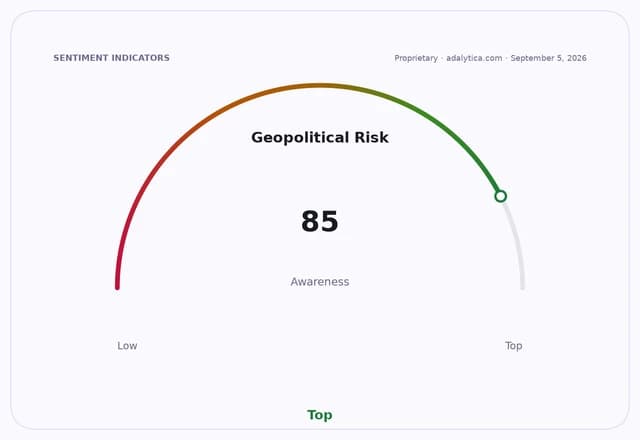
Sentiment IndicatorsⓘProprietary · adalytica.com · September 5, 2026
This is a snapshot — live sentiment, awareness and momentum for 130+ markets update continuously in the dashboard.Open AlphaPulse
Three sources said some suppliers stopped shipping after China in early August sanctioned the Responsible Business Alliance, a U.S. supply-chain monitor, because doing business under the related Responsible Minerals Initiative framework could expose them to Beijing’s scrutiny. Others had already paused shipments in recent months to avoid geopolitical entanglement, including four cases where firms declined to sell material that could be resold to banned users, according to one source.
The timing adds pressure to an already fragile truce. U.S. officials have been urging Beijing to honor commitments made in Busan and Beijing to keep rare earth export licences moving, and one source said the issue has now landed on the U.S. planning agenda ahead of Xi’s Sept. 24 visit. A U.S. official said Washington continues to press Chinese counterparts over compliance with the Busan agreement and other bilateral concerns.

Supply remains tight even where exports have improved. While shipments of many rare earths and magnets have recovered since China’s April 2025 restrictions, prices for certain materials with military or sensitive industrial uses — including yttrium, indium phosphide and tungsten — are still near record highs. U.S. companies have in some cases waited more than six months for licences, sources said, leaving buyers exposed to delayed production schedules and higher inventory costs.
China has also used the same tool against other customers. Export approvals are reportedly even more limited for Indian and Japanese buyers, while customs data showed no terbium shipments to Japan from January through August, compared with 20 tons a year earlier. Gallium shipments to Japan were down 65% and yttrium shipments 98% over the same period, reinforcing the degree to which Beijing can throttle supply country by country.
For investors, the story keeps focus on non-China rare earth producers and magnet makers that stand to benefit if governments and manufacturers accelerate diversification. Shares of U.S.-listed rare earth names such as MP Materials have already been volatile this year as traders weigh policy support, supply bottlenecks and the pace of Western build-out. Prolonged Chinese restrictions also bolster the case for miners and processors outside China, including firms tied to alternative supply chains in North America.
European buyers are still seeing friction too. The European Chamber of Commerce in China said members continue to face implementation problems despite streamlined processes and want a transparent, predictable licensing system. Beijing says it is committed to maintaining global critical mineral supply chains and argues its sanctions on auditing firms were retaliation for U.S. restrictions on Chinese technology and infrastructure companies.
The key market catalyst is whether Beijing eases licence approvals around Xi’s trip to defuse accusations it is violating the Busan truce. If it does not, the risk is a fresh round of shortages, more expensive inputs and another jolt to companies exposed to rare earths and strategic metals.
| Entity | Gains | Losses |
|---|---|---|
| China | ▲More leverage in talks | ▼Greater trade backlash |
| U.S. manufacturers | ▲Potential licence relief if talks improve | ▼Delays, higher input costs |
| Rare earth miners outside China | ▲Stronger diversification demand | ▼If tensions ease, urgency fades |
| Beijing hardliners | ▲More bargaining power | ▼Summit-related pressure to compromise |