China’s decision to extend visa-free entry for Russian citizens through the end of 2027 is another sign that Beijing is willing to keep tightening practical ties with Moscow even as the West raises the cost of that partnership.
China Extends Russia Visa-Free Entry
The policy move is small on its face, but economically and geopolitically it matters because it lowers friction for travel, trade, business coordination and people-to-people contact between two countries increasingly pushed together by sanctions, security rivalry and capital isolation from the West. In an environment where formal alliances are often constrained by politics, visa policy becomes a quiet but powerful signal of durability.
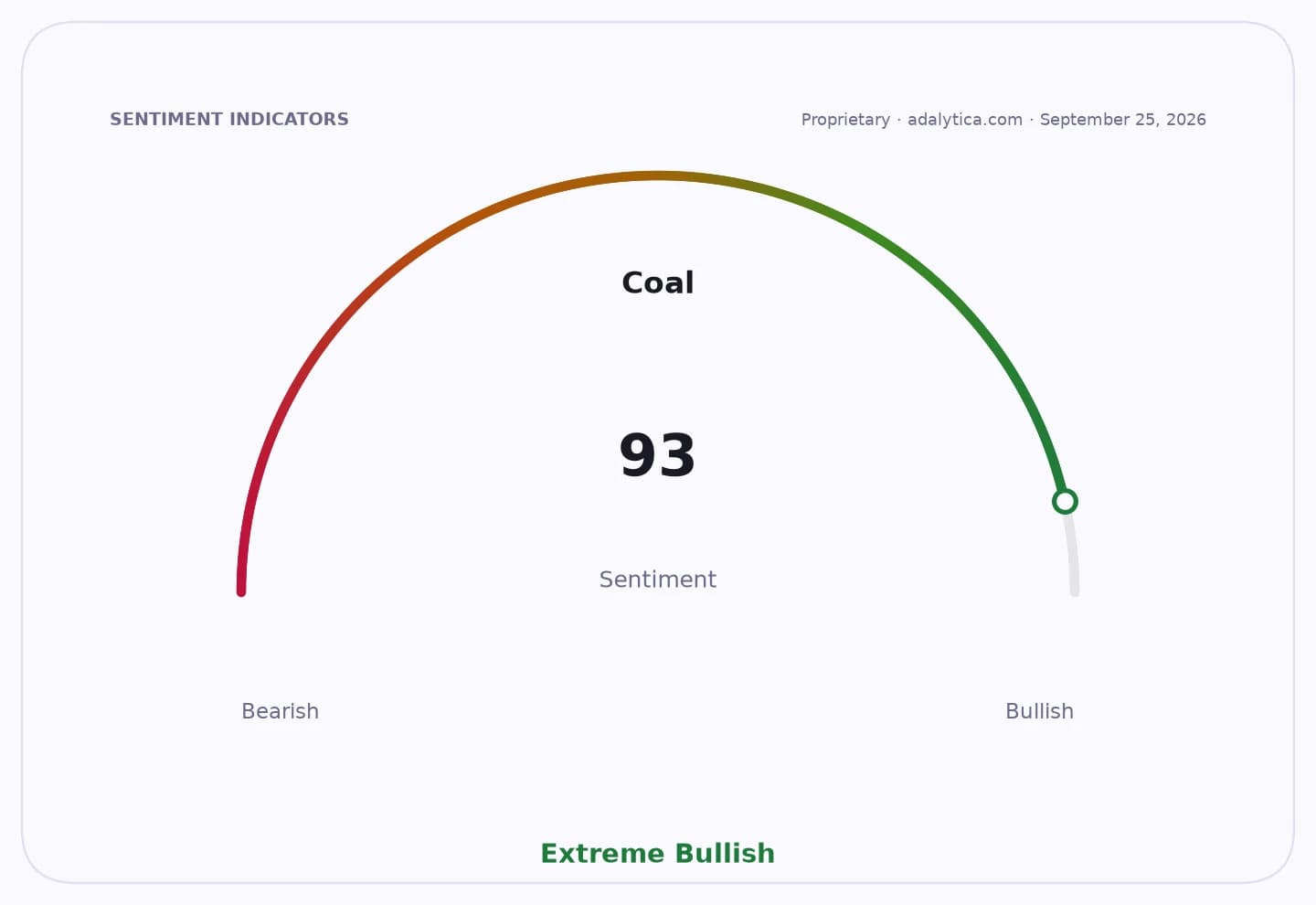
Sentiment IndicatorsⓘProprietary · adalytica.com · July 21, 2026
This is a snapshot — live sentiment, awareness and momentum for 130+ markets update continuously in the dashboard.Open AlphaPulse
For investors, the bigger message is that the Sino-Russian relationship is not fading into symbolism. It is becoming embedded in everyday commerce and strategic coordination, which raises the odds of further fragmentation in global supply chains, energy flows and cross-border payments. That matters for anything tied to China’s external demand, Russia-linked commodity routes and the defense complex, where markets continue to underestimate how quickly geopolitical blocs can harden.
The backdrop is already bearish for global stability. Adalytica’s Global Stability Sentiment sits at 4, or “Extreme Fear,” while its US–China Relations Sentiment is at 21, or “Fear,” underscoring how little room there is for complacency about the direction of major-power relations. Against that setting, even a visa extension is not routine diplomacy — it is another building block in a larger strategic realignment.
China’s mainland and Hong Kong markets have been volatile, but the broader investment implication is clear: the market is still underpricing the second-order winners from a world split into rival economic spheres. That means defense contractors, space and satellite resilience plays, cybersecurity, energy security names and selected logistics and infrastructure assets are likely to keep attracting capital as geopolitics, not just earnings, drives multiples.
The market also has to watch China exposure through a different lens. The Hong Kong-listed FXI ETF remains well below its 200-day moving average, even after recent rebounds, showing that investors have not yet fully embraced China as a geopolitical beneficiary. Instead, positioning suggests skepticism, which is often where the best asymmetry lives when policy is quietly shifting in favor of deeper state-led support and strategic insulation.
In my view, the real trade here is not Russia tourism or visa processing. It is recognizing that every incremental step between Beijing and Moscow makes the bloc more durable and the West’s containment strategy more expensive. Investors who want to position early should look beyond the headline and toward the toll roads of geopolitics: defense, satellite resilience, energy infrastructure, rare earths, and the logistics networks built for a more fractured world.
| Entity | Gains | Losses |
|---|---|---|
| China-Russia bloc | ▲Deeper ties | ▼Western pressure |
| Defense and space contractors | ▲Higher demand | ▼Peace dividend trades |
| Logistics and payments networks | ▲More cross-border flows | ▼Friction from sanctions |
| FXI / broad China equities | ▲Policy support narrative | ▼Geopolitical discount |