China’s imports of Russian liquefied natural gas surged 49.1% in the first 10 months of the year, underscoring how Beijing is reshaping its energy supply chain even as global gas trade remains volatile.
China Russian LNG imports rise 49.1% in 10 months
Natural Gas
That shift matters because LNG is not just another commodity flow: it is a strategic lever for China’s industrial costs, for Russia’s export revenue and for the global gas market’s pricing power. Beijing bought 8.7 million tons of Russian LNG in January through October, worth $4.96 billion, according to China’s customs data, making Russia China’s second-largest LNG supplier behind Australia.
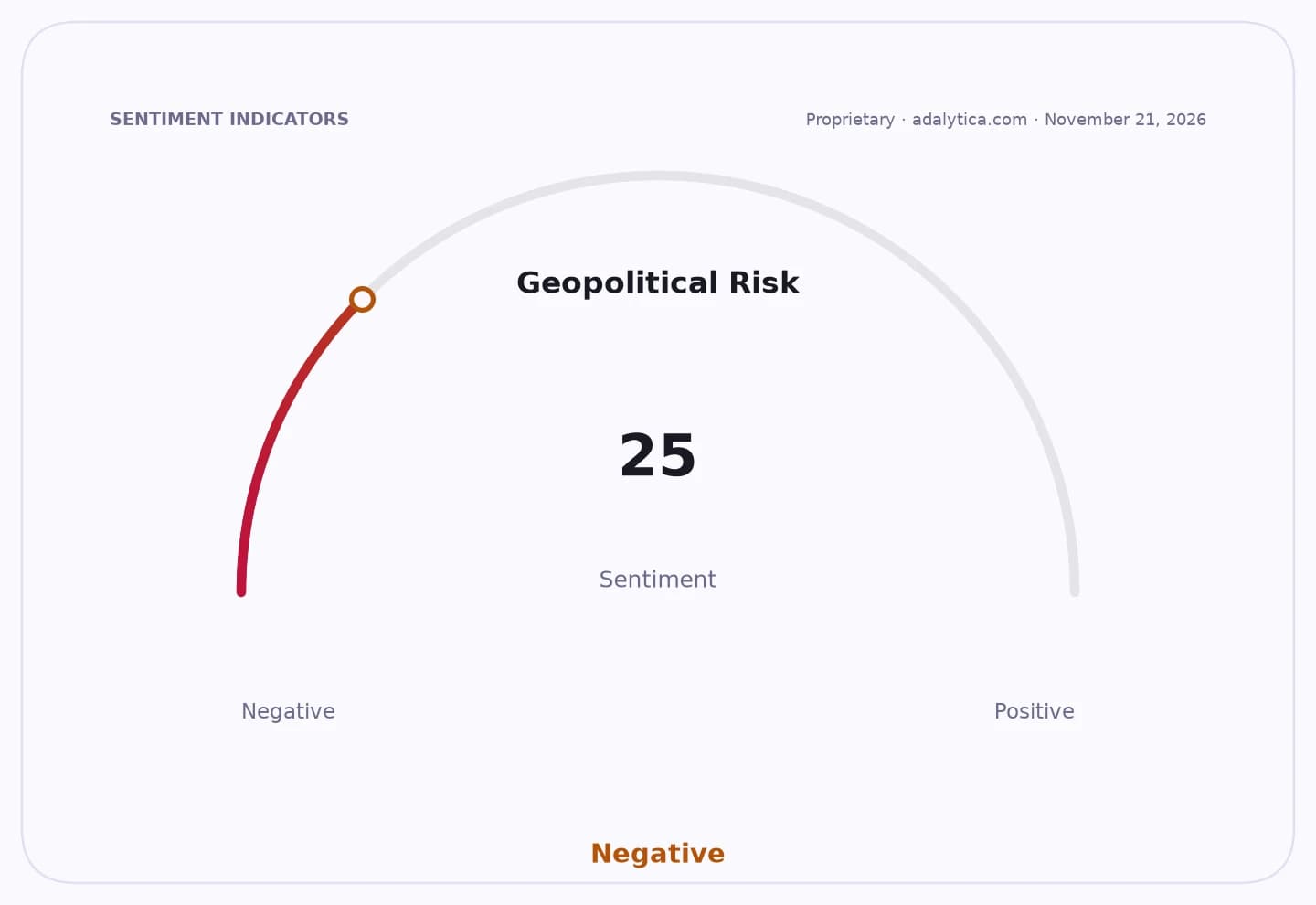
Sentiment Indicators
The numbers show a clear reallocation of supply. Australia still dominated China’s LNG imports at 17.02 million tons, but Russia’s growth outpaced the broader market, rising 52.3% in value over the period. Malaysia also expanded shipments, while Qatar’s exports to China fell sharply, suggesting China is diversifying away from some traditional Gulf flows and leaning more heavily on politically aligned or opportunistic supply.
For investors, that is a reminder that the LNG market is becoming more geopolitical, not less. Long-term contracting, shipping logistics and sanctions risk now matter as much as spot prices. Russian gas molecules finding a bigger home in China effectively tighten the strategic bond between the two countries while reinforcing a bifurcated global energy system: one lane for sanctioned and discounted barrels and molecules, another for Western-aligned trade.
The October pullback, when Russian LNG shipments fell 18.3% from September to 1.51 million tons, should not obscure the bigger trend. Seasonal swings are normal, but the year-to-date acceleration points to sustained demand from China and a continued rerouting of Russian energy exports toward Asia after Europe’s demand collapse.
The market implication is straightforward. The winners are LNG exporters with scale, contracted volumes and access to Asian demand. The losers are suppliers exposed to Chinese market share erosion and any investor still assuming global LNG trade will normalize around prewar patterns. Cheniere Energy and Shell remain among the clearest beneficiaries of durable LNG demand growth, while the broader trade supports the case for midstream infrastructure, shipping and regasification assets tied to Asia.
With Russian LNG now entrenched as a larger part of China’s import mix, the next catalyst is whether Beijing locks in even more long-term supply while global buyers compete for a relatively tight pool of flexible cargoes. That is why the LNG thesis remains one of the cleanest geopolitical trades in energy: follow the molecule flow, and the capital flow usually follows.
| Entity | Gains | Losses |
|---|---|---|
| Russia | ▲Higher LNG revenue | ▼Reliance on Asia |
| China | ▲More supply security | ▼Greater geopolitical exposure |
| Australia | ▲Stable top supplier status | ▼Share pressure from Russia |
| Qatar | ▲Flexible cargo demand | ▼China market share loss |