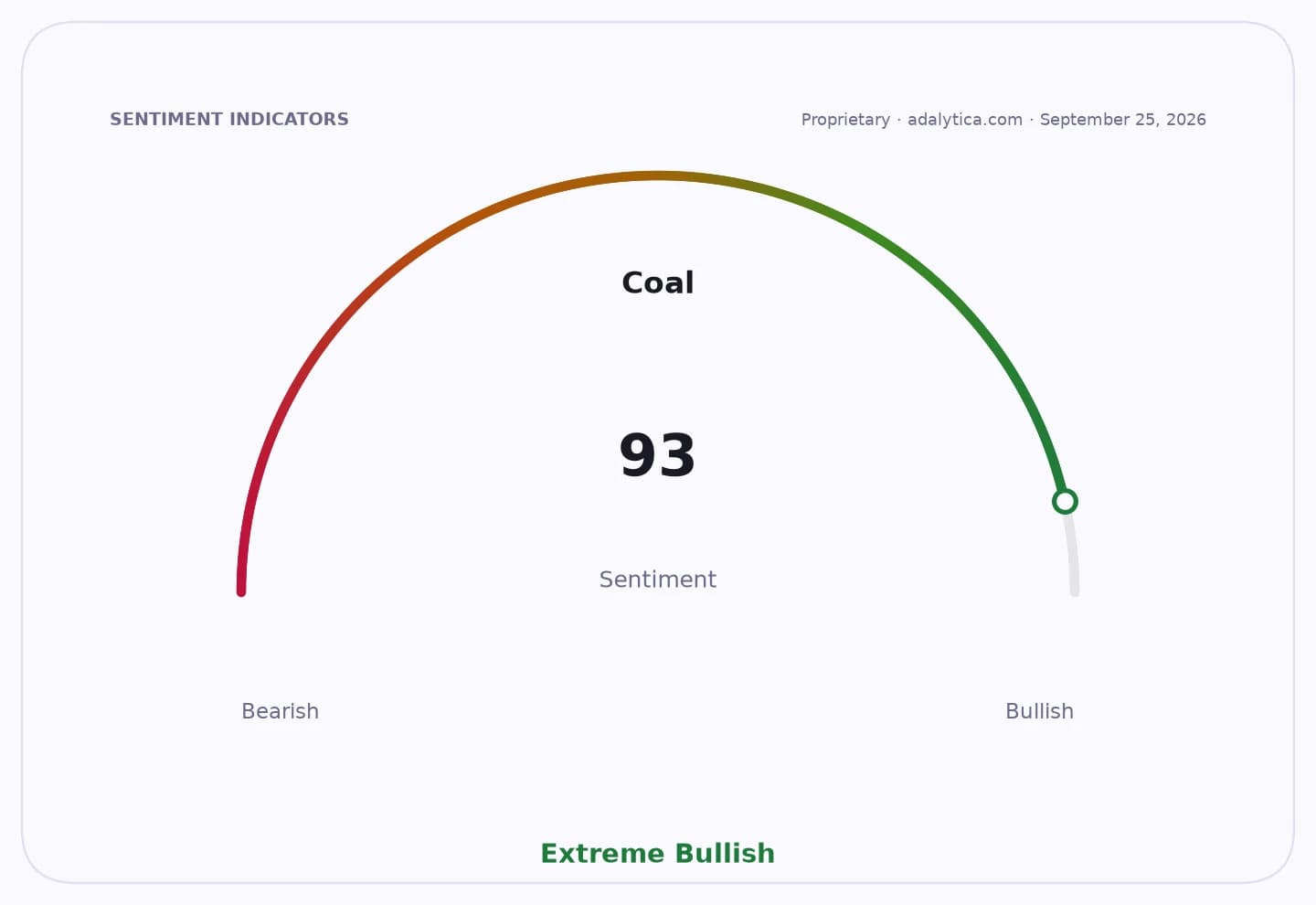
China’s retaliatory sanctions on six U.S. organizations raise the risk that a trade fight already centered on technology and defense will spill further into supply chains, capital flows and investor positioning.
China sanctions six U.S. groups; FXI near $36.31
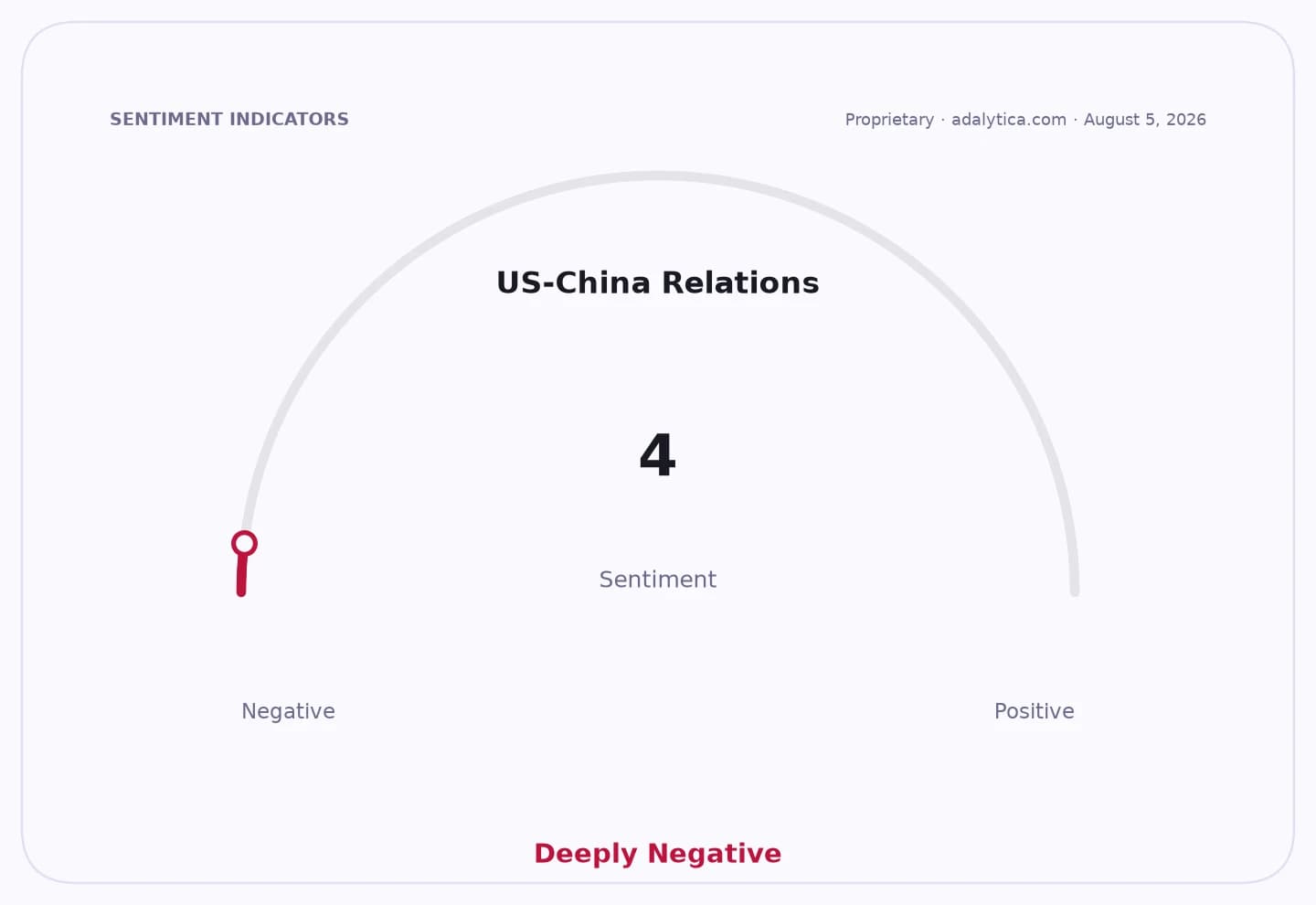
That matters because the latest exchange is not just symbolic diplomacy. It adds another layer of policy friction between the world’s two biggest economies at a time when markets were already pricing in fresh geopolitical strain. Adalytica’s U.S.–China Relations Sentiment gauge is at 4, or “Extreme Fear,” while awareness is 86, showing the confrontation is dominating investor attention even as broad global stability readings remain elevated. When policy uncertainty hardens into sanctions, the cost of doing business rises for multinationals on both sides, and the probability of tit-for-tat restrictions climbs.
Sentiment IndicatorsⓘProprietary · adalytica.com · August 5, 2026
This is a snapshot — live sentiment, awareness and momentum for 130+ markets update continuously in the dashboard.Open AlphaPulse
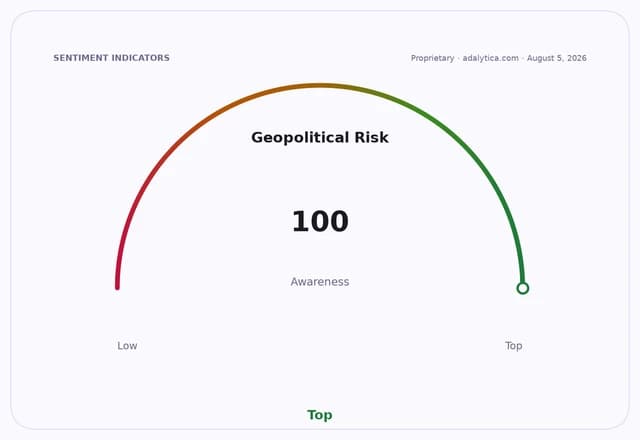
For investors, the immediate read-through is clear: China-facing assets are vulnerable to de-risking, while hedges tied to U.S. dollar strength and geopolitical volatility can find support. The iShares China Large-Cap ETF, FXI, has slipped to $36.31 from a recent intraday peak near $40.87 in mid-September, with its 200-day moving average around $36.93 and the 50-day average near $34.23. That puts the fund back near a technical inflection point rather than a clean breakout, even though momentum indicators remain constructive. By contrast, the Direxion Daily FTSE China Bear 3X ETF, YANG, has rebounded to $26.62 from a July low near $26.15 after briefly trading above $32 in mid-July, reflecting how quickly traders lean into downside protection when policy risk spikes. The Invesco U.S. Dollar Index Bullish Fund, UUP, has held around $28.16, underscoring the haven bid that typically follows rising geopolitical stress.
The deeper narrative is that Beijing is signaling it will not absorb U.S. pressure without response. That makes the current dispute less about one-off sanctions and more about a durable policy regime in which strategic sectors — chips, defense, critical materials and cross-border infrastructure — remain exposed to recurring retaliation. Adalytica’s China CCP Policy Direction sentiment sits at 93, suggesting Beijing is leaning hard into a firmer posture, while the latest data on U.S.–China relations shows sentiment deteriorating sharply over the past week.
US-China Relations — 30-day sentimentadalytica.com
Explore this data interactively — full history, time series and cross-market comparisons.Open AlphaPulse

The market underestimates how persistent that backdrop can be. Even if headline risk fades temporarily, investors should expect repeated bursts of volatility, slower multiple expansion for China-linked equities and renewed demand for assets tied to dollar strength, supply-chain diversification and defense spending. The best way to position now is not to chase a quick rebound in China risk assets, but to focus on the beneficiaries of fragmentation: U.S. industrials tied to reshoring, defense contractors, and selective dollar and volatility hedges. As long as sanctions remain the preferred language of both capitals, this is a trade war that keeps creating opportunities — and traps — for investors who move too slowly.
| Entity | Gains | Losses |
|---|---|---|
| U.S. dollar / UUP | ▲Haven demand | ▼Risk-on flows |
| China equities / FXI | ▲Short-covering only | ▼Policy-driven de-rating |
| Bearish hedges / YANG | ▲Volatility upside | ▼Calm conditions |
| Multinationals / exporters | ▲Diversification tailwinds | ▼Cross-border friction |