A web of commercial shipments from China is helping Iran and the Houthi movement assemble drones, missile parts and related military hardware, deepening a security problem that now reaches from the Gulf to the Red Sea and complicates Washington’s efforts to contain both Tehran and its allies.
China shipments aid Iran and Houthi weapons supply
The biggest development is not a single shipment but the scale and resilience of the supply chain. Investigations by Bloomberg and the Wall Street Journal indicate that trade routes long used for ordinary industrial commerce are now carrying a flow of dual-use materials and components into Iran and Houthi-held Yemen, where they can be folded into weapons production. That matters economically because it shows how sanctions regimes are being eroded by global trade networks that are hard to police, while also raising the risk of further disruption to shipping lanes, energy flows and defense spending.
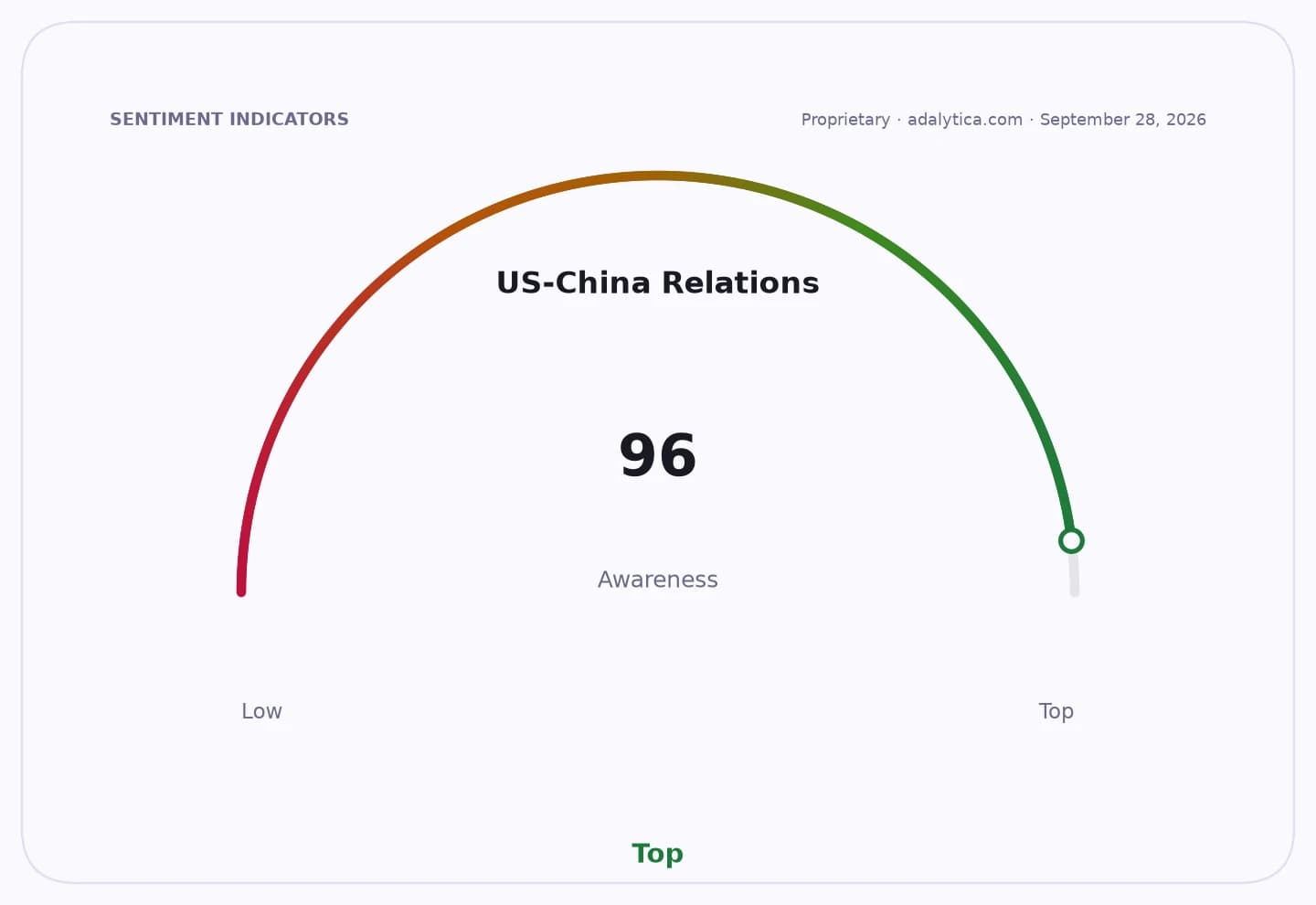
Sentiment IndicatorsⓘProprietary · adalytica.com · September 29, 2026
This is a snapshot — live sentiment, awareness and momentum for 130+ markets update continuously in the dashboard.Open AlphaPulse
In Yemen, customs records and intercepted containers showed dozens of Chinese-linked shipments moving through 41 bills of lading, many originating in Guangzhou. In one case, experts examining a container in Aden found industrial machinery, chemicals and parts that appeared consistent with ballistic missile assembly, including rear fins, heat-resistant phenolic resin and machine tools that could be used to make precision drone components. Yemeni officials said some of the material amounted to “a complete rocket structure” spread across three containers.
The pattern matters because it suggests the Houthis are moving beyond simple importation of finished weapons toward more local assembly and, potentially, more self-sufficient production. That is a strategic shift for a group whose attacks on Red Sea shipping have already forced costly rerouting for global carriers and heightened insurance and security expenses. If the militia can source key inputs through commercial channels, interdiction becomes harder and the ceiling on its operational tempo rises.
The same dynamic appears in Iran. The Journal reported that in the first half of 2026 roughly 1,300 shipments from China reached Iran’s defense ministry carrying dual-use components, including GPS trackers, electric motors, aircraft parts and electronics that can be used in guidance systems. It also described Chinese-made chemicals such as sodium perchlorate, a precursor for solid rocket fuel. The flow continued even as Beijing publicly positioned itself as a diplomatic counterweight in the region, underlining the gap between China’s official line on stability and the commercial ecosystem its exports support.
Washington’s response is likely to be more sanctions and more scrutiny of intermediaries in China, Hong Kong, Pakistan and elsewhere. The US has already sanctioned 13 people and entities tied to Iranian weapons procurement, and officials say more than 70% of prohibited or restricted dual-use goods seized between January 2025 and April 2026 were of Chinese origin, according to a UN-monitoring source cited by US officials. Beijing rejects the allegations and says it complies with UN resolutions, but the evidence points to a recurring problem: individual parts may be legal on paper, yet in aggregate they can sustain military programs.
For investors, the implications are broad. Defense contractors stand to benefit if the US and its allies respond with more missile defense, surveillance and maritime security spending, but supply chains for aerospace and industrial manufacturers may face tighter export enforcement and greater compliance costs. The stakes are also visible in markets for crude oil and freight: any escalation involving Iran, the Houthis or the Bab al-Mandab chokepoint raises the risk premium for energy and shipping, even if it stops short of a broader regional war.
The geopolitical narrative is increasingly clear. China is not just a trade partner or diplomatic interlocutor; it is also the source of commercial inputs that help sustain Iran’s military capacity and the Houthis’ growing industrial base. That gives Tehran and its allies more endurance, more autonomy and more room to challenge US interests across the Middle East, while leaving Washington with a harder problem than sanctions alone can solve.
| Entity | Gains | Losses |
|---|---|---|
| Iran & Houthis | ▲Cheaper dual-use inputs | ▼Higher sanction risk |
| China exporters/intermediaries | ▲Sales and transit revenue | ▼Scrutiny and enforcement |
| US defense contractors | ▲More security demand | ▼Compliance and supply-chain risk |
| Global shippers/oil buyers | ▲— | ▼Higher route and energy risk |