China’s push to deepen trade and investment ties on this visit matters because investors are looking for any sign that the world’s second-largest economy can avoid a more damaging confrontation with Washington.
China Stocks Rise as FXI Hits 36.06 on July 29

The stakes are high for growth, corporate earnings and capital flows. Beijing has been condemning fresh U.S. tariffs and warning that the dispute could slide into a broader trade war, even as both sides keep lines of communication open. That mix of confrontation and engagement is exactly what markets have been wrestling with: protectionist pressure on one hand, and the possibility of selective thawing on the other.
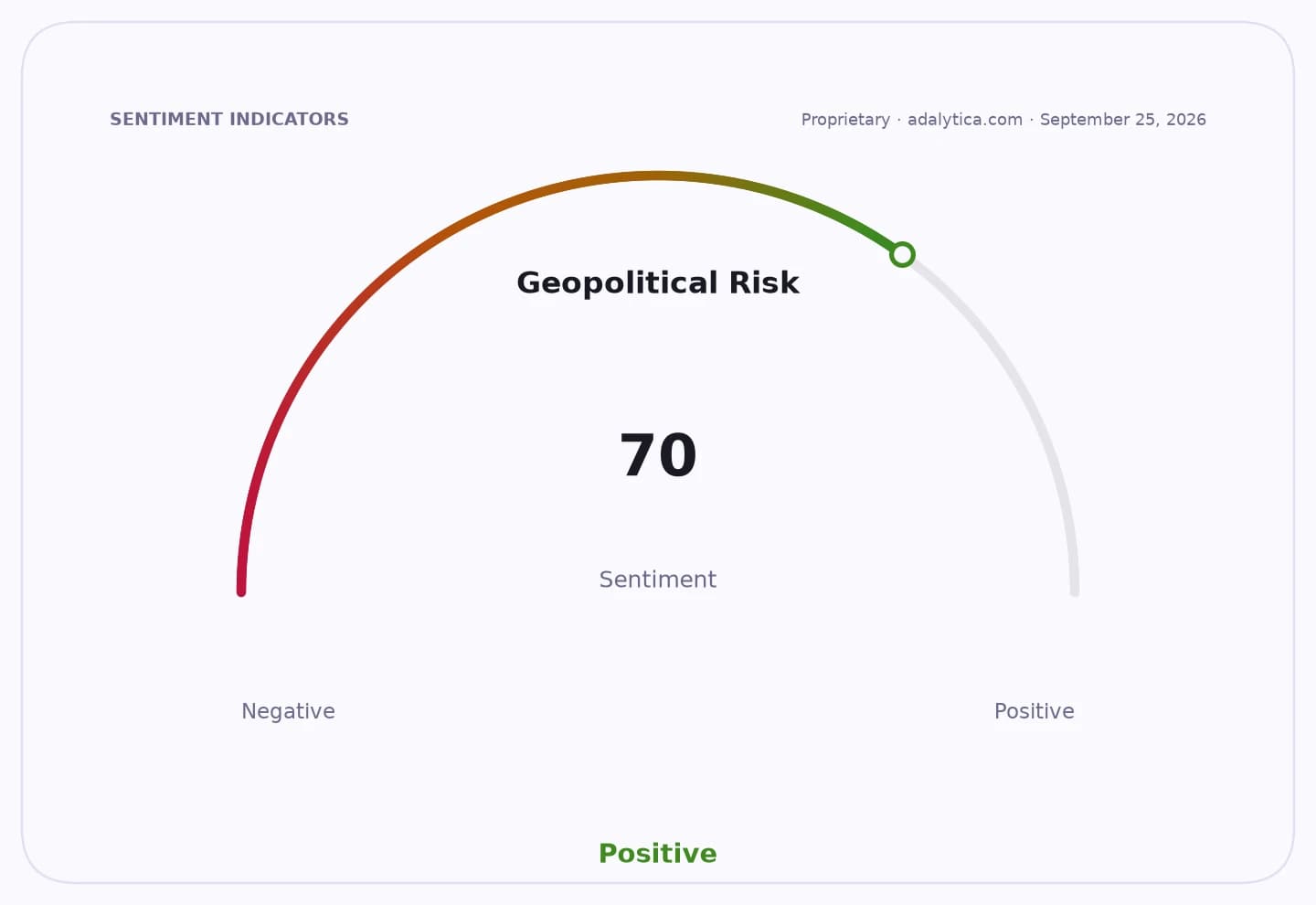
Sentiment IndicatorsⓘProprietary · adalytica.com · July 29, 2026
This is a snapshot — live sentiment, awareness and momentum for 130+ markets update continuously in the dashboard.Open AlphaPulse
Chinese and U.S.-listed China stocks have already shown how sensitive investors are to every twist in the relationship. The FXI China large-cap ETF was trading at 36.06 on July 29, up from 34.13 on July 17, while the broader MCHI ETF rose to 55.03 from 52.95 over the same stretch. Those moves suggest investors are willing to buy into any sign that trade tensions may not spiral, even though both funds remain well below their 200-day moving averages, a reminder that confidence is still fragile.
That tension also shows up in the broader policy backdrop. Adalytica’s China CCP Policy Direction Sentiment gauge remains neutral at 36, but its awareness reading is deep in fear territory, underscoring how uncertain the outlook remains. The U.S.-China relations gauge is also only neutral, at 64, after a sharp improvement over the past week. In other words, the market is not pricing in a clean resolution — just a chance that diplomacy can keep damage contained.
For long-term investors, that is the real story. Trade and investment ties between the U.S. and China are not just diplomatic talking points; they shape supply chains, margins, semiconductors, consumer electronics and the valuation of Chinese equities. Apple, TSMC and a host of multinational manufacturers still rely on China-linked demand and production, which means even modest progress can support earnings expectations, while new tariffs can force costly rerouting of global commerce.
The immediate risk is that negotiations produce headlines without substance, leaving companies to navigate higher costs and more unpredictable rules. But the upside is equally clear: if the two economies can preserve even a narrow channel for trade and investment, that is good for global growth, less disruptive for exporters and far better for investors than a full-scale decoupling narrative.
For patient investors, this remains a story worth watching, not trading around. The best approach is still diversification, discipline and a multi-year horizon — because in a relationship this economically important, the biggest returns often come from staying invested while the noise plays out.
| Entity | Gains | Losses |
|---|---|---|
| China exporters | ▲Easier access to U.S. demand | ▼Tariff escalation |
| U.S. multinationals | ▲More stable supply chains | ▼Higher input costs |
| Chinese equities | ▲Better sentiment, capital inflows | ▼Trade-war risk |
| U.S. consumers | ▲Lower import disruption | ▼Higher prices if tariffs stick |