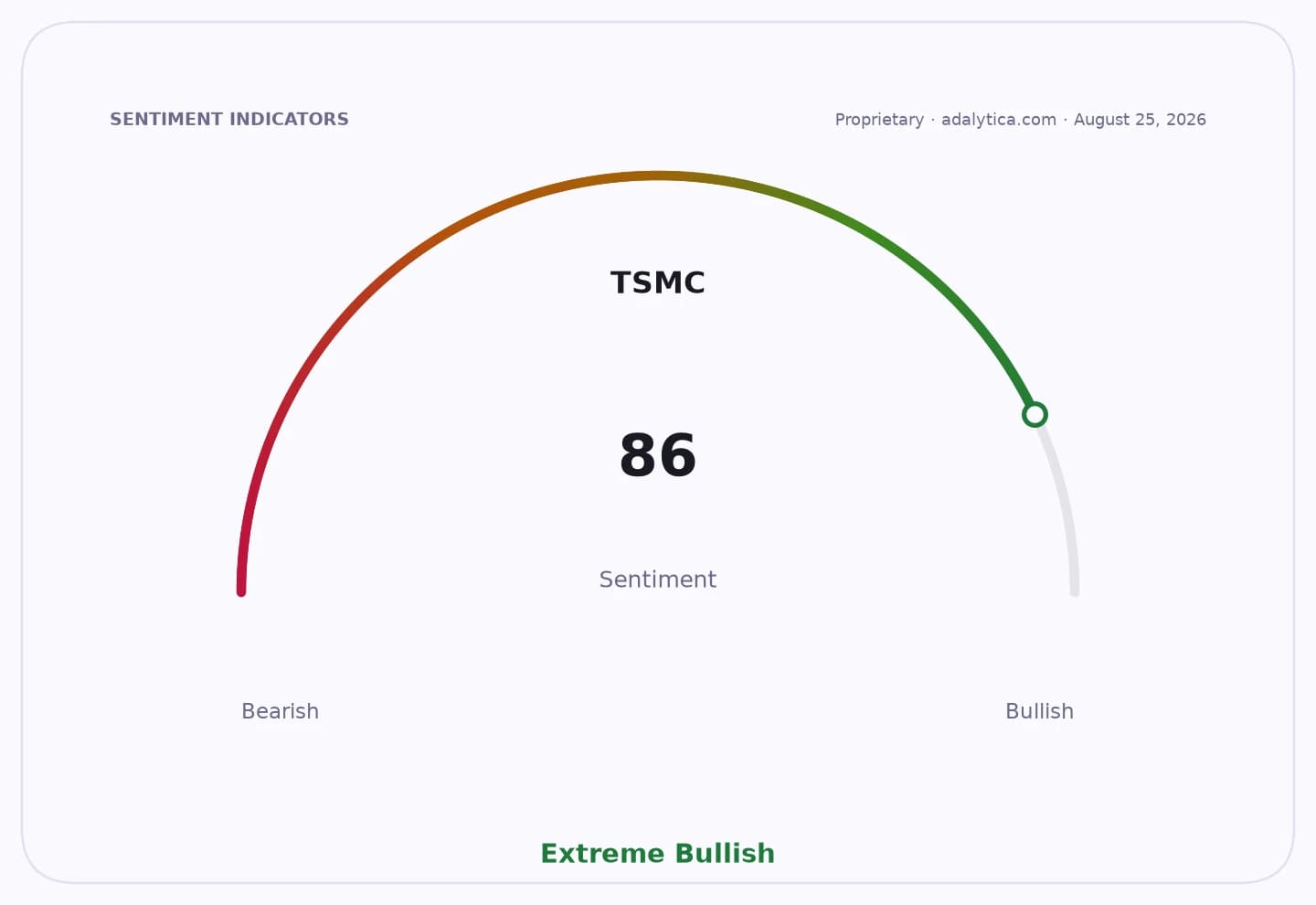
China’s three-week seabed survey east of Taiwan is more than a scientific exercise: it is another move in Beijing’s long campaign to normalize claims over waters and territory around the island while probing one of the most strategically sensitive corridors in Asia.
China Survey East of Taiwan Raises Security Risk
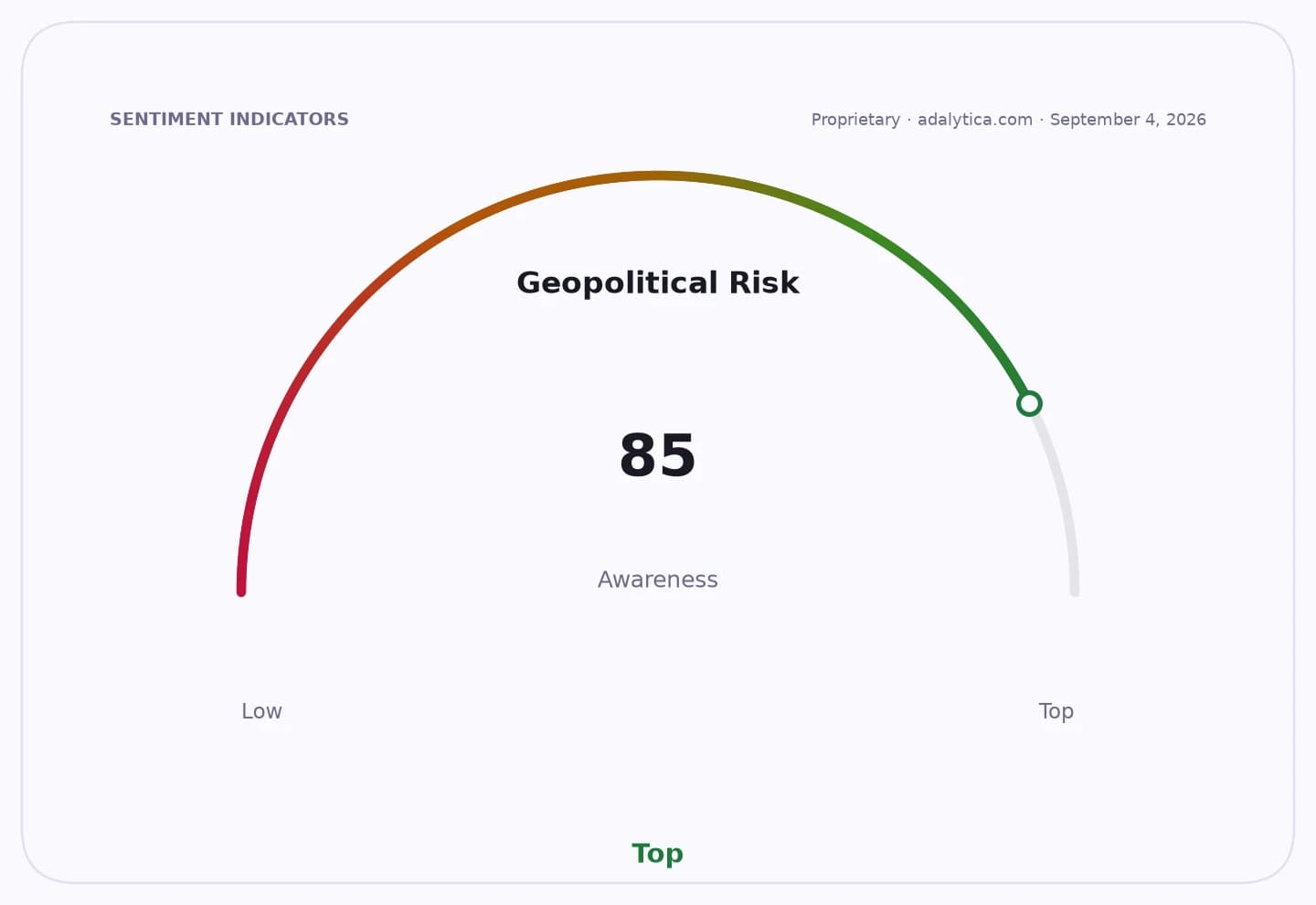
That matters economically because the Taiwan Strait and the waters to Taiwan’s east sit at the center of global trade, advanced-chip supply chains and military risk pricing. The more Beijing treats the area as administratively reachable — through research missions, mapping work and coast guard patrols — the more it raises the odds of incremental enforcement actions that can complicate shipping, insurance, offshore infrastructure planning and cross-strait investment.
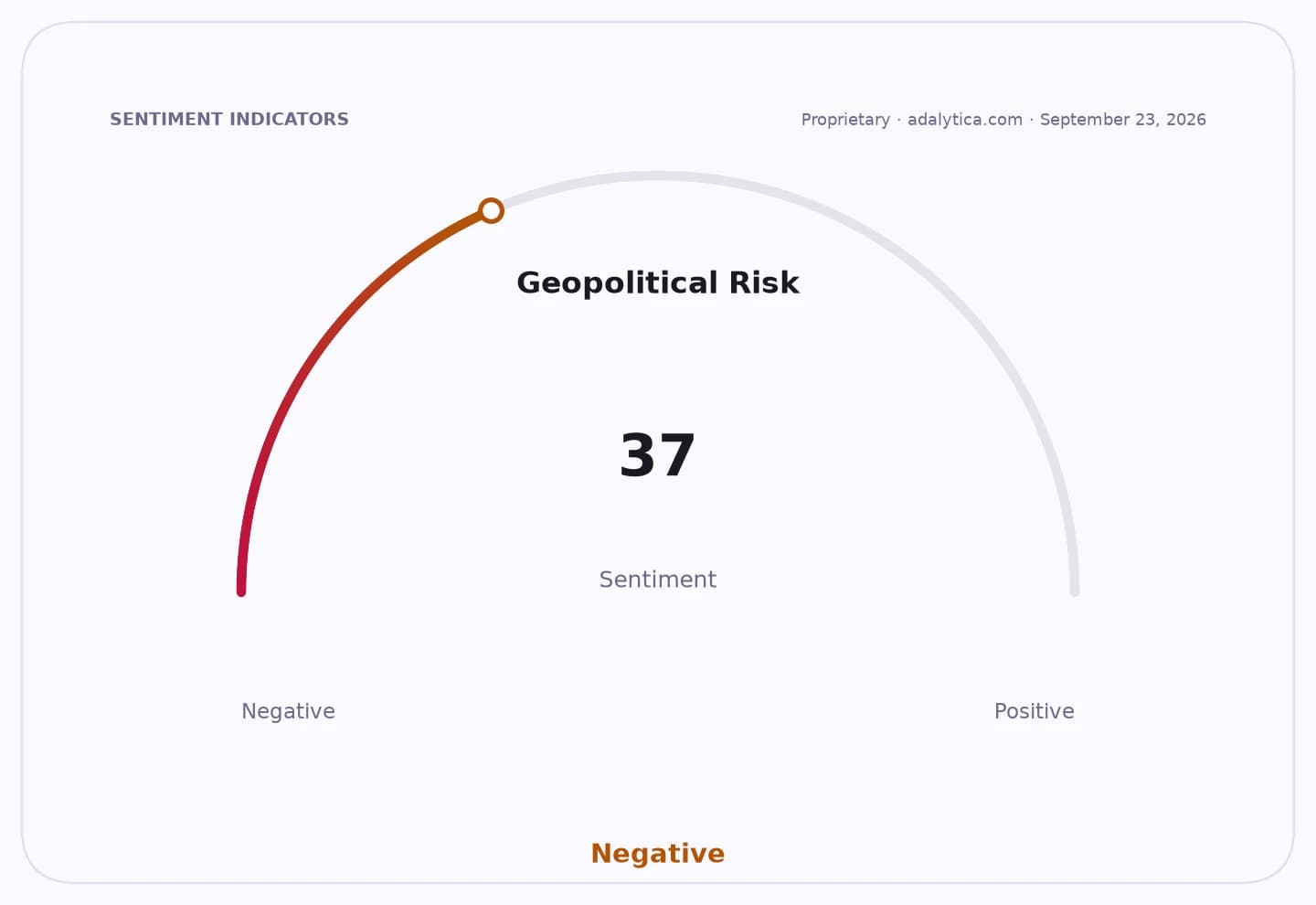
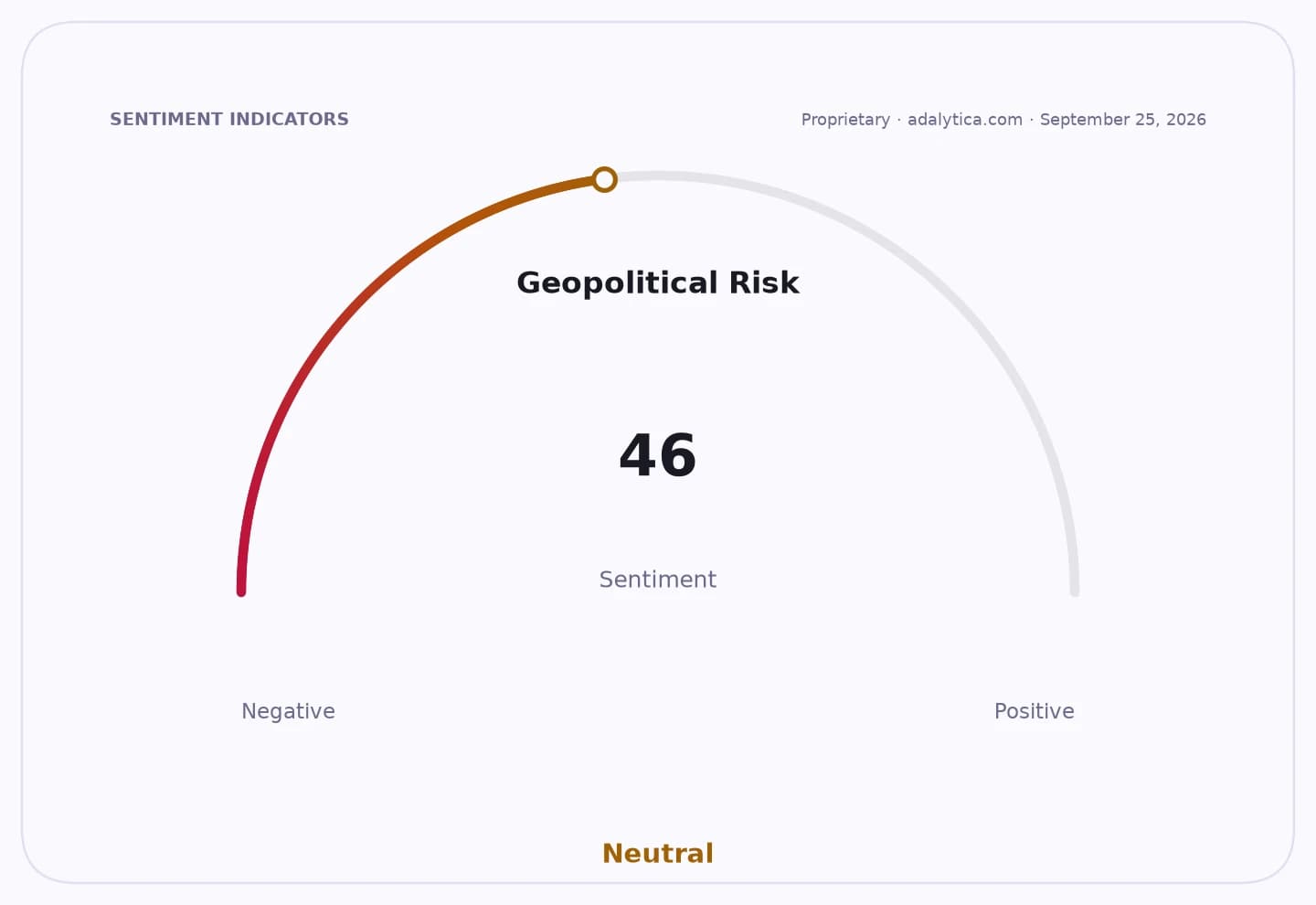
Sentiment IndicatorsⓘProprietary · adalytica.com · September 4, 2026
This is a snapshot — live sentiment, awareness and momentum for 130+ markets update continuously in the dashboard.Open AlphaPulse
Taiwan’s coast guard said the Chinese vessel operated from Aug. 10 to Aug. 31 inside Taiwan’s exclusive economic zone, a claim Beijing rejects. Beijing said the mission was aimed at understanding geology and building a more unified territorial map of China. The language matters: geological survey ships are dual-use assets, and seabed data can support undersea navigation, resource assessment, cable-route mapping and military planning. In a region where undersea communications and energy links are critical, that is no trivial detail.
The timing also fits a broader pattern. Beijing said on Thursday its coast guard conducted another “routine patrol” east of Taiwan, the third such operation since June. Taken together, the survey and patrols look less like isolated incidents than a slow ratchet of presence designed to make China’s claim feel normal through repetition. Taiwan’s government, which rejects Beijing’s sovereignty claim outright, sees the activity as unlawful and politically loaded — and investors should too.
For markets, the immediate read-through is not to expect a direct shock to Taiwan’s chip industry. But the strategic premium on Taiwan assets remains real, and it rises whenever China demonstrates it can sustain pressure without firing a shot. That favors defense, surveillance, satellite, subsea cable security and maritime monitoring names more than it punishes them, while keeping a floor under volatility in Taiwan-linked equities and ETFs.
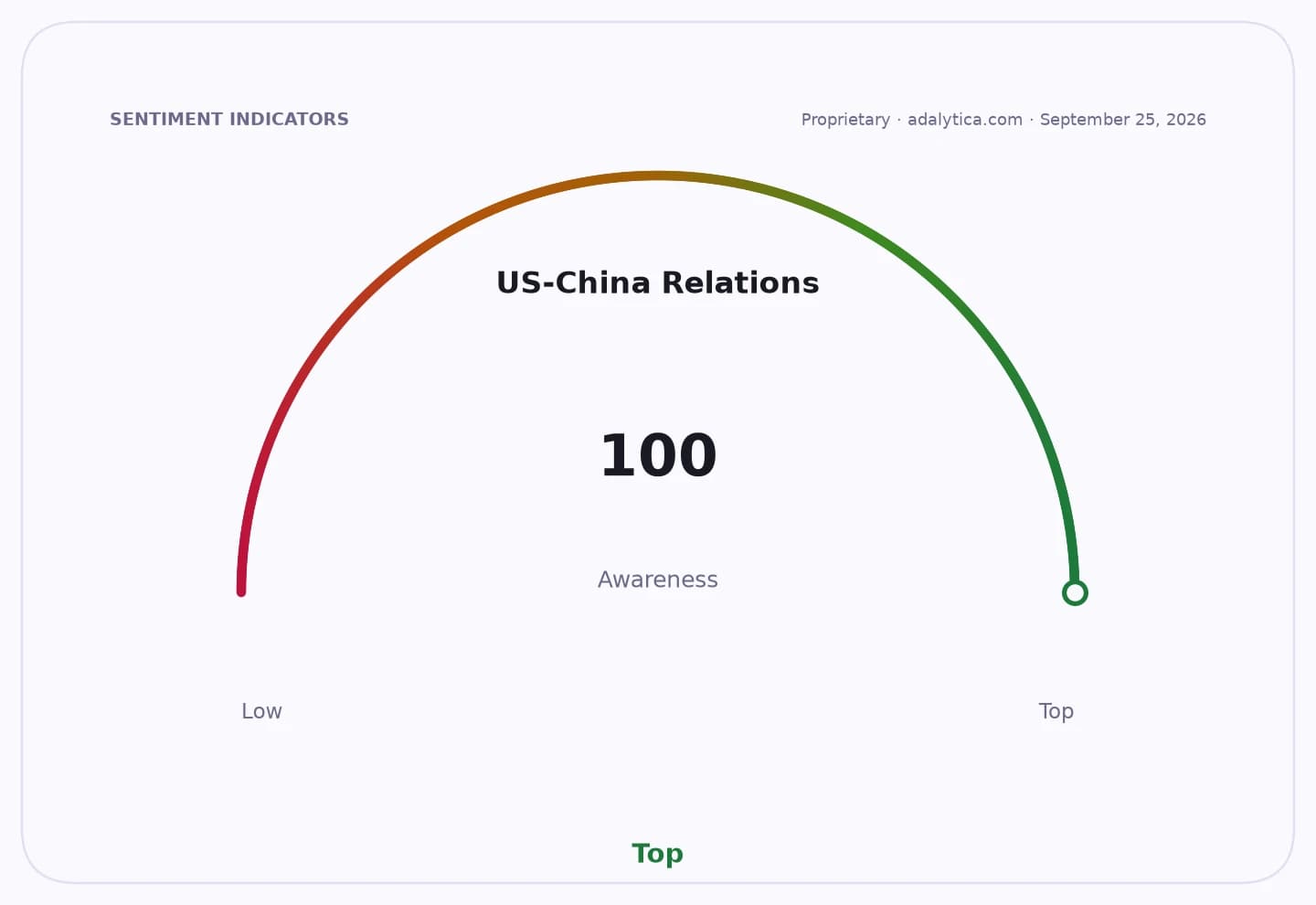
Adalytica’s US–China Relations Sentiment reading has already jumped to Extreme Greed, reflecting how quickly geopolitical headlines can reprice attention even before they reprice assets. The market may be underestimating the second-order effect: each “routine” patrol or survey adds another layer to the risk framework around Taiwan, and that is exactly how strategic competition usually becomes investable. The best positioning is to own the picks-and-shovels of contest and resilience — from defense supply chains to infrastructure and secure communications — before the next escalation forces everyone else to chase it.
| Entity | Gains | Losses |
|---|---|---|
| Chinese coast guard and survey vessels | ▲Presence and leverage | ▼International pushback |
| Taiwan defense and monitoring firms | ▲Higher demand for security | ▼None in the short term |
| Subsea cable and maritime security providers | ▲More contract opportunities | ▼Costlier risk environment |
| Taiwan and regional equities | ▲Strategic attention | ▼Geopolitical discount |