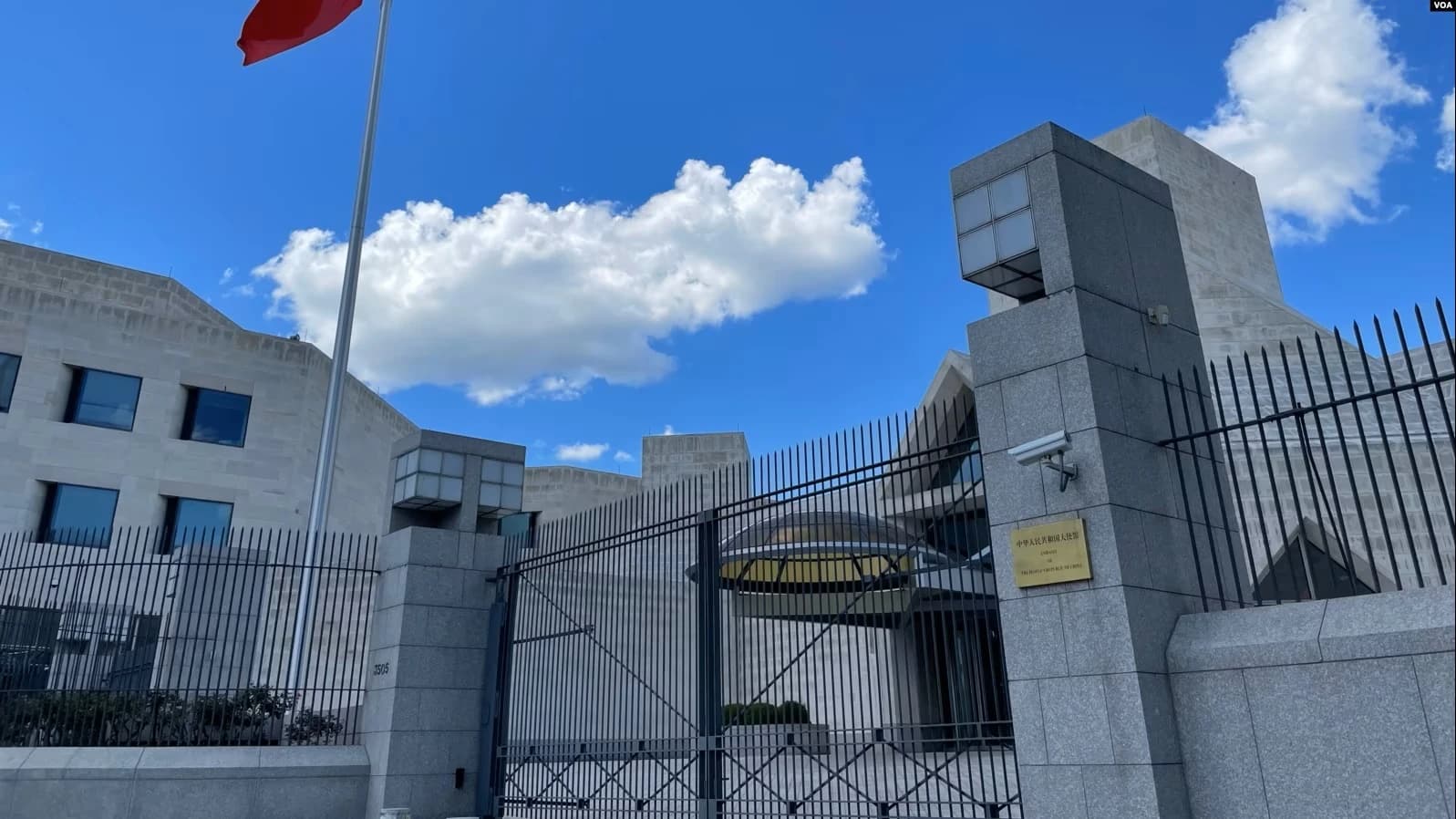
Beijing has sharpened its defense of the One-China principle, turning a dispute over a 1971 UN resolution into another flashpoint in already brittle China-Taiwan relations.
China Taiwan row over UN Resolution 2758

The immediate economic impact is limited, but the geopolitical stakes are high for investors because any fresh deterioration in cross-strait ties can ripple through Asian markets, raise defense-risk premiums and complicate trade and supply-chain planning across the Taiwan Strait.
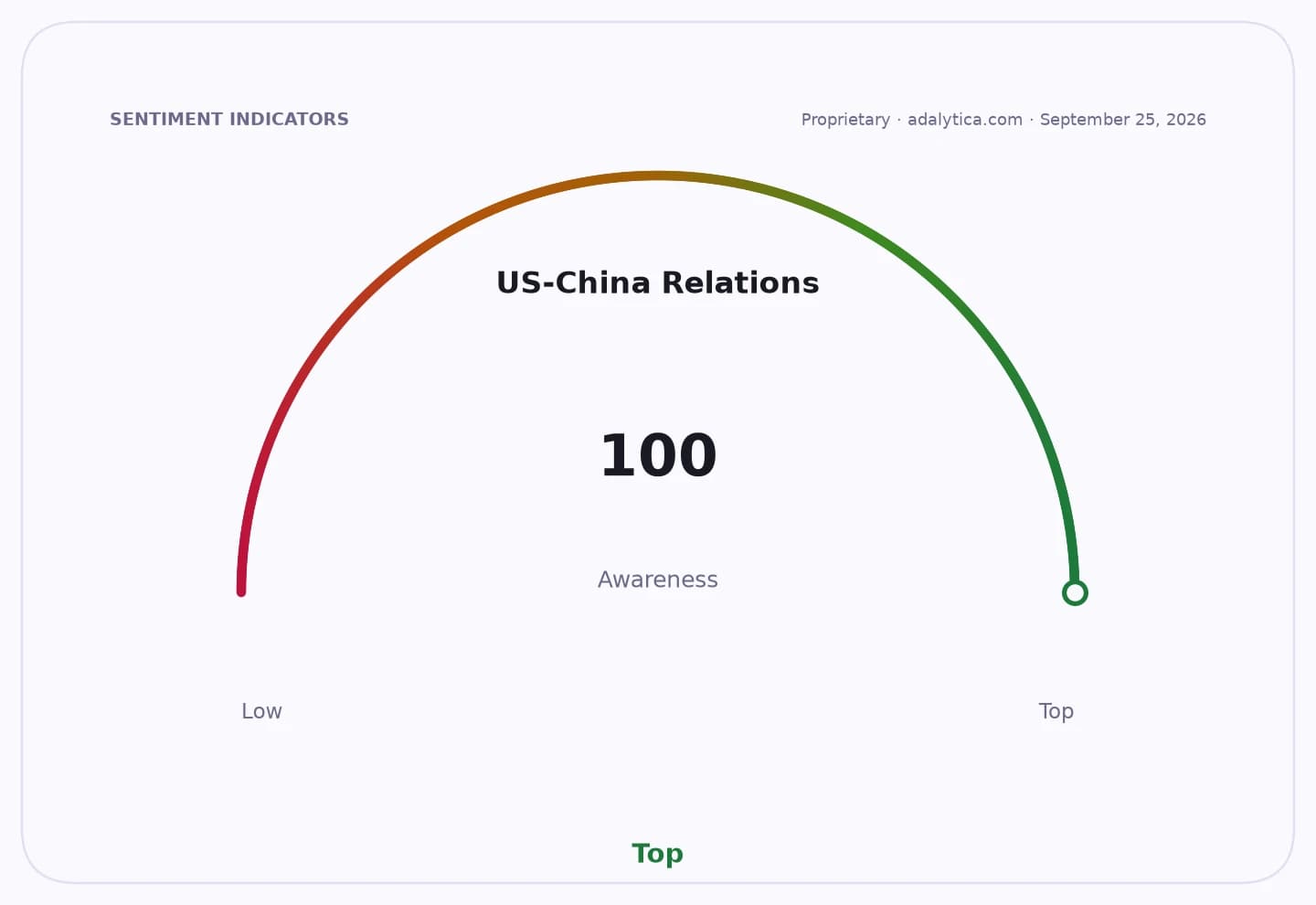
Sentiment IndicatorsⓘProprietary · adalytica.com · September 11, 2026
This is a snapshot — live sentiment, awareness and momentum for 130+ markets update continuously in the dashboard.Open AlphaPulse
China’s foreign ministry on Tuesday said “Taiwan has never been a country and will never be a country,” after Taiwan President Lai Ching-te accused Beijing of twisting UN General Assembly Resolution 2758 to bolster its sovereignty claim. Foreign ministry spokesperson Mao Ning said the resolution settled “once and for all” the representation of China at the United Nations and reaffirmed the One-China principle.
The row centers on how the UN measures are interpreted. Resolution 2758, passed in 1971, recognized the People’s Republic of China as the only legitimate representative of China at the UN and expelled the representatives of Chiang Kai-shek. Beijing says that leaves no room for “two Chinas” or “one China, one Taiwan,” while Taiwan argues the resolution says nothing about the island’s sovereignty or political status.
For investors, the dispute matters less as a legal argument than as a marker of how far Beijing is willing to push its line on Taiwan. China says more than 180 UN member states support the One China principle, while major powers including the US, EU, UK, Japan, India and Australia maintain a one-China policy that recognizes Beijing as the government of China but stops short of endorsing its sovereignty over Taiwan.
China-focused exchange-traded funds have been mixed in recent sessions, with the iShares MSCI China ETF, FXI, slipping to $34.35 on Sept. 10 and trading below both its 50-day and 200-day moving averages. The iShares MSCI Taiwan ETF, EWT, eased to $108.92 from recent highs, while the ASX, which tracks Australia’s market, was last at $39.86. The moves do not point to a panic response, but they underscore how sensitive regional assets remain to any escalation in Taiwan rhetoric.
Adalytica’s US-China Relations Sentiment gauge remains at 96, or “Extreme Greed,” while global stability sentiment sits at 30, classified as “Fear,” suggesting markets are still pricing geopolitical risk unevenly even as headline tension stays elevated.
The broader message is that Taiwan remains one of the most consequential geopolitical risk points for global investors, particularly for semiconductors, shipping, defense and broader Asia exposure. Any further escalation in language from Beijing or Taipei could keep pressure on risk appetite and reinforce the premium investors assign to supply-chain resilience and regional stability.
| Entity | Gains | Losses |
|---|---|---|
| Beijing | ▲Reinforces sovereignty claim | ▼Faces more Taiwan pushback |
| Taiwan's DPP government | ▲Mobilizes international support | ▼Risks diplomatic isolation |
| Global investors | ▲Clearer policy stance to price | ▼Higher geopolitical risk premium |
| Semiconductor and Asia supply chains | ▲Status quo clarity if contained | ▼Disruption risk if tensions rise |