Europe’s push for a stronger yuan is unlikely to revive China’s economy or solve its trade imbalance, and that matters because currency diplomacy can’t substitute for the harder work of domestic rebalancing and demand growth.
China Yuan Debate Over Europe Trade Imbalance

The key point from Asian media, echoed by Beijing’s sharp response, is that the European Union appears to be chasing a foreign-exchange fix for a problem that is fundamentally economic. China’s message is that a weaker or stronger currency alone will not close a deficit created by slower growth, uneven demand and structural trade flows. Investors should care because when policymakers talk about a “Plaza Accord”-style deal, they are really talking about whether currencies, trade policy and capital flows could be forced into a new regime. In this case, Beijing is signaling that such a bargain is not on the table.
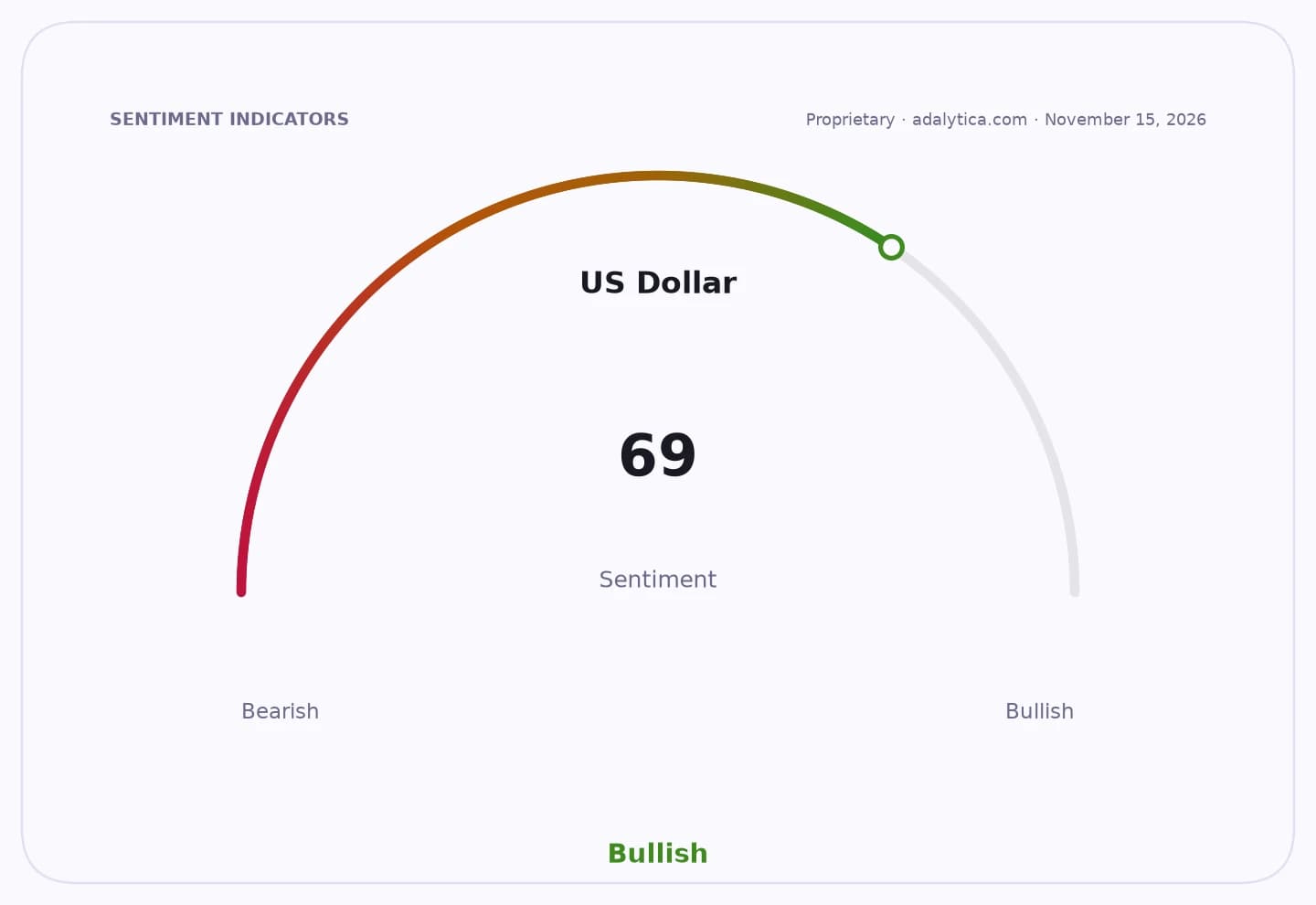
Sentiment Indicators
That makes the euro-yuan and dollar-yuan debate more than just diplomatic theater. A coordinated currency deal, like the 1985 Plaza Accord that pushed the dollar lower, can shift competitiveness and asset prices, but it cannot create real spending power where it does not exist. If Europe wants a smaller deficit with China, it needs stronger internal demand, more productive investment and a more competitive industrial base. If China wants durable growth, it needs households and services to do more of the heavy lifting. Neither problem is solved by jawboning the exchange rate.
Markets have already been sensitive to that tension. The yuan has been under enough pressure to keep traders alert, while the dollar has remained a central clearing point for global risk. Adalytica’s Chinese yuan trade signals show sentiment in fear territory, even as awareness is extremely elevated, a mix that suggests investors are watching the currency closely without showing conviction that policy talk will change the trend. By contrast, FX carry trade sentiment is in extreme greed, a reminder that investors still see opportunity in yield differentials even when exchange-rate politics are noisy.
For long-term investors, the lesson is straightforward: currency headlines can move markets, but they rarely alter the underlying earnings power of businesses on their own. A stronger yuan would help some importers and pressure some exporters; a weaker yuan would do the opposite. But the bigger story is whether China can engineer a cleaner growth model and whether Europe can compete without relying on exchange-rate pressure. Until that changes, the yuan debate is more likely to influence sentiment than to transform the real economy. For investors, it is worth watching — but not mistaking for a cure.
| Entity | Gains | Losses |
|---|---|---|
| Chinese exporters | ▲Price competitiveness | ▼Margin pressure from stronger yuan |
| European manufacturers | ▲Cheaper imports | ▼Worse trade imbalance |
| Forex carry traders | ▲Yield opportunities | ▼Policy-driven currency swings |
| China’s economy | ▲Little from currency pressure | ▼If demand weakness persists |