China’s yuan has stabilized after sharp recent swings, but traders are still bracing for more turbulence as Beijing leans harder on policy support and broader dollar moves keep the currency vulnerable.
China Yuan Stabilizes as Beijing Supports Markets
The offshore and onshore yuan have recovered from a one-month low, with the median exchange rate recently at 6.7088 per dollar, helped by exporter demand even as the greenback remains firm. That steadier tone matters because the yuan is a key barometer for China’s growth outlook, capital flows and policy credibility — and abrupt depreciation can ripple through broader Asian markets, corporate hedging costs and investor sentiment toward Chinese assets.
Sentiment Indicators
Chinese Yuan
Authorities are not standing still. Beijing has kept up market support measures, including record 90 billion yuan of ETF buying to calm domestic equities, while China and Singapore have expanded yuan financing channels in another push to widen the currency’s use in trade and funding. The moves fit a broader effort to keep the yuan from weakening too far and to reinforce its role in cross-border finance.
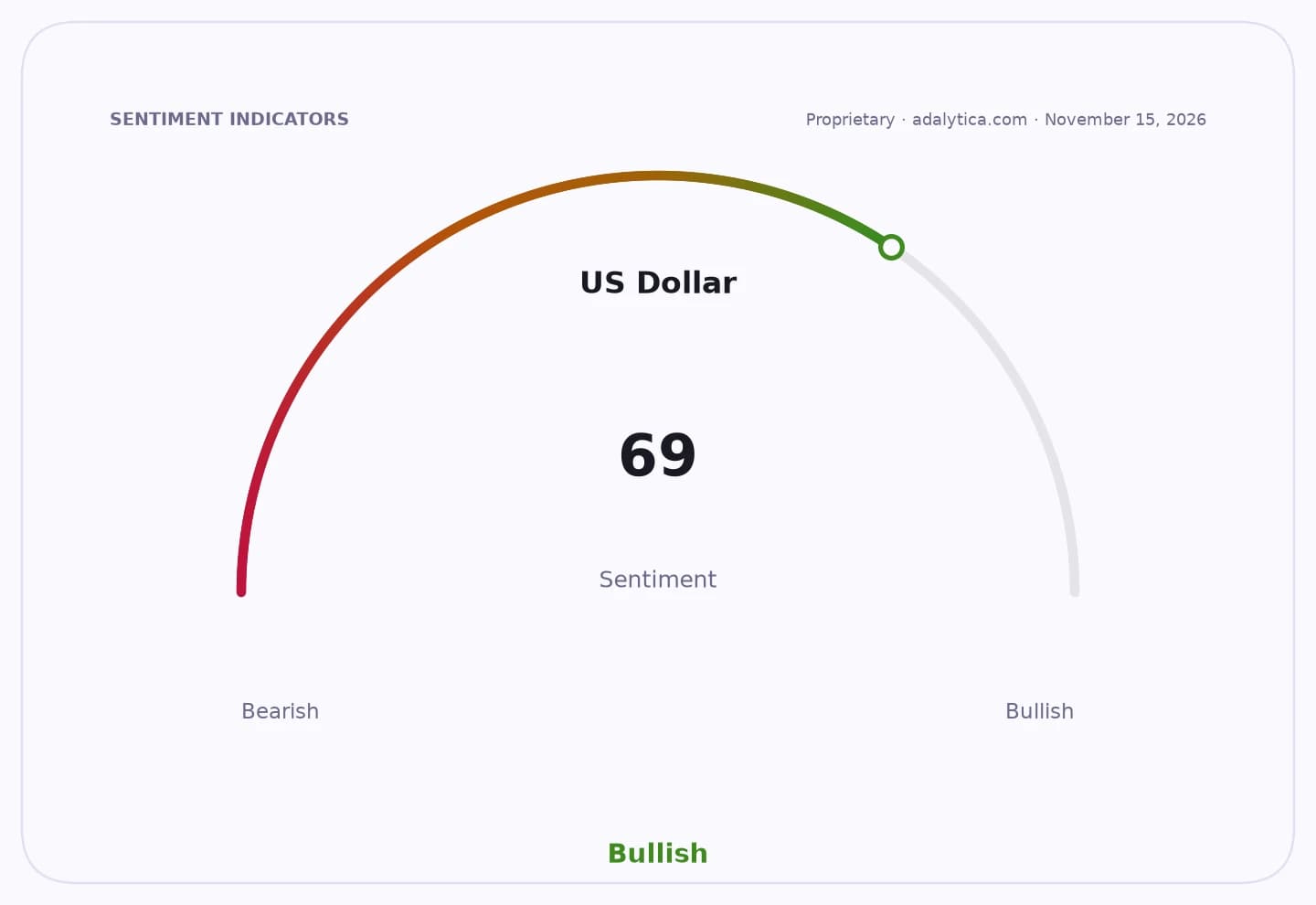
For investors, the message is mixed: the currency is no longer in free fall, but it is not out of the woods. Adalytica’s Chinese yuan trade signals show sentiment at 84, marked “Greed,” while U.S. dollar sentiment is at just 6, labeled “Extreme Fear,” underscoring how quickly positioning can shift around the exchange-rate outlook.
Chinese Yuan — 30-day sentimentadalytica.com
Explore this data interactively — full history, time series and cross-market comparisons.
China-linked exchange-traded funds also reflect the strain. The iShares China Large-Cap ETF, FXI, has fallen to 31.43 from 38.64 at the end of December and now sits well below its 50-day moving average, a sign that investors remain cautious on Chinese risk assets despite the currency’s recent stabilization. The yuan-tracking ETF FXY has been choppy but comparatively firmer, closing at 57.55, with short-term technical readings pointing to a market still searching for direction.
The next catalyst is whether Beijing can sustain the yuan’s steadiness without tightening domestic liquidity too much, while the dollar’s path and U.S.-China trade tensions continue to steer capital flows. If volatility picks up again, exporters, importers and foreign investors in China assets will feel it first.
| Entity | Gains | Losses |
|---|---|---|
| Chinese exporters | ▲More competitive pricing | ▼Currency volatility risk |
| Beijing policymakers | ▲Steadier market tone | ▼Pressure to defend the yuan |
| Foreign investors in China assets | ▲Less immediate FX stress | ▼Ongoing policy uncertainty |
| U.S. dollar bulls | ▲— | ▼Softer positioning if yuan stabilizes |