Chip stocks are officially in a bear market, but Bank of America’s message is that investors should not confuse a valuation reset with a collapse in the AI buildout.
Chip selloff looks like a reset, not a bust
The selloff has pulled the Philadelphia Semiconductor index, Nvidia, Broadcom and their peers well off recent highs, yet the underlying thesis has not broken: hyperscalers, cloud providers and enterprise customers are still pouring money into compute, networking and custom silicon. That matters because semiconductors are not a short-cycle trade anymore — they are the toll roads of the AI economy, and the market is now pricing them like a cyclical bust.
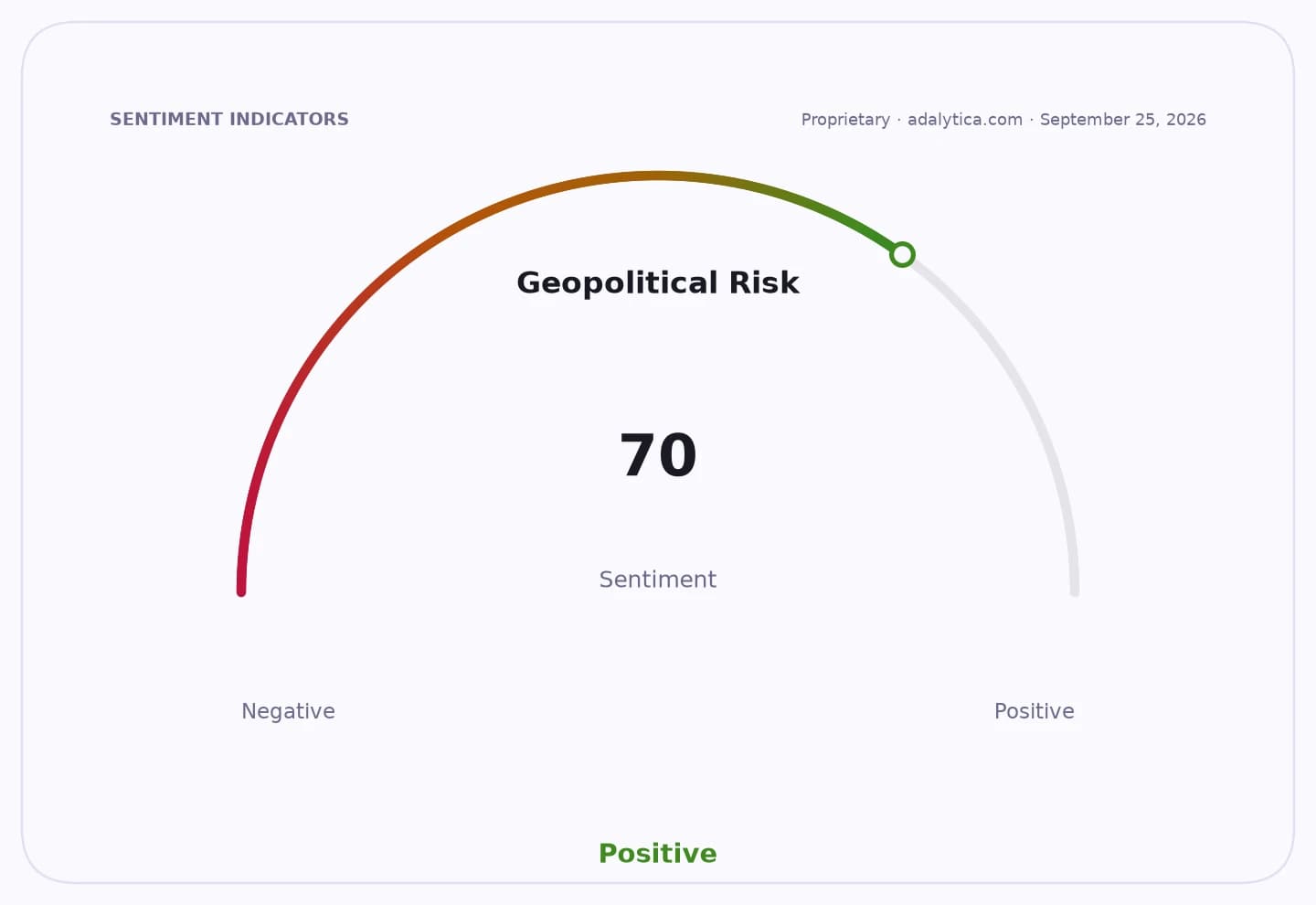
Sentiment IndicatorsⓘProprietary · adalytica.com · July 24, 2026
This is a snapshot — live sentiment, awareness and momentum for 130+ markets update continuously in the dashboard.Open AlphaPulse

The economic backdrop helps explain the mood swing. The 10-year Treasury yield is sitting around 4.7%, with the Fed funds rate still near 3.6%, keeping discount rates elevated and making long-duration growth names harder to defend. When money is no longer cheap, the market stops paying any price for future AI earnings and starts demanding proof now. That is exactly why the group has been hit even as the secular spend curve remains intact.
But the data also shows why panic may be misplaced. Nvidia’s shares have fallen from a 2026 peak above $235 to about $209, with the stock trading just above its 50-day moving average after a sharp spring surge and pullback. Broadcom, after an even steeper run to above $439, is now around $392, still comfortably above its 200-day average. In other words, this looks more like digestion after an explosive capex cycle than the end of it.

That distinction matters for investors. The market is punishing the semiconductor complex as if AI demand has peaked, yet the latest price action says something more nuanced: leadership is broadening, volatility is rising, and the easy money phase is over. That is often the point where the best long-term entries emerge in infrastructure names with real pricing power and recurring demand.
Broadcom is especially interesting here. The company has reinforced its position as an AI and custom-chip winner with a long-term collaboration extension with Apple through 2031, a reminder that the best beneficiaries of this cycle are not only the GPU names. They are the firms supplying custom ASICs, high-speed networking and the connective tissue that makes AI clusters work. Nvidia remains the dominant compute platform, but Broadcom is the quieter compounder investors often underappreciate until the next leg higher begins.
The broader chip fund SOXX is telling the same story. After surging above 650, it has pulled back to the low 550s and is now below its 50-day moving average, a sign that momentum has cooled even though the long-term uptrend has not been broken. Technical indicators are describing a reset, not a structural unwind: Nvidia’s RSI has rebounded into the low 60s, Broadcom’s into the low 60s as well, and both stocks are recovering from oversold conditions rather than entering outright breakdown territory.
My view is that BofA is right to frame this as a chance to get selective, not a reason to run. The market is missing the second-order trade: once the initial AI euphoria cools, capital rotates toward the infrastructure enablers with the strongest cash flows, best balance sheets and deepest customer lock-in. That favors Nvidia, Broadcom and the rest of the AI supply chain over software names that still have to prove they can monetize the buildout.
If yields stay high and macro volatility persists, chip multiples can stay compressed longer than bulls want. But the secular capex cycle is not going away because the 10-year is at 4.7%. It is being funded by the largest technology companies on earth, and they are still early in the upgrade cycle. For investors, that means the bear market in chips is less a warning siren than a setup: accumulate the quality names on weakness, and let the next wave of AI infrastructure spending do the rest.
| Entity | Gains | Losses |
|---|---|---|
| Nvidia, Broadcom | ▲Long-term AI demand | ▼Near-term sentiment |
| SOXX semiconductor ETF holders | ▲Potential rebound setup | ▼Momentum traders |
| Hyperscalers and cloud buyers | ▲Better chip entry points | ▼Near-term capex optics |
| Short sellers | ▲Volatility opportunities | ▼Structural AI uptrend |