CIH Bank’s move to fold property search and mortgage financing into a single mobile app matters because it shifts the bank upstream in Morocco’s home-buying process, where the biggest friction points are often not just credit terms but finding a credible, financeable property in the first place.
CIH Bank and Yakeey launch Morocco home-buying app
The partnership with proptech firm Yakeey gives CIH a way to engage customers before they reach the loan desk, potentially increasing mortgage origination while reducing the time and uncertainty that can cause deals to collapse. For a lender with about 3 million clients — 40% to 50% of them young — that is commercially significant: the bank is trying to convert browsing into borrowing, while also repositioning branches toward advisory work instead of basic transaction processing.
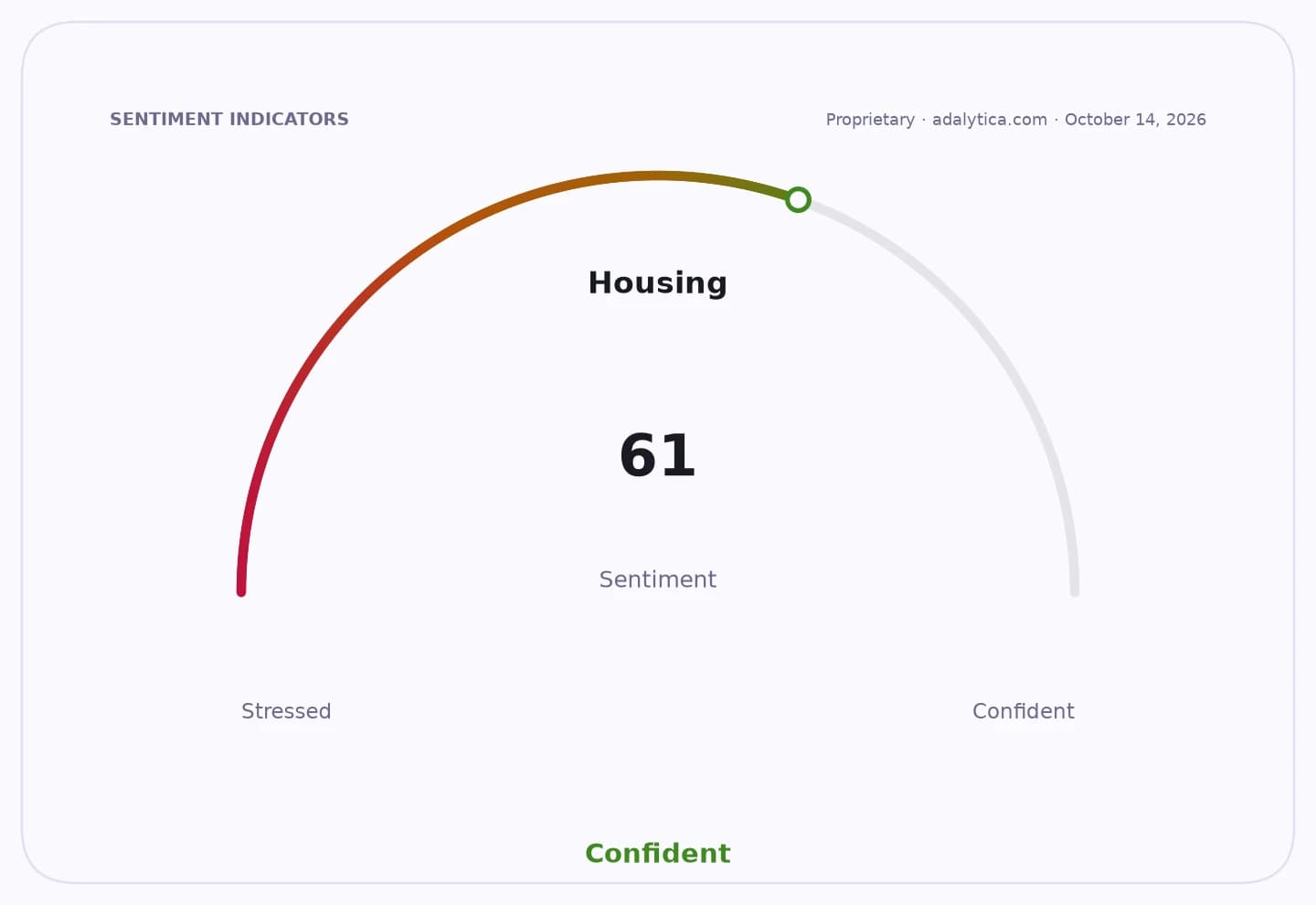
Sentiment IndicatorsⓘProprietary · adalytica.com · October 24, 2026
This is a snapshot — live sentiment, awareness and momentum for 130+ markets update continuously in the dashboard.Open AlphaPulse
The service sits inside CIH Mobile and lets users search verified listings, run financing simulations, estimate a home’s value and even list a property for sale if they are trading up or downsizing. The partners say the process is organised around four stages — “Time to Find,” “Time to Yes,” “Time to Money” and “Time to Keys” — with the bank tracking delays file by file and deploying real-estate or financing specialists whenever a bottleneck appears.
That operational detail is important because Morocco’s housing market still suffers from information asymmetry and fragmented workflows. Yakeey says its listings are “verified, visited, under mandate,” which is meant to reduce the common problem of stale ads, sold-out homes and opaque pricing. Its instant valuation tool uses artificial intelligence and transaction data to anchor pricing in comparable sales, an effort to bring more transparency to a market where buyers often struggle to judge whether a home is fairly priced or even available.
The economics are straightforward. By combining discovery, valuation and credit pre-approval, CIH can shorten the sales cycle, improve conversion and lower the cost of acquisition per mortgage customer. For borrowers, the appeal is convenience and fewer dead ends. For sellers and agents, the platform could improve liquidity if it successfully matches demand with properties that can actually clear financing. The bull case is that this becomes a closed loop for Morocco’s real-estate ecosystem, with better data, faster approvals and more mortgage volume. The bear case is that adoption may be limited if trust in listings, underwriting speed or property valuation remains weak.
The launch also shows how banks are adapting to younger, digitally native customers. CIH and Yakeey are leaning on artificial intelligence for chat-based lead qualification, request routing by neighborhood and automatic matching between buyer criteria and available homes. Over time, CIH wants to monitor property values the way it tracks financial assets, which would deepen its role in the full housing lifecycle rather than just at the funding stage.
The broader message is that Morocco’s property market is moving toward a more integrated, data-driven model, and lenders that control the customer journey may gain an advantage over banks that remain passive mortgage providers. The next test will be whether the app can turn verified listings and digital convenience into faster closings, larger loan pipelines and a measurable lift in mortgage market share.
| Entity | Gains | Losses |
|---|---|---|
| CIH Bank | ▲Earlier mortgage origination | ▼Passive role in buying process |
| Yakeey | ▲More users and transactions | ▼Reliance on execution quality |
| Homebuyers | ▲Faster search and financing | ▼Less room for opaque listings |
| Traditional brokers | ▲Less friction in deals | ▼Disintermediation pressure |