Crypto exchange closures and consolidation are accelerating because the business is getting harder to sustain, with liquidity, regulation and fee pressure pushing weaker venues out while the biggest platforms gain scale. That shift matters because it is reshaping how investors trade digital assets, where volume concentrates and which public companies are best positioned to capture the next phase of crypto adoption.
Coinbase, Robinhood, CME near key crypto consolidation levels
The economics of the sector increasingly favor exchanges with deep order books, diversified products and the regulatory budgets to survive a more demanding compliance regime. Smaller venues, especially those reliant on retail speculation or narrow token listings, face a more fragile revenue mix as trading activity migrates toward the firms that can offer institutional access, custody, derivatives and a broader product stack.
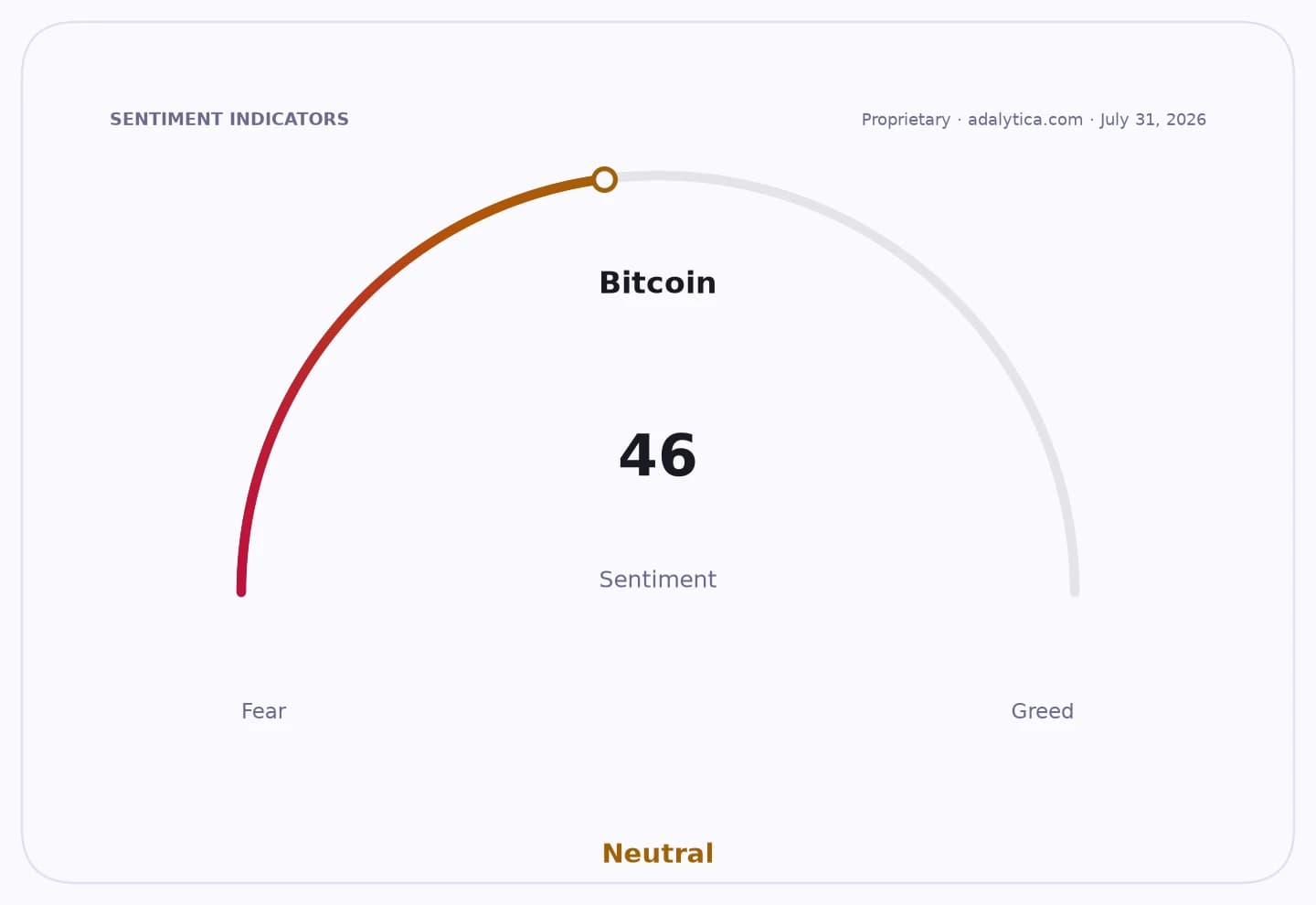
Sentiment IndicatorsⓘProprietary · adalytica.com · July 31, 2026
This is a snapshot — live sentiment, awareness and momentum for 130+ markets update continuously in the dashboard.Open AlphaPulse
That consolidation theme shows up in the market data for Coinbase, Robinhood and CME Group, which together reflect a market increasingly dominated by a few large, liquid gateways. Coinbase shares have fallen to $146.26 from $375.78 earlier in the period, with the stock now below both its 50-day and 200-day moving averages and RSI readings in the mid-40s, a sign investors are discounting near-term volatility in crypto activity. Robinhood, which has broadened its crypto offering but remains more dependent on retail flows, has dropped to $86.56 from a recent peak of $143.18 and is trading well under its 50-day average, with RSI near 27, suggesting persistent selling pressure. By contrast, CME, whose crypto exposure comes through derivatives rather than spot trading, has held up better and is near record territory at $267.79, above both its 50-day and 200-day averages, underscoring how regulated futures venues are benefiting as trading becomes more professionalized.
For Coinbase, consolidation is a double-edged sword. Fewer competitors can mean more volume concentration and better pricing power, but it also highlights how quickly crypto activity can cycle lower when speculation fades. The company’s latest filing warned that cryptocurrency prices remain highly volatile and continue to affect trading volumes and operating results. Robinhood faces a similar but more retail-dependent version of that risk: if smaller exchanges disappear and spot trading becomes even more concentrated, the winners are likely to be platforms with scale, strong brands and enough balance-sheet flexibility to absorb compliance costs and product investment.
For investors, the key question is whether consolidation improves industry economics enough to offset the volatility built into crypto markets. Bulls will argue that a smaller set of well-capitalized exchanges should eventually mean higher share of wallet, better monetization and more durable margins for leaders such as Coinbase and CME. Bears will counter that the same forces driving consolidation — weak volumes, pricing pressure and rising oversight — also cap the sector’s earnings power and leave public names exposed whenever bitcoin sentiment deteriorates. Adalytica’s Bitcoin Fear & Greed Index was neutral at 46, a reminder that the market is still far from the euphoric conditions that tend to lift exchange revenues across the board.
The next test will be whether institutional participation and derivatives growth can offset a thinner retail market. If they can, the industry’s shakeout should leave a more disciplined and profitable oligopoly. If not, more closures are likely, and the survivors will increasingly be judged not on how fast they grow in good times, but on how well they weather the next crypto downturn.
| Entity | Gains | Losses |
|---|---|---|
| Coinbase | ▲More volume concentration | ▼Smaller exchange competition |
| Robinhood | ▲Broader crypto migration | ▼Retail trading volatility |
| CME Group | ▲Regulated derivatives flows | ▼Spot-market fragmentation |
| Smaller crypto exchanges | ▲— | ▼Fee pressure and shutdown risk |