Colombia’s government has ordered a halt to new hiring for service contracts and tighter limits on politically appointed positions, a sign that fiscal austerity is moving from rhetoric to payroll.
Colombia freezes new public service hiring

The move matters because labor costs are one of the quickest levers available to a government trying to slow spending without immediately cutting benefits or investment outlays. By restricting new “prestación de servicios” contracts — a common way to staff public agencies — the administration is trying to contain the operating expense base while preserving room to keep core programs running.
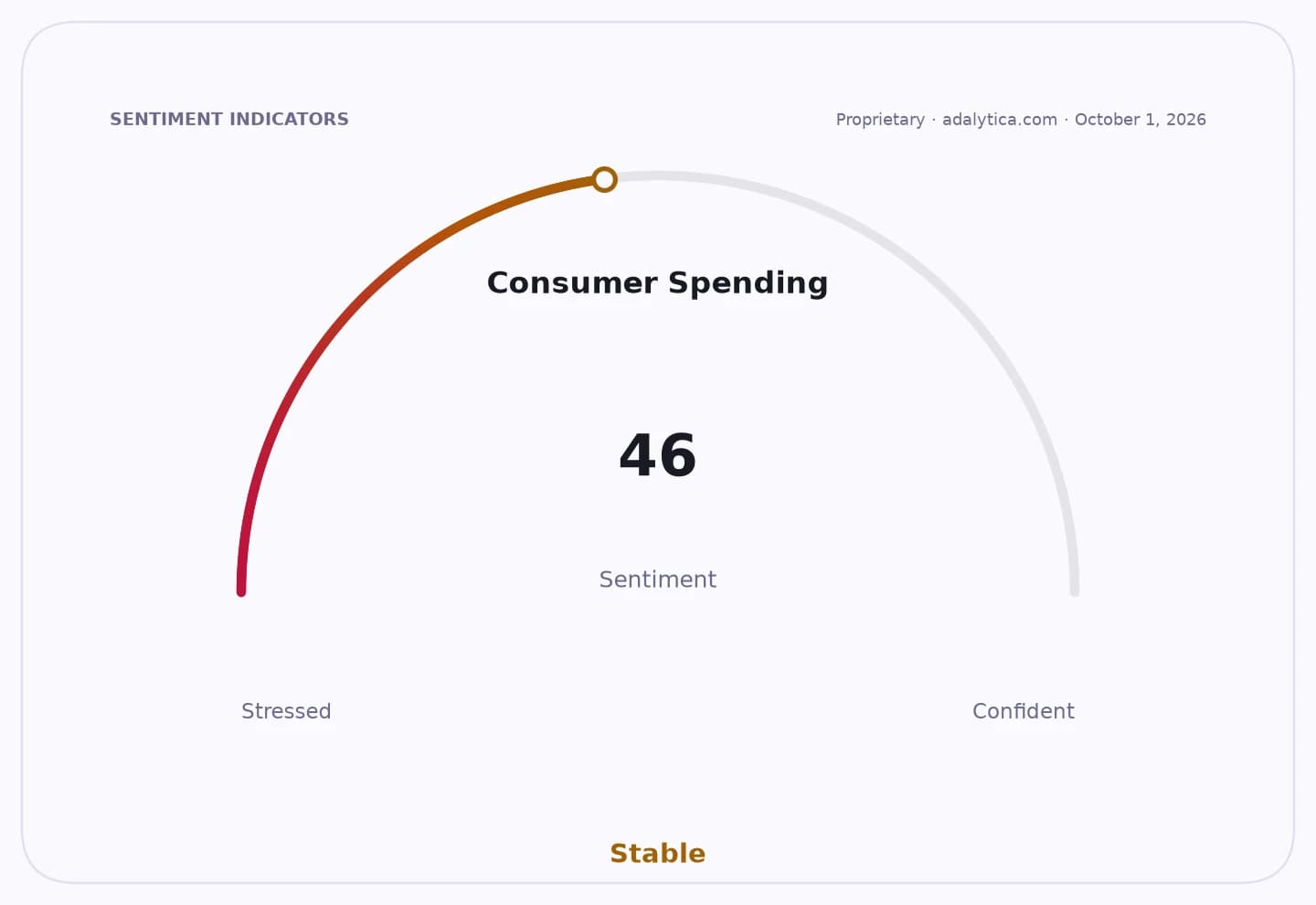
Sentiment IndicatorsⓘProprietary · adalytica.com · October 18, 2026
This is a snapshot — live sentiment, awareness and momentum for 130+ markets update continuously in the dashboard.Open AlphaPulse
That makes the policy economically significant in a country where public-sector employment and government procurement are closely tied to household income, local consumption and political patronage. Service contracts often function as quasi-employment, so freezing new hires can curb near-term expenditure growth but also weaken demand in communities dependent on public paychecks. The decision also suggests the government is prioritizing credibility on budget discipline as it confronts a wider slowdown in sentiment around spending and employment.
For investors, the key question is whether this is a temporary administrative tightening or the start of a broader austerity program that could weigh on growth, earnings and domestic demand. A cleaner fiscal profile can support sovereign confidence and reduce pressure on financing costs, but it also raises the risk of softer consumption and slower activity in the near term. That tension is especially relevant for businesses exposed to the public sector, from staffing firms and contractors to service providers that rely on government outlays.
The policy also comes against a labor backdrop that remains comparatively stable by historical standards, with unemployment recently around 4.2% and payrolls still expanding. But those national figures can mask the distributional impact of a hiring freeze, particularly for lower- and mid-skilled workers who depend on public contracts and discretionary state hiring. The administration’s effort to ration free appointments signals it wants austerity to fall first on administrative overhead rather than front-line services, but that balance is often difficult to maintain.
For markets, the immediate read-through is mixed. Fiscal restraint may reassure bondholders and support the currency if it improves the government’s deficit trajectory. Yet the same restraint can also cool demand and reinforce caution among companies tied to government spending. If the austerity plan broadens beyond hiring controls, investors will likely focus on whether the government can reduce spending without triggering a deeper slowdown or political backlash.
The broader narrative is one of a state trying to prove discipline while keeping the economy intact. The harder part will be making the cuts credible enough to matter financially, but narrow enough to avoid damaging growth and social cohesion.
| Entity | Gains | Losses |
|---|---|---|
| Government / treasury | ▲Lower wage spending | ▼Political room for patronage |
| Bondholders | ▲Better fiscal credibility | ▼None if growth weakens |
| Public contractors / staffing firms | ▲— | ▼Fewer new contracts |
| Households reliant on public pay | ▲— | ▼Hiring and income opportunities |