The Colombian peso’s rally to seven-year highs against the dollar is giving local savers and importers the cheapest greenback in years, but it is also forcing investors to decide whether the move reflects a durable shift or a crowded short-term trade.
Colombian Peso Rally Looks Extended, But Gains Hold

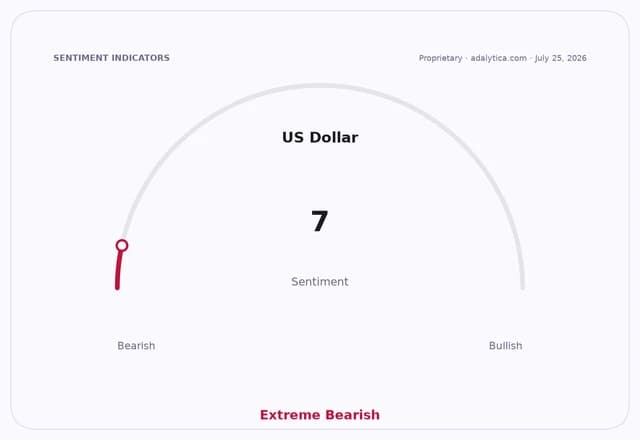
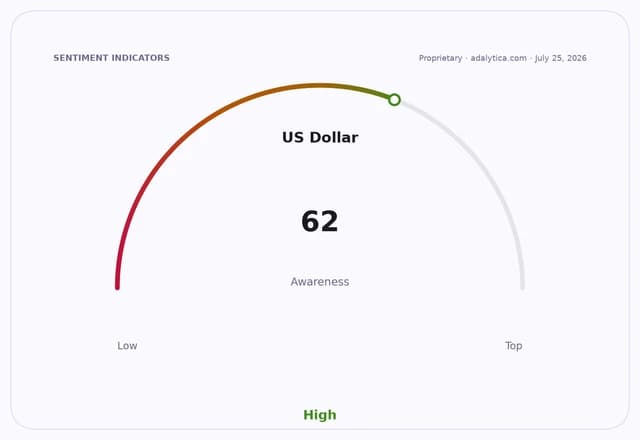
The dollar traded around 3,218 pesos on July 25, the weakest level for the U.S. currency in Colombia since before the pandemic-era and commodity shock that helped drive it much higher. The peso’s surge comes as the broader dollar weakens sharply, with Adalytica’s U.S. Dollar Trade Signals showing “Extreme Fear” sentiment and a 37% drop in the past week, while conventional technical indicators on the pair suggest the peso remains extended after a steep run.
For Colombia, a stronger peso is a macro tailwind. It helps ease imported inflation, lowers the local cost of dollar-denominated fuel, food and machinery, and can give the central bank more room to keep policy steady if price pressures stay contained. That matters in an economy still balancing growth support with the need to keep inflation moving down and financing conditions manageable.
The move is also supported by incoming capital and a steadier external backdrop. The Latin American Development Bank has approved roughly $9 billion in funding for Colombia, reinforcing the country’s near-term financing picture at a time when President Gustavo Petro is pressing ahead with social reforms and seeking to maintain political momentum. A stronger funding pipeline tends to reduce pressure on the currency by improving confidence in the sovereign and the broader investment outlook.
But the trade is not one-way. The dollar’s slide makes it cheaper for Colombians to buy now, yet it can hurt exporters, tourism operators earning abroad and investors holding unhedged foreign assets if the peso keeps appreciating. For foreign investors, the stronger currency can boost local returns in dollar terms, but it also raises the risk of chasing the move after a sharp appreciation.
Market signals point to caution. FXC, the Canadian-dollar ETF used here as a broad proxy for dollar weakness, remains close to its 50-day moving average and well below recent highs, underscoring how fast the greenback has faded. In Colombia’s case, the peso’s technical profile also looks stretched after a rapid drop in USD/COP, which leaves room for a snapback if U.S. rates rebound, risk appetite cools or domestic politics turn more volatile.
The key question now is whether Colombia’s currency strength reflects a structural improvement in fundamentals or simply a dollar correction that has gone too far. Investors will be watching U.S. Treasury yields, Fed signals and local policy headlines for the next catalyst, because at these levels the peso’s rally can help returns for buyers of dollars — but it can just as quickly reverse.
| Entity | Gains | Losses |
|---|---|---|
| Colombian consumers | ▲Cheaper imports | ▼Less help for exporters |
| Importers | ▲Lower dollar costs | ▼Margins if peso rebounds |
| Exporters | ▲None | ▼Weaker peso revenue in local terms |
| Dollar buyers | ▲Better entry levels | ▼Risk of further peso strength |




