Consumer confidence rose 2.2% in July to 89.8, the strongest reading in two years, suggesting households are becoming more willing to spend even as broader economic challenges persist.
Consumer Confidence Hits Two-Year High

The improvement matters because consumer sentiment often leads actual spending, and consumption remains the main engine of growth in most large economies. A move to a two-year high does not imply a broad-based boom, but it does indicate that the worst of the recent pessimism may be easing. For policymakers, that can reduce immediate pressure for support measures; for businesses, it raises the odds that demand may hold up better into the second half of the year.
Sentiment IndicatorsⓘProprietary · adalytica.com · July 23, 2026
This is a snapshot — live sentiment, awareness and momentum for 130+ markets update continuously in the dashboard.Open AlphaPulse
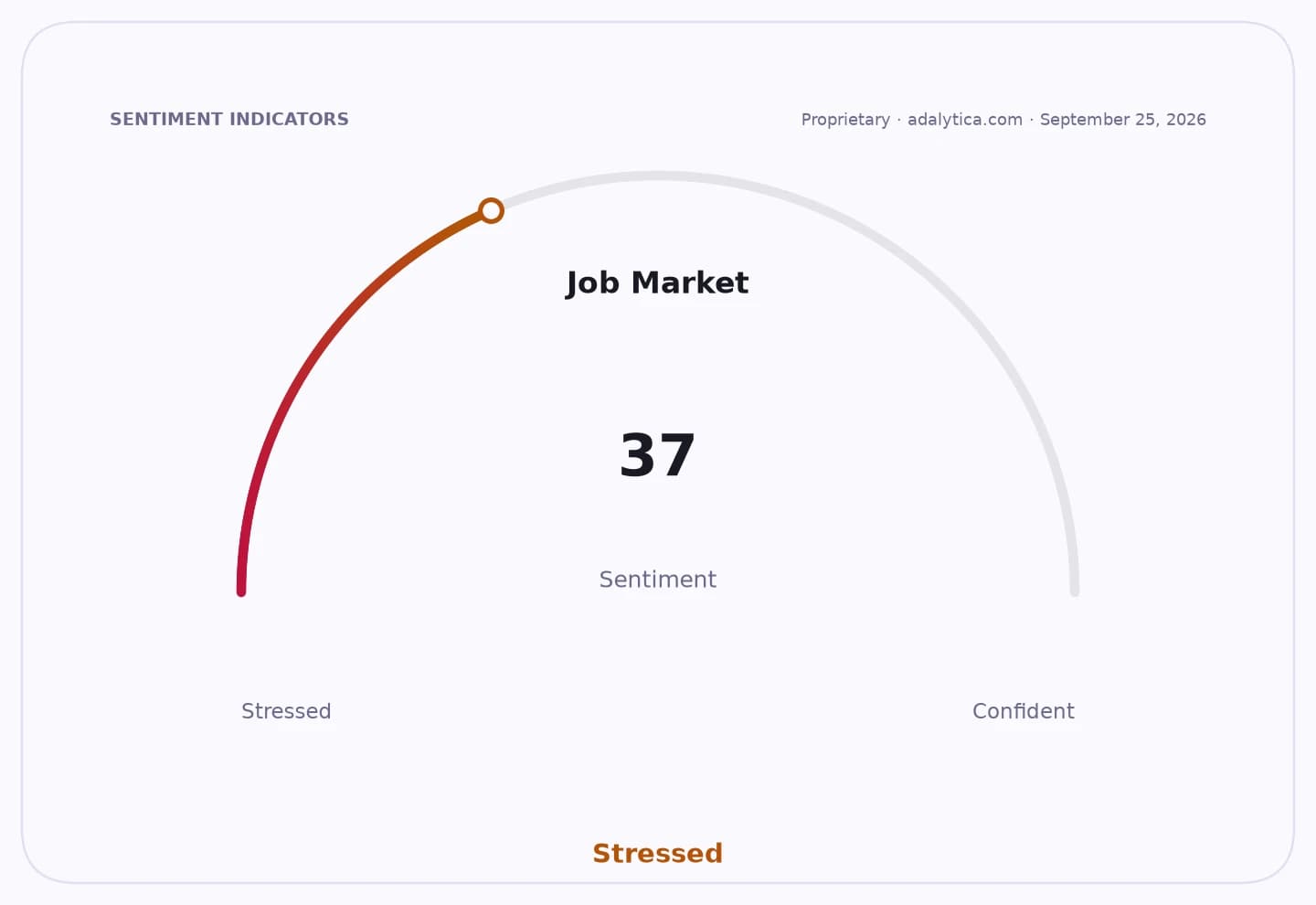
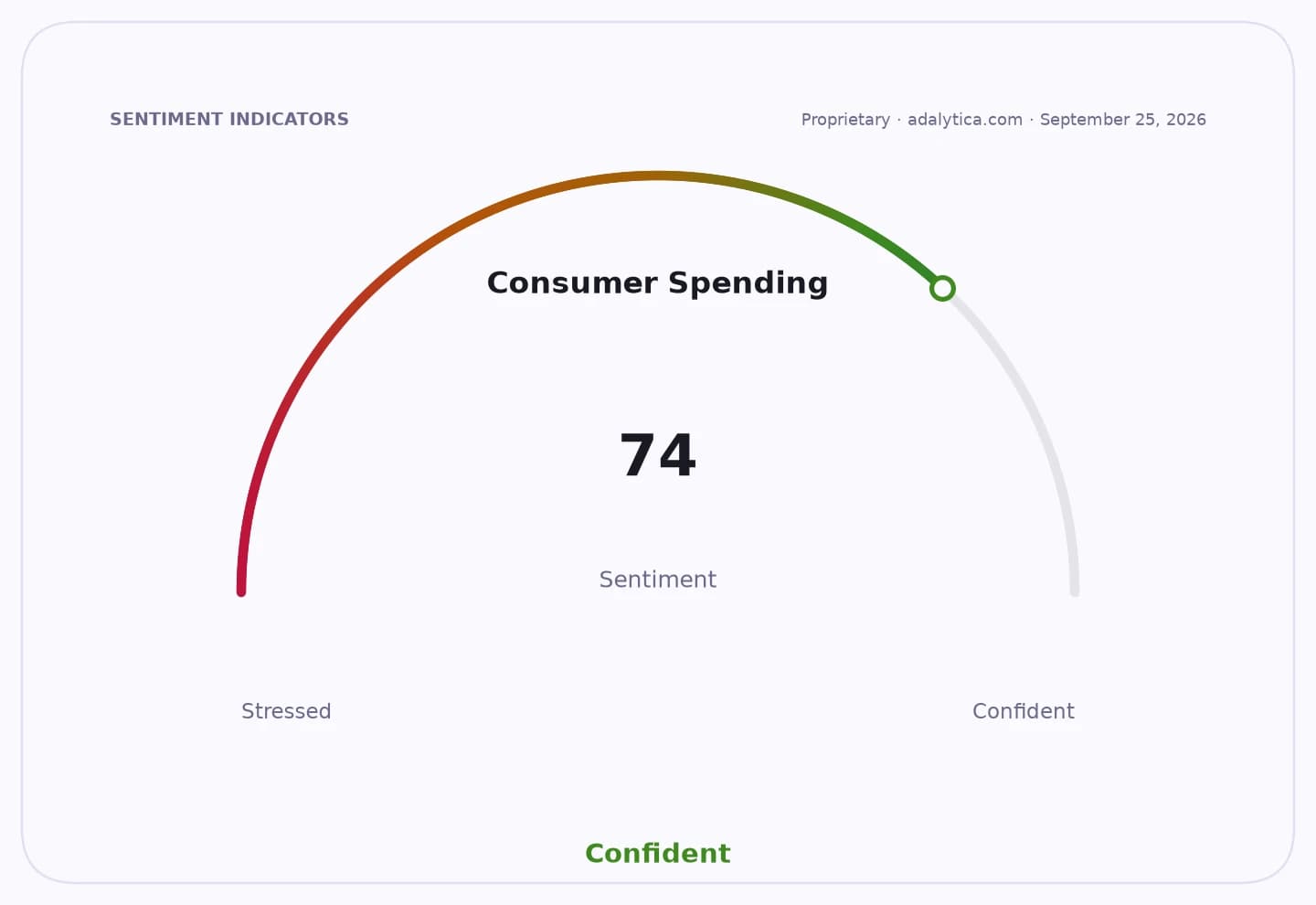
The latest reading also fits a pattern of tentative stabilization in consumer-facing indicators. Private sector measures of consumer spending sentiment were still neutral, while retail sales sentiment remained in fear territory, suggesting the rebound in confidence is real but fragile. That split is important: households may be feeling better about the outlook, yet they have not fully translated that into stronger retail intent. In other words, confidence is improving faster than hard spending signals.
For investors, the message is nuanced. A healthier consumer backdrop is constructive for discretionary retailers, autos, travel, housing-related names and lenders exposed to household activity. It also supports earnings expectations for companies reliant on domestic demand. But the gap between sentiment and spending means equity markets should be cautious about extrapolating a straight-line recovery. If confidence continues to improve, it could lift revenue forecasts and reduce downside risk in consumer cyclicals; if it stalls, the rebound will look more like relief than a turning point.
The broader narrative is that households are regaining some resilience after a prolonged period of caution. That is economically significant because confidence, once it turns higher, can reinforce itself through higher spending, better labor-market perceptions and improved business expectations. The next test will be whether the July increase feeds into stronger retail activity, firmer wage-led demand and a more durable uplift in the months ahead.
| Entity | Gains | Losses |
|---|---|---|
| Consumers | ▲Better spending mood | ▼Ongoing inflation worries |
| Retailers | ▲Higher sales potential | ▼Weak conversion if caution returns |
| Consumer cyclicals | ▲Demand tailwind | ▼Slower rebound if confidence fades |
| Central bankers | ▲Easier policy backdrop | ▼Less room to justify support |