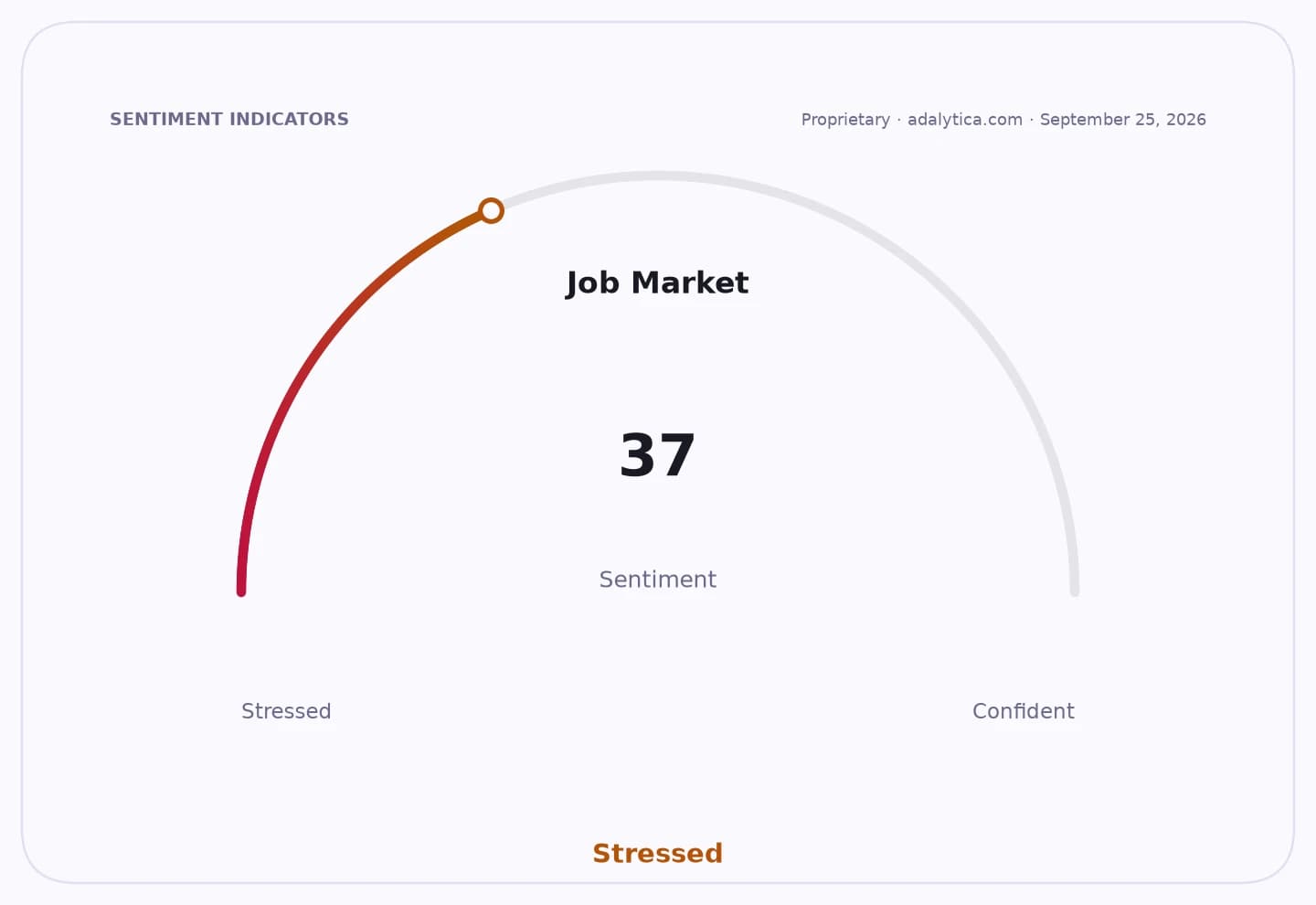
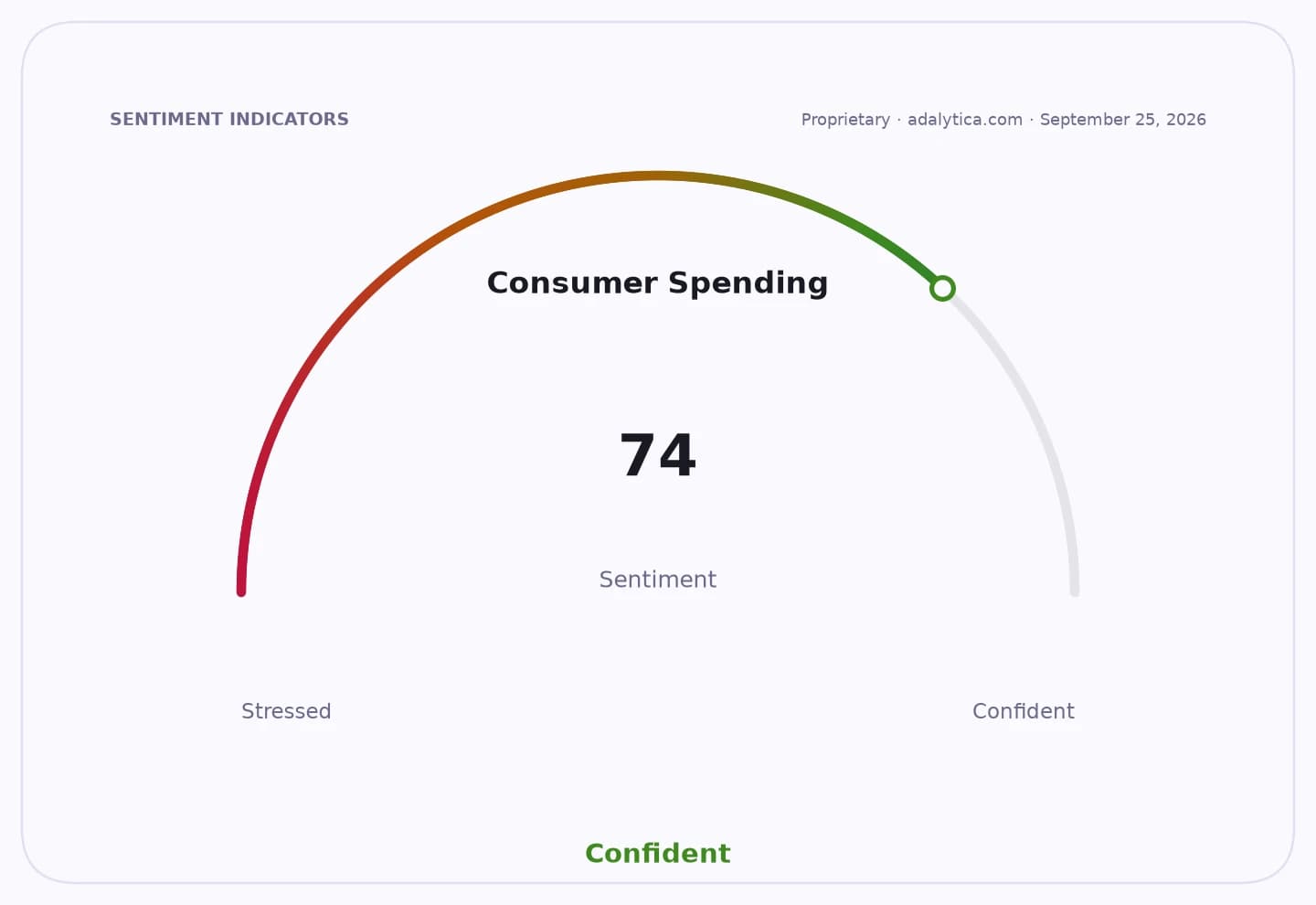
Nearly half of Americans now rate national economic conditions as bad or very bad, a fresh sign that consumer pessimism is deepening even as the labor market remains relatively steady.
Consumer pessimism deepens as labor market holds
That disconnect matters because consumer confidence is one of the best real-time gauges of spending behavior, and spending is still the engine of the U.S. economy. The SMRC survey showed 49.4% of the public calling conditions poor, a level that signals households remain uneasy about prices, wages and the durability of growth. For investors, that kind of caution can reshape everything from retail sales and travel demand to earnings expectations for consumer brands, banks and homebuilders.
Sentiment IndicatorsⓘProprietary · adalytica.com · July 26, 2026
This is a snapshot — live sentiment, awareness and momentum for 130+ markets update continuously in the dashboard.Open AlphaPulse
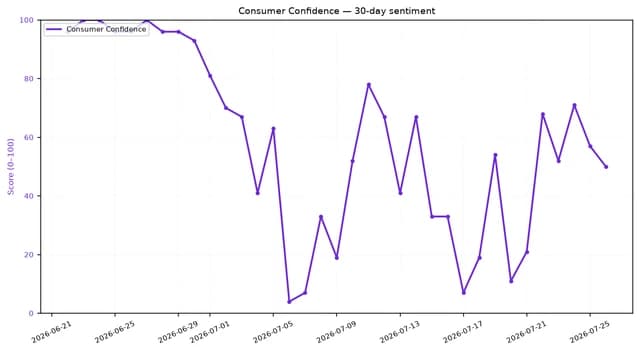
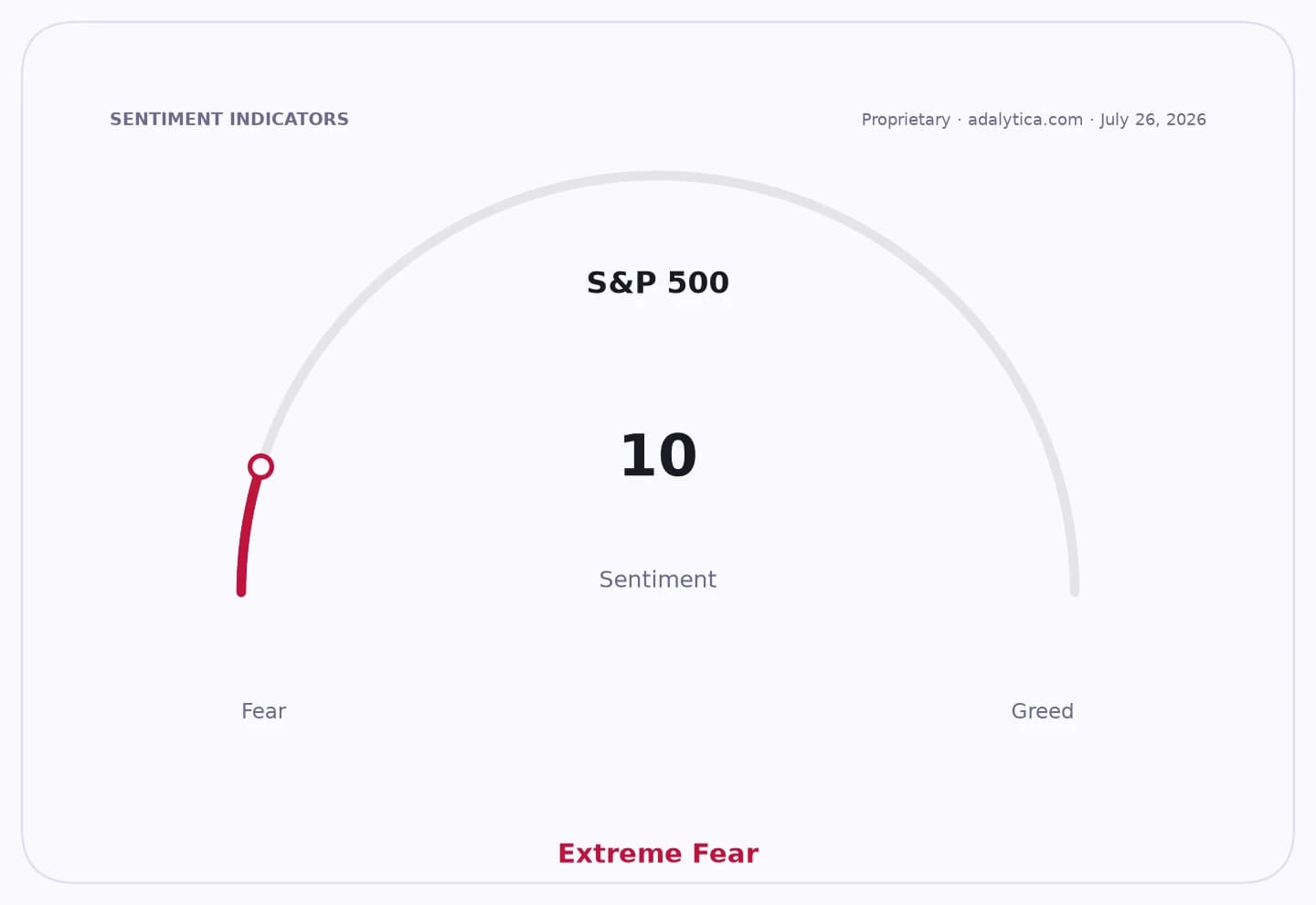
The broad economic picture is mixed, not broken. The unemployment rate stood at 4.2% in June, only slightly lower than May’s 4.3%, suggesting the job market is still holding together. But that stability has not translated into stronger sentiment. Adalytica’s Consumer Confidence Recession Sentiment gauge was neutral at 50, even after a sharp drop on the day, while its S&P 500 Trade Signals model showed extreme fear. In other words, households and markets are sending a clear message: investors are pricing in more downside risk than the labor data alone would suggest.
That gap between solid employment and weak confidence is important for long-term investors because it often creates the kind of market where fundamentals matter more than headlines. Companies with durable pricing power, recurring revenue and strong free cash flow can keep compounding even when consumers feel squeezed. By contrast, businesses tied to discretionary spending, weaker credit quality or heavy refinancing needs may face more pressure if cautious households keep pulling back.
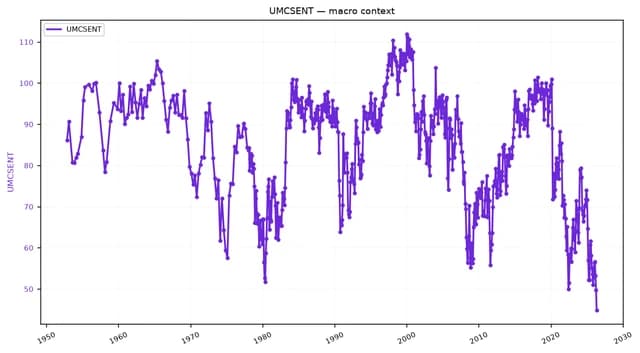
There is also a broader macro narrative here. Pessimism can become self-reinforcing if it leads consumers to delay purchases, tighten budgets and resist big-ticket spending. That may be especially relevant if sentiment weakens further from the already subdued 44.8 reading in May, with Adalytica’s model forecasting another drop to 43.18 in June. If that plays out, it would suggest confidence is not just low, but deteriorating.
For investors, the key takeaway is not to try to time every swing in sentiment. It is to own businesses and funds that can weather it. Periods of fear have historically been where patient investors build positions in high-quality companies at more reasonable valuations. If you are thinking in years, not weeks, this kind of backdrop is a reminder to stay diversified, keep adding to watchlists and focus on resilient cash-generating businesses rather than chasing short-term optimism.
| Entity | Gains | Losses |
|---|---|---|
| Defensive consumer staples | ▲Steady demand | ▼Less upside from spending rebounds |
| High-quality value investors | ▲Better entry points | ▼Near-term volatility |
| Discretionary retailers | ▲Few near-term winners | ▼Softer consumer spending |
| Index funds and diversified portfolios | ▲Broad resilience | ▼Sentiment-driven drawdowns |