UK households are starting to believe inflation will keep cooling, and that shift matters because expectations can help determine how sticky price pressures become in the months ahead. The latest Citi/YouGov survey showed the public’s inflation expectations falling again in July, reinforcing the view that Britain’s inflation scare is fading even if it has not vanished.
Cooling Inflation Expectations Aid UK Rates Outlook
That is important for the economy because inflation is not just about what is happening today in food, fuel and wages. It is also about what consumers, businesses and workers think will happen next. When inflation expectations drift lower, it becomes easier for the Bank of England to keep borrowing costs steady, and eventually to justify cuts, without risking a fresh price surge. For a country where inflation has repeatedly run hotter than hoped, that is no small development.
Sentiment IndicatorsⓘProprietary · adalytica.com · July 28, 2026
This is a snapshot — live sentiment, awareness and momentum for 130+ markets update continuously in the dashboard.Open AlphaPulse
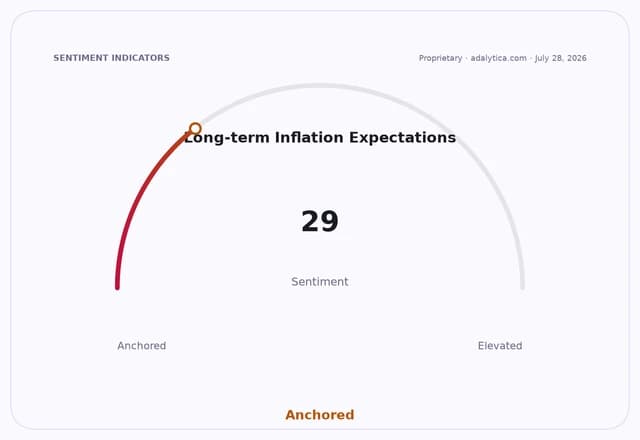
The backdrop helps explain why this shift matters now. UK inflation cooled to 2.6% in June, a 14-month low, after earlier pressure from energy and grocery bills began to ease. That is still above the Bank of England’s 2% target, but it is close enough to give households some breathing room and to support the argument that the worst of the cost-of-living squeeze is behind them. In the survey data, confidence in the Bank’s 2% target also improved in the latest reading, suggesting the public is becoming a little more comfortable that price stability can be restored.
For investors, the message is straightforward: lower inflation expectations reduce the odds of a renewed rate shock. That matters across gilts, sterling and UK rate-sensitive stocks such as housebuilders, retailers and real estate names. If the Bank of England can keep policy restrictive without needing to tighten further, bond markets may continue to price a gentler path for rates, while equity investors get some relief on discount rates and consumer demand. The ten-year gilt yield near 4.7% shows borrowing costs remain elevated, but stable expectations are the first step toward a more constructive backdrop for fixed income and UK equities.
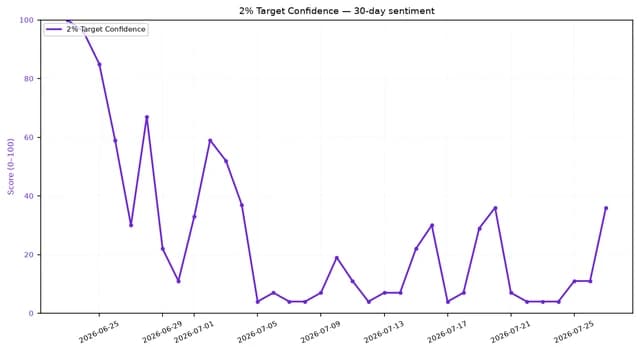
Still, this is not a clean victory over inflation. Underlying price pressures have proved stubborn, and central bankers have learned the hard way that one soft month does not make a trend. The risk for investors is that sticky services inflation or another energy shock could quickly reverse today’s optimism. But the broader narrative is improving: inflation is no longer accelerating in the public mind, and that is exactly the kind of change that can give policymakers room to breathe.
For long-term investors, the best takeaway is not to chase every data point, but to watch whether inflation expectations keep trending lower over several months. If they do, the Bank of England will have more flexibility, UK consumer confidence could improve, and domestically focused assets may deserve a fresh look. In a market that rewards patience, this is the kind of disinflation story worth keeping on your watchlist.
| Entity | Gains | Losses |
|---|---|---|
| UK consumers | ▲Easier budgeting | ▼Less fear of price spikes |
| Bank of England | ▲More policy room | ▼Less urgency to hike |
| UK bond investors | ▲Lower rate-risk premium | ▼Less upside if inflation re-accelerates |
| Rate-sensitive UK stocks | ▲Better valuation support | ▼Still exposed to sticky inflation |