Southern California rent inflation has slowed to a five-year low, and that matters because housing is one of the last stubborn pillars keeping U.S. inflation sticky and interest rates elevated.
Cooling Southern California rents aid REITs

When rent growth eases in a market as supply-constrained and expensive as Southern California, it changes the outlook for inflation, consumer spending and the apartment trade all at once. The immediate winner is the renter, but the bigger market consequence is that easing shelter pressure can help pull down broader price measures over time, giving the Federal Reserve more room to stay patient on rates — a shift that would ripple through REIT valuations, homebuilders and rate-sensitive equities.
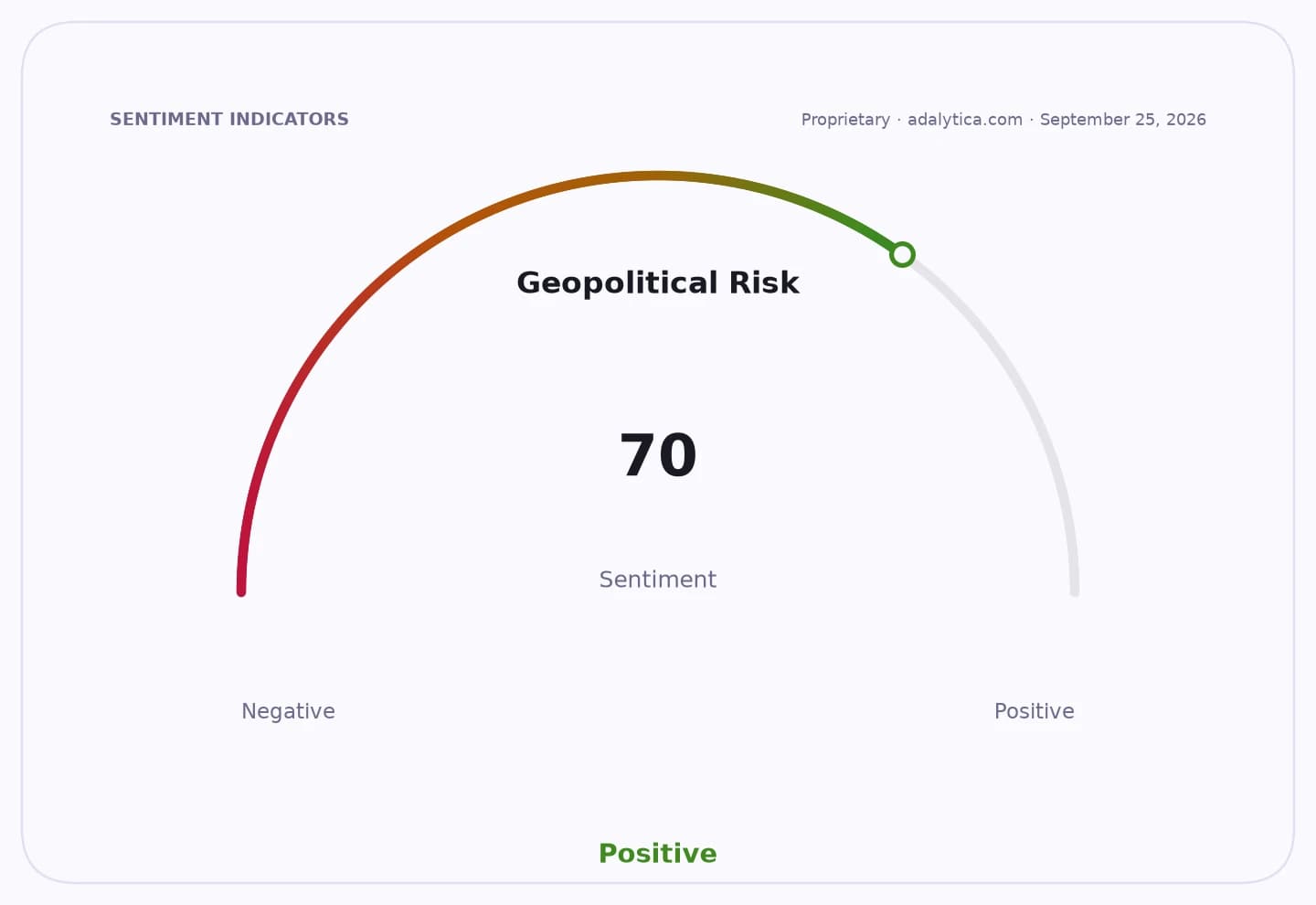
Sentiment IndicatorsⓘProprietary · adalytica.com · July 15, 2026
This is a snapshot — live sentiment, awareness and momentum for 130+ markets update continuously in the dashboard.Open AlphaPulse
The broader data backdrop points in the same direction. U.S. house prices have continued to climb, but the pace of housing cost acceleration has clearly cooled from the frenzy of the last few years. At the same time, apartment-focused exchange-traded funds have held up well but are no longer pricing in a breakneck rent boom. VNQ and IYR are both trading above their 50-day and 200-day moving averages, while the conventional RSI and MACD readings show constructive but not euphoric momentum — the kind of setup that often precedes a re-rating rather than a blow-off rally.
That is why the real story here is not just “rents are easing.” It is that the apartment cycle is normalizing after a period of extraordinary price pressure, and the market is likely underestimating how quickly that can reshape capital flows. Softer rent inflation reduces the urgency of shelter-related inflation fears, which is bullish for duration assets and for real estate names that benefit when Treasury yields stop grinding higher. It also signals that demand is absorbing a growing supply pipeline, a dynamic that could become especially important in high-cost coastal markets where affordability has been stretched to the limit.
The stock action is telling. Apartment REITs and single-family rental names have already bounced, with VNQ, IYR and AMH all sitting well above longer-term technical support. AMH, which owns single-family rentals, has recovered from spring weakness, while the broad property ETFs have kept their gains intact. That suggests investors are beginning to position for a softer-rent regime, but not yet fully price the second-order effect: lower shelter inflation could become a tailwind for multiples across the entire real estate complex.
I believe the market is still too focused on today’s rent prints and not enough on what comes next. If Southern California, one of the nation’s most expensive housing markets, is seeing rent inflation slow to a five-year low, that is a powerful signal that the post-pandemic rental surge is maturing. The best opportunity may not be in chasing the hottest landlords, but in owning the toll roads of housing — diversified REITs, rental operators and financing-sensitive real estate vehicles that stand to benefit if inflation cools and interest rates eventually follow.
For investors, the takeaway is simple: this is not a reason to fear real estate. It is a reason to start selecting the winners in a more normalized housing cycle. The most asymmetric setup now favors quality apartment and residential REITs, especially those with strong balance sheets and coastal exposure, while the risk is shifting toward anyone still betting on an endless rent boom.
| Entity | Gains | Losses |
|---|---|---|
| Renters in Southern California | ▲Lower housing cost pressure | ▼Less leverage in tight markets |
| Apartment REITs and rental operators | ▲More stable demand, easier comps | ▼Slower rent growth |
| Rate-sensitive equities and REIT ETFs | ▲Multiple support from cooler inflation | ▼Less upside from inflation fears |
| Fed hawks and housing bulls | ▲— | ▼Less support for higher-for-longer rates |