CoreWeave has been forced to improve terms on debt tied to Anthropic contracts, a sign that lenders are no longer willing to underwrite AI infrastructure growth on hype alone.
CoreWeave debt terms tightened on Anthropic-linked financing
That matters because the AI buildout is shifting from an equity-fueled land grab to a credit market test. When lenders push back, the cost of capital goes up, covenant language tightens and the companies at the center of the boom must give away more economics to keep financing the race for compute. For CoreWeave, whose business is built on a handful of large AI relationships, that raises an important question the market is only starting to price: how much of the AI infrastructure story depends on debt markets staying open and patient?
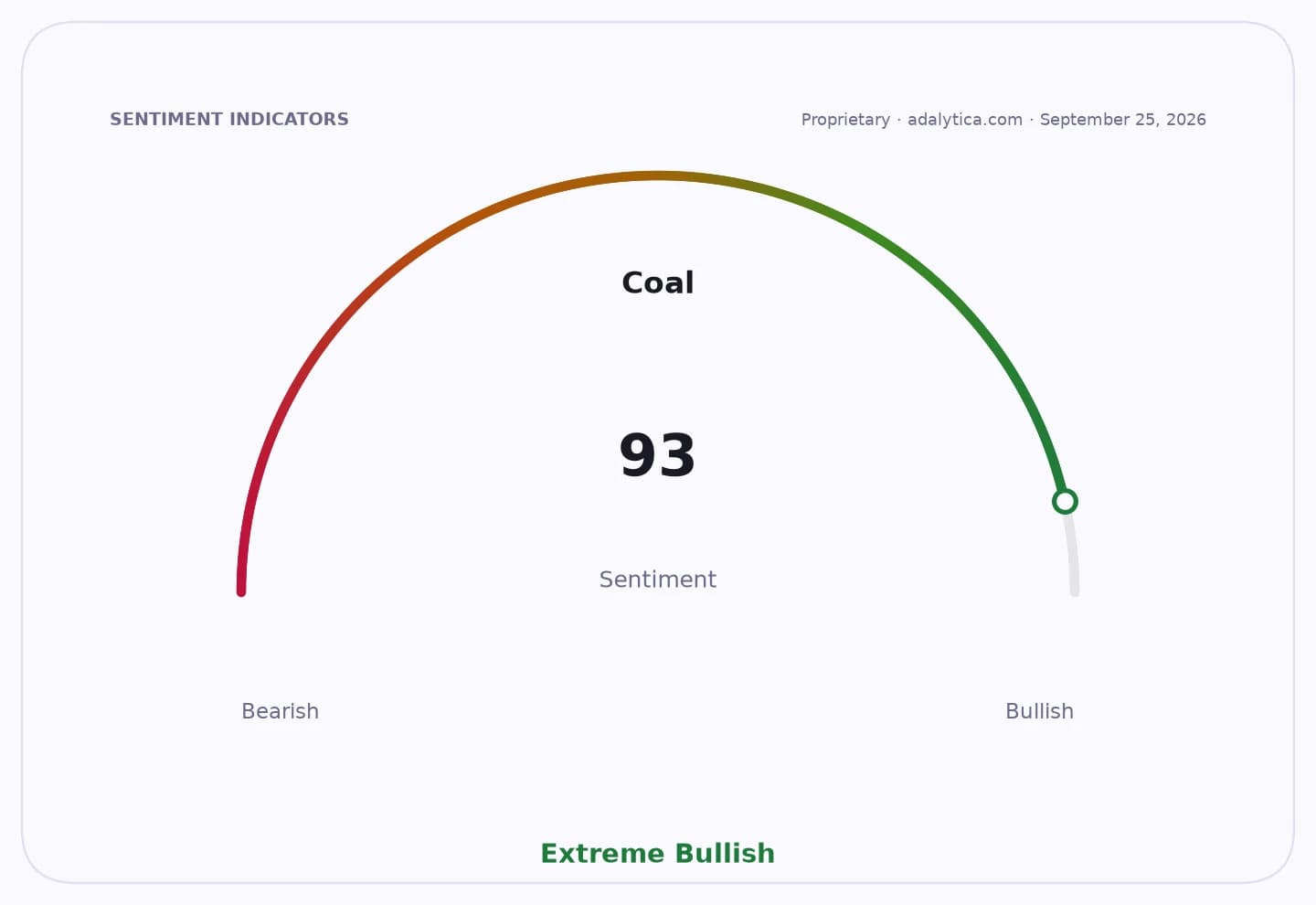
Sentiment IndicatorsⓘProprietary · adalytica.com · July 31, 2026
This is a snapshot — live sentiment, awareness and momentum for 130+ markets update continuously in the dashboard.Open AlphaPulse
The move also lands in a more cautious credit environment for AI-linked borrowers. Investors have grown increasingly sensitive to concentration risk, contract durability and the possibility that customer spending on artificial intelligence may not scale in a straight line. CoreWeave’s decision to bow to investor pushback suggests lenders want stronger protections before taking exposure to revenue streams tied to a marquee AI customer such as Anthropic.
For equity holders, the message is even sharper. The stock has been volatile, and the latest trading pattern shows how quickly sentiment can swing when confidence in the financing narrative wobbles. CoreWeave closed at $71.19 on July 31, far below its spring highs, after a brutal summer selloff that dragged the shares to $60.82 two days earlier. The recovery is real, but so is the skepticism. With the 50-day moving average still above the stock and momentum indicators only just stabilizing, the market is treating this as a business story and a balance-sheet story at the same time.
Microsoft and Amazon are relevant here too, not because they are directly in this debt deal, but because CoreWeave sits in the same AI infrastructure ecosystem that is still being funded by enormous capital expenditures from the hyperscalers. Microsoft jumped to $462.73 on July 31 and Amazon rose to $269.96, underscoring renewed enthusiasm for cloud and AI capex. Yet CoreWeave’s financing headache shows the capital stack beneath that boom is getting more expensive and more selective. That should help the biggest, strongest platforms and squeeze the more leveraged specialists.
Our thesis is simple: the market is still underestimating how quickly AI financing is moving from growth-at-any-price to disciplined underwriting. That is a tailwind for the companies selling picks-and-shovels with fortress balance sheets, and a headwind for leveraged players dependent on concentrated contracts and continuous refinancing.
If lenders are already demanding sweeter terms on Anthropic-linked debt, expect the next round of financing across AI infrastructure to carry higher hurdles, tighter structures and less tolerance for execution risk. Investors should be positioning accordingly: favor the hyperscalers and infrastructure leaders with pricing power, and be cautious on the most debt-dependent names in the AI buildout.
| Entity | Gains | Losses |
|---|---|---|
| Lenders | ▲Better protection | ▼Lower upside |
| CoreWeave | ▲Keeps financing access | ▼Gives up leverage |
| Anthropic | ▲Stable compute access | ▼Less bargaining power |
| Microsoft/Amazon | ▲Competitive advantage | ▼More scrutiny on AI capex peers |