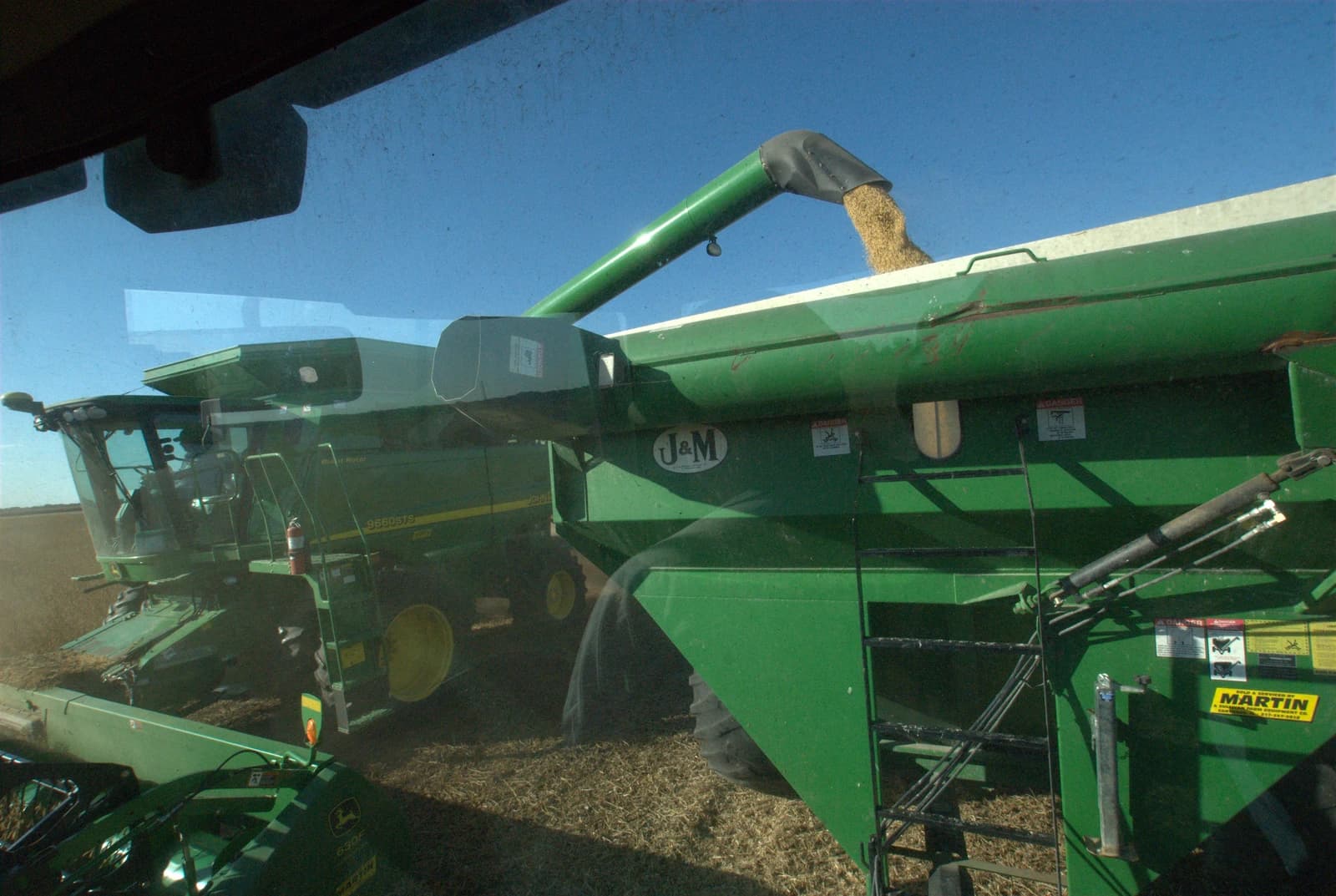
Soybean and corn futures on the Chicago Board of Trade slipped to multi-week lows as U.S. harvest progress swelled supplies and kept sellers active, while wheat bounced on bargain hunting after recent losses. The split matters because it reinforces a familiar autumn pattern: fresh crop arrivals pressure the row-crop complex just as grain markets start to price the balance between immediate harvest pressure and later-season weather risk.
Corn and soy futures fall on harvest pressure

Corn ended at 17.85 cents a bushel in the CORN fund on Oct. 22, after touching 17.86 cents the previous day, while soybeans in the SOYB fund held near 26.76 cents. Both remain below their 50-day moving averages, with corn also sitting under its 200-day average, a sign the market is still digesting heavier supply rather than betting on a quick rebound. Wheat was the outlier, with the WEAT fund at 22.93 cents, recovering from a sharp pullback even as its short-term technicals showed the market is still vulnerable to renewed selling.
Sentiment IndicatorsⓘProprietary · adalytica.com · October 22, 2026
This is a snapshot — live sentiment, awareness and momentum for 130+ markets update continuously in the dashboard.Open AlphaPulse
The economic message is straightforward: harvest progress is turning the U.S. into a source of near-term grain supply at the very moment traders are least inclined to pay up for inventory. That keeps a lid on crop prices and eases input-cost pressure for livestock producers and food buyers, but it also squeezes farm income in the Midwest and raises the stakes for storage, basis and export competition later in the season.
Energy markets are feeding into that move. West Texas Intermediate crude, which helps set the tone for ethanol economics and farm fuel costs, has been volatile but was still trading around $107.89 a barrel on Oct. 20, after a recent surge and retreat. The dollar has also been soft by historical standards, which should help U.S. exports at the margin, but it has not been enough to offset the immediate pressure from the harvest pipeline. Conventional technical indicators underline the tone: corn’s RSI was near 27.7, soybean RSI around 38.9 and wheat RSI about 25.0, all consistent with oversold conditions even as the dominant trend remains down.
For investors, the setup argues for patience on the long side of row crops and a more selective approach to the agricultural trade. The market underestimates how often harvest pressure can dominate fundamentals until the fieldwork is largely complete. That makes rallies in soybeans and corn more likely to be sold into unless weather, exports or policy deliver a fresh catalyst. Wheat’s rebound, by contrast, shows where capital may rotate when valuation gets stretched to the downside.
The next move will likely hinge on whether harvest data keep improving and whether export demand can absorb the added supply. If they do, soybeans and corn may stay under pressure into the end of the harvest window, while wheat could remain the more tradable rebound as short covering meets historically cheap prices.
| Entity | Gains | Losses |
|---|---|---|
| Grain buyers | ▲Lower feed costs | ▼Less urgency to hedge |
| Livestock producers | ▲Cheaper corn and soymeal | ▼— |
| U.S. farmers | ▲— | ▼Harvest-time price pressure |
| Wheat bulls | ▲Short-covering rebound | ▼Still-weak trend |